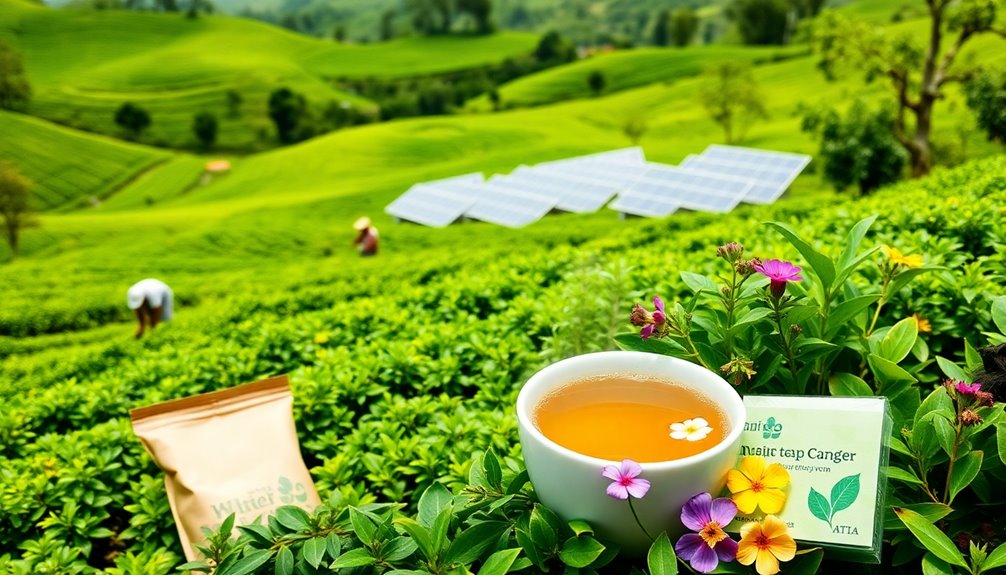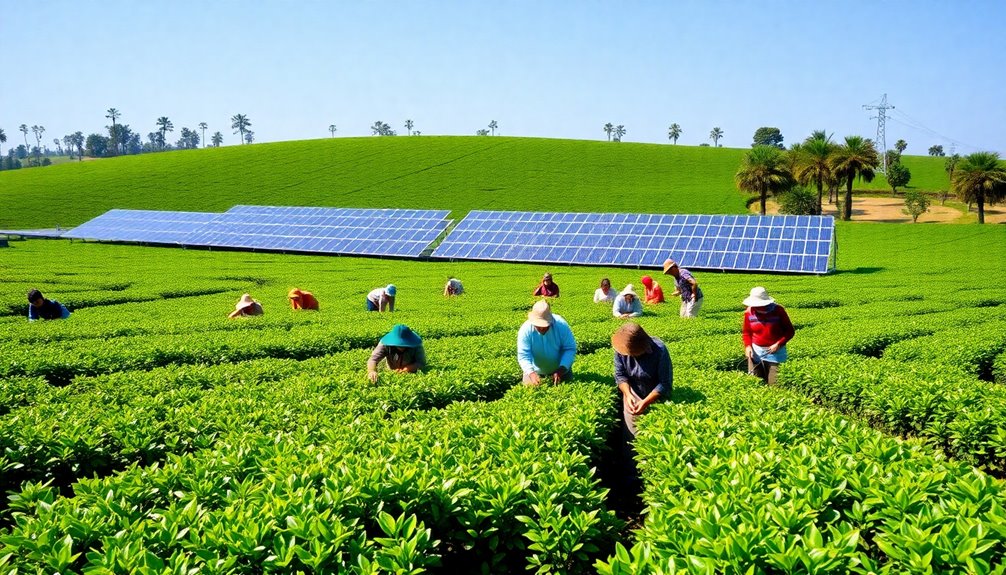

The current state of sustainable and ethical tea sourcing shows a strong shift toward practices that support fair treatment of farmers, environmental health, and transparent supply chains. Many brands now prioritize certifications like Fair Trade and organic standards to ensure fair wages, safe working conditions, and eco-friendly farming methods. This movement empowers consumers to make impactful choices that promote social justice and sustainability. If you want to discover more about how these practices are shaping the industry, keep exploring.
Key Takeaways
- Growing consumer demand drives increased adoption of fair trade and organic certifications in tea production.
- Many tea brands are committed to transparent supply chains and ethical sourcing practices.
- Certification standards are continually evolving to ensure higher social and environmental accountability.
- Sustainable farming techniques and community involvement are becoming standard in the industry.
- Industry trends show a shift toward holistic certifications combining social justice and environmental sustainability.

As tea lovers become more conscious of their choices, sustainable and ethical sourcing has moved to the forefront of the industry. You now have the opportunity to support practices that prioritize fair treatment of farmers, environmental health, and quality. One of the key ways producers guarantee ethical standards is through fair trade practices. These initiatives ensure that farmers and workers receive fair wages, work in safe conditions, and are involved in decision-making processes that affect their livelihoods. By choosing teas cultivated under fair trade agreements, you’re helping to create a more equitable supply chain, reducing exploitation and promoting community development. Fair trade practices also encourage transparency, so consumers like you can trace the origins of your tea and make informed decisions. Additionally, many certified teas undergo rigorous quality control, ensuring that consumers receive high-quality products that meet strict standards. Alongside fair trade, organic certification plays a vital role in sustainable tea sourcing. When tea is labeled as organic, it means it’s grown without synthetic pesticides, fertilizers, or genetically modified organisms. This not only benefits the environment by preventing soil and water contamination but also ensures that the tea you’re drinking is free from harmful chemicals. Organic certification requires strict adherence to standards set by certifying bodies, providing you with confidence that the product meets rigorous environmental and health criteria. By supporting organic teas, you contribute to healthier ecosystems and promote agricultural methods that sustain soil fertility and biodiversity.
The combination of fair trade practices and organic certification represents a significant shift toward more sustainable and ethical tea production. Many tea estates now prioritize both, recognizing that a holistic approach benefits farmers, consumers, and the environment alike. When you purchase teas with these certifications, you’re actively participating in a movement that values ecological balance and social justice. This not only guarantees the quality and safety of your tea but also encourages producers to adopt more sustainable farming techniques, reduce waste, and minimize their carbon footprint.
In essence, your choices as a tea consumer can drive meaningful change. By selecting products that adhere to fair trade practices and hold organic certification, you support a system that values human rights and environmental health. These standards serve as a guarantee that your tea isn’t just a beverage but a reflection of ethical principles and sustainable development. As awareness grows, more brands are aligning with these standards, making it easier for you to enjoy your favorite brew while contributing to a more sustainable and just world.
Frequently Asked Questions
How Do Certifications Verify Ethical Practices in Tea Sourcing?
Certifications like Fair Trade and Organic Certification verify ethical practices by inspecting farms and supply chains to make sure workers are paid fair wages and environments are safe. You can trust these labels because they require strict adherence to standards that protect workers and the environment. When you see these certifications on your tea, you’re supporting ethical sourcing, fair treatment, and sustainable farming practices, making your choice more responsible and impactful.
What Are the Biggest Challenges Faced by Sustainable Tea Farmers?
You face significant challenges as a sustainable tea farmer, including ensuring fair labor practices and conserving water. Fair labor requires fair wages and safe working conditions, which can be difficult to maintain consistently. Water conservation is essential but often hard due to limited resources or climate issues. These challenges demand ongoing effort, investment, and commitment to uphold ethical standards and protect the environment while maintaining productivity.
How Can Consumers Identify Truly Ethical Tea Brands?
You can identify truly ethical tea brands by looking for certifications like Fair Trade, which guarantee fair wages and sustainable practices. Check the supply chain transparency—brands that openly share where and how their tea is sourced demonstrate a commitment to ethics. Research the company’s values and reviews, and choose those that prioritize environmental impact and fair treatment of farmers. This way, you support brands truly dedicated to ethical sourcing.
Are There Regional Differences in Sustainable Tea Cultivation?
Ever wonder if your tea’s story varies with geography? Yes, regional disparities in sustainable tea cultivation exist, shaped by local climates, resources, and farming practices. Different cultivation zones face unique challenges—some struggle with water scarcity, others with soil degradation—yet many regions are adopting eco-friendly methods. So, when you choose tea, remember that regional differences influence not just flavor but also how ethically and sustainably it’s grown.
What Future Innovations Could Improve Ethical Sourcing in Tea?
You can expect future innovations like innovative packaging that reduces waste and enhances eco-friendliness, making sustainable sourcing more practical. Blockchain traceability will also play a key role, giving you transparent, tamper-proof insights into the tea’s journey from farm to cup. These advances empower you to make ethical choices, support fair labor practices, and promote environmentally friendly cultivation, ensuring your tea consumption aligns with your values.
Conclusion
As you pursue pure, principled, and purposeful tea choices, remember that sustainable and ethical sourcing shapes a better brew for both producers and planet. By being mindful, motivated, and more mindful of your methods, you can make meaningful moves toward a more moral and mindful market. Your decisions deliver a decisive difference, driving demand for diligent, dependable, and deserving tea. Stay steadfast, support sustainable sourcing, and savor a sip that’s truly sustainable and ethically sound.