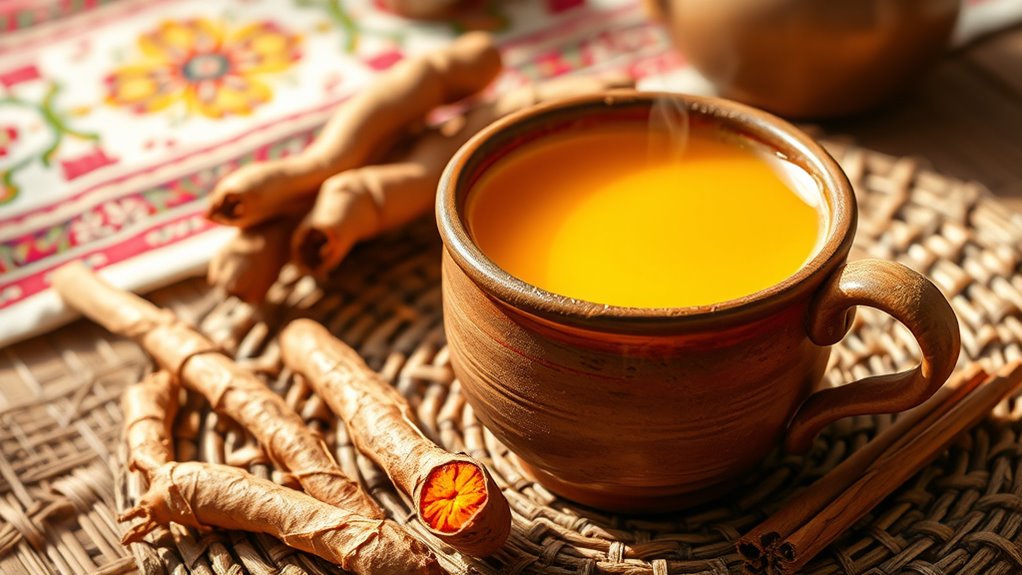
Turmeric tea plays a essential role in local traditions as a symbol of health, wellbeing, and spiritual connection. You’ll find it used in rituals, festivals, and healing practices across many communities, embodying centuries-old wisdom. It’s seen as more than just a remedy — it links people to their cultural roots and spiritual beliefs. Exploring its significance reveals how deeply these traditions honor nature, community, and health—continue to discover more about its cultural importance.
Key Takeaways
- Turmeric tea is integral to traditional healing and spiritual rituals, symbolizing health, protection, and divine blessings in many cultures.
- It is used in religious festivals and ceremonies to invoke spiritual harmony and connect with ancestral traditions.
- Consuming turmeric tea reflects centuries-old wisdom, maintaining cultural continuity and honoring natural remedies.
- The preparation and sharing of turmeric tea serve as acts of cultural identity, fostering community bonds and spiritual connection.
- Its role in rituals embodies a deep respect for nature, health, and spiritual well-being across diverse societies.
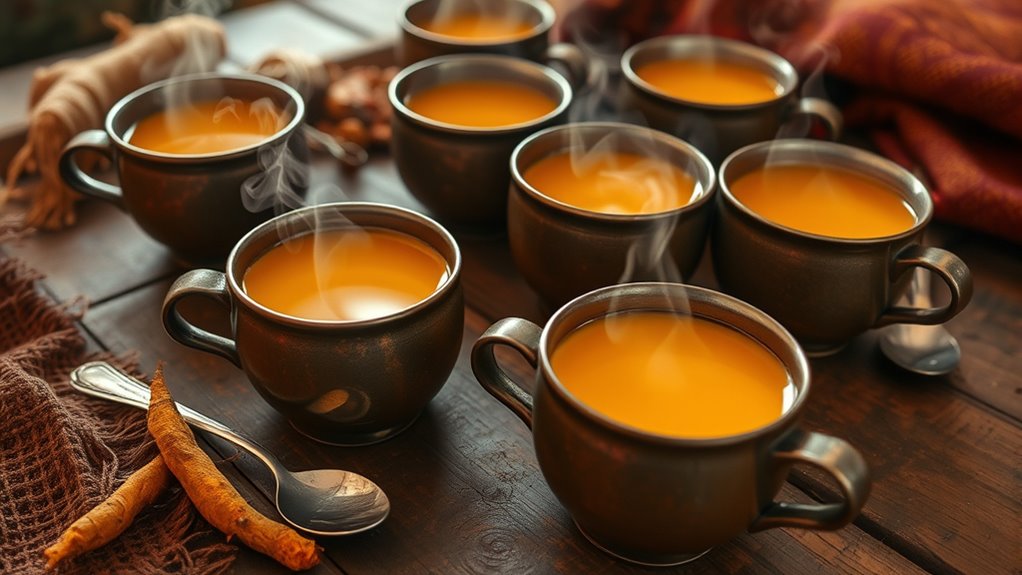
Turmeric tea holds a deep cultural significance in many societies, symbolizing health, tradition, and spiritual well-being. For centuries, communities have cherished this drink not just for its flavor but also for its profound connection to well-being and cultural identity. Its medicinal benefits are widely recognized, making it a staple in traditional healing practices. The tea’s active compounds, particularly curcumin, are believed to possess anti-inflammatory, antioxidant, and immune-boosting properties, which help in alleviating ailments like joint pain, digestive issues, and colds. Because of these health benefits, turmeric tea often plays a crucial role in rituals aimed at promoting physical and spiritual harmony.
Turmeric tea embodies health, tradition, and spiritual harmony across diverse cultures.
When it comes to preparation methods, you’ll find that they vary across cultures, but most share common elements. Typically, making turmeric tea involves simmering fresh or dried turmeric root or powder in water. Some traditions add ingredients like black pepper, which enhances curcumin absorption, or honey and lemon to improve taste and add extra health benefits. The process is simple: boil water, add turmeric, and let it steep for about 10 to 15 minutes to extract maximum medicinal benefits. Straining out any solids before drinking ensures a smooth, comforting beverage. The preparation methods are often passed down through generations, with each community adding its unique touch—be it herbs, spices, or specific techniques—embodying their cultural identity and health philosophies. Additionally, the use of traditional cooking techniques can influence the potency and cultural authenticity of the tea.
In many local traditions, turmeric tea isn’t just a beverage; it’s a ritual that signifies healing, protection, and connection to ancestral practices. For example, in Indian culture, turmeric tea is often consumed during religious festivals or during healing ceremonies, believed to invoke divine blessings and fortify the body. In Southeast Asia, turmeric-infused drinks are used in traditional medicine to restore balance and vitality. These preparation methods aren’t just functional—they’re symbolic, serving as a bridge between physical health and spiritual well-being.
Understanding the medicinal benefits and preparation methods of turmeric tea enriches your appreciation of its cultural importance. It’s more than a trendy health drink; it’s a reflection of centuries-old wisdom, a testimony to how natural ingredients are woven into daily life and spiritual practices. When you prepare and share turmeric tea, you’re participating in a tradition that values health, respect for nature, and cultural continuity. This drink’s significance extends beyond its medicinal properties, embodying a deep-rooted connection to community, spirituality, and the enduring pursuit of wellness.

Organic Turmeric Root 4 oz (113g), USDA Certified Organic Dried Turmeric Root Herb Tea, Tumeric, Cut and Sifted
- Certified Organic: Ethically sourced and lab-tested
- High-Quality & Potent: Ideal for teas and herbal blends
- Laboratory Tested: Ensures purity and safety
As an affiliate, we earn on qualifying purchases.
As an affiliate, we earn on qualifying purchases.
Frequently Asked Questions
How Is Turmeric Tea Prepared Traditionally?
To prepare turmeric tea traditionally, you start by boiling water and adding fresh or powdered turmeric, creating an herbal infusion. You can spice it up with ingredients like black pepper, cinnamon, or ginger for a richer, spiced preparation. Let it simmer for a few minutes to extract the flavors fully. Then, strain the tea into a cup and enjoy its warm, earthy taste, often sweetened with honey if desired.
Are There Specific Occasions for Drinking Turmeric Tea?
You often drink turmeric tea during festive rituals and ceremonial occasions, as it’s believed to bring health and good luck. During celebrations or special gatherings, sharing this tea signifies unity and well-being. You might also enjoy it during religious ceremonies or family rituals, where its vibrant color and healing properties add a sense of tradition and reverence. Drinking turmeric tea at these times helps you connect with cultural roots and spiritual practices.
What Are the Health Benefits Associated With Turmeric Tea?
Imagine a golden shield wrapping around your health—turmeric tea offers powerful antioxidant properties that fight free radicals, keeping your body vibrant. Its anti-inflammatory effects soothe aches and reduce swelling, like a gentle balm on tired muscles. Drinking turmeric tea regularly can boost immunity, improve digestion, and promote overall wellness. You’ll feel energized and balanced, as if your body’s internal harmony is restored with each sip of this vibrant, healing brew.
How Does Turmeric Tea Influence Local Medicinal Practices?
Turmeric tea influences your local medicinal practices by integrating it into herbal remedies and spiritual rituals. You might use it to boost healing sessions or as a sacred offering during ceremonies. Its natural anti-inflammatory properties support traditional health methods, while its role in spiritual rituals enhances community bonding and spiritual well-being. You see turmeric tea as more than a beverage—it’s a essential part of your cultural healing and spiritual expression.
Are There Regional Differences in Turmeric Tea Recipes?
You’ll find that regional flavor dances through turmeric tea recipes like a lively melody. Ingredient variations, such as adding ginger in the north or lemongrass in coastal areas, shape each local brew’s unique character. These regional differences reflect local tastes and available ingredients, turning each cup into a flavorful journey. So, next time you sip, savor how regional flavor tells a story in every ingredient variation.
Conclusion
You now hold the secret to turmeric tea’s power—it’s not just a drink, but a magical potion that weaves through generations, shaping traditions and binding communities. Imagine a steaming cup glowing with golden light, radiating warmth and unity, transforming simple moments into legendary tales. This tea isn’t just brewed; it’s a living, breathing symbol of culture, a fiery elixir so potent that it could light up entire festivals and heal ancient wounds with every sip.