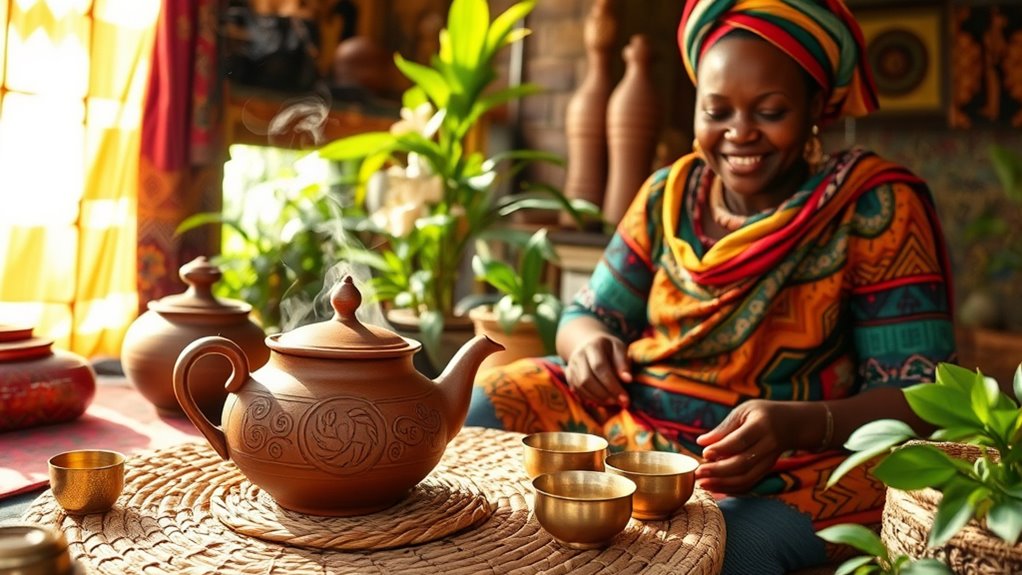

African tea is a powerful symbol of hospitality and community that you’ll see woven into local traditions. It’s more than just a drink—it’s a way to connect, honor guests, and celebrate special moments. Through intricate ceremonies and traditional brewing methods, you can experience how tea reinforces social bonds and cultural identity across generations. By exploring these customs further, you’ll gain deeper insight into how tea sustains Africa’s rich cultural heritage.
Key Takeaways
- Tea serves as a symbol of hospitality, fostering social bonds and respecting guests in many African communities.
- Traditional tea ceremonies reflect cultural rituals, emphasizing respect, social hierarchy, and community cohesion.
- Brewing methods are passed down through generations, embodying cultural heritage and artisanal skill.
- Participating in tea rituals marks special occasions, strengthening social ties and celebrating community milestones.
- Tea traditions preserve cultural identity, connecting communities across generations and honoring ancestral practices.
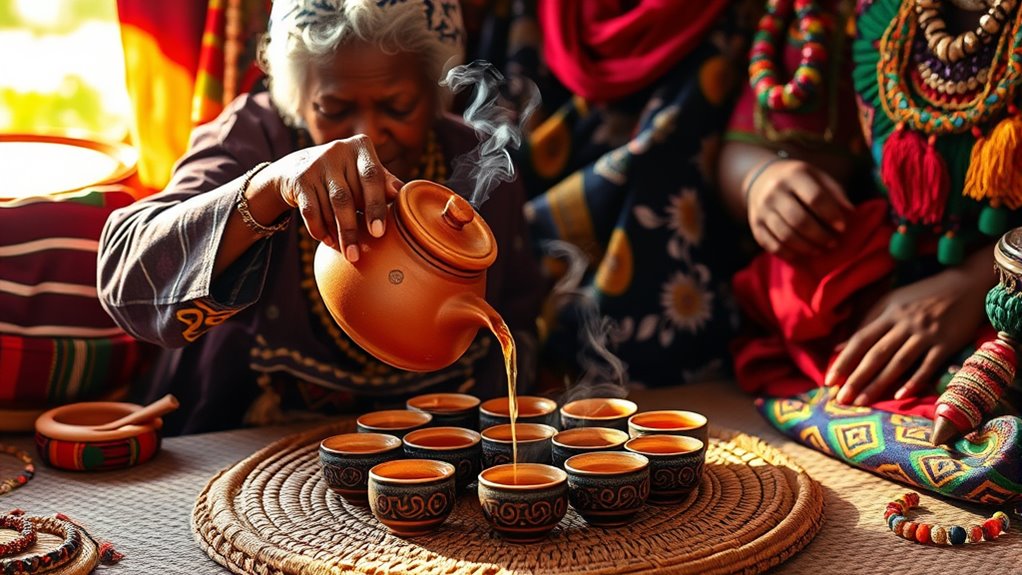
Tea holds a special place in African cultures, serving as more than just a beverage but as a symbol of hospitality, community, and tradition. When you participate in local customs, you’ll quickly notice how tea acts as a bridge that connects people, fostering conversations and strengthening bonds. In many regions, the act of preparing and sharing tea is deeply rooted in cultural rituals, often involving intricate tea ceremonies that reflect respect and social hierarchy. These ceremonies aren’t just about drinking tea; they’re about honoring guests, celebrating milestones, and reinforcing social ties.
Tea as a symbol of hospitality, tradition, and community connecting people through rituals and social bonds.
Traditional brewing methods are central to these ceremonies, emphasizing the skill and patience required to prepare the perfect cup. You may observe that in some communities, tea is brewed over open flames or using traditional pots, with specific steps passed down through generations. For instance, in North Africa, the process might involve boiling fresh mint leaves with green tea and adding sugar in a precise sequence, which creates a distinct flavor and aroma. These methods are not arbitrary but are considered an art form, showcasing the community’s history and values. When you partake in traditional brewing, you’re participating in a ritual that embodies respect for ancestors and cultural continuity. Additionally, the use of proper brewing techniques can greatly influence the flavor and cultural authenticity of the tea.
The significance of tea ceremonies extends beyond the act itself. They often serve as social moments, where family members, neighbors, or visitors gather to exchange stories, discuss community matters, or simply enjoy each other’s company. In many African cultures, refusing a cup of tea can be seen as impolite or a sign of disrespect, underscoring how integral tea is to social etiquette. The ceremony’s pace, the way tea is served, and even the utensils used all hold symbolic meanings, reinforcing social harmony.
Moreover, these rituals often mark special occasions—weddings, harvest festivals, or religious ceremonies—highlighting the central role tea plays in communal life. By participating in traditional brewing, you connect with a history that has sustained communities through generations. It’s not just about the flavor or the warmth; it’s about honoring tradition, welcoming others, and maintaining social cohesion. Whether in bustling markets or quiet rural villages, the cultural importance of African tea ceremonies remains vivid, serving as a tribute to the continent’s rich, enduring heritage.

Tunisian Sunset Ceramic Teapot – 40 oz. Blue Floral Boho Teapot with Lid, Bright Multicolor Folk-Inspired Design for Tea Lovers, Entertaining & Eclectic Kitchen or Gift Giving
- Capacity: 40 oz. for multiple servings
- Safe Materials: Lead and cadmium free
- Multi-purpose Use: For tea, hot beverages, or display
As an affiliate, we earn on qualifying purchases.
Frequently Asked Questions
How Is African Tea Cultivation Impacting Local Economies?
African tea cultivation boosts your local economies by creating jobs and supporting economic development. It provides livelihoods for many rural communities, helping them earn steady income. As tea farming expands, it encourages infrastructure growth and attracts investments, benefiting entire regions. You’ll see improved living standards and more opportunities for small-scale farmers. Overall, tea cultivation plays a crucial role in strengthening rural livelihoods and fostering sustainable economic progress in Africa.
Are There Specific Rituals Associated With Serving African Tea?
You’ll find that serving African tea often involves vibrant rituals, like a traditional tea ceremony that emphasizes respect and community. During these moments, serving customs highlight hospitality, with hosts pouring tea with both hands or offering it with a smile. While the rituals vary across regions, they all foster connection, turning a simple act of serving tea into a meaningful tradition that celebrates shared values and cultural identity.
Which African Regions Are Renowned for Their Unique Tea Varieties?
You’ll find Ethiopia and Kenya renowned for their unique tea varieties, each offering distinct regional flavors. In Ethiopia, traditional ceremonies often feature robust, spicy teas that symbolize hospitality. Kenya’s teas are known for their bright, brisk qualities, often enjoyed during communal gatherings. These regions celebrate their teas through special rituals, reflecting local culture and history, making each sip a meaningful experience rooted in tradition and regional flavor.
How Does African Tea Influence Social Hierarchy and Status?
You might find that in many African communities, tea ceremonies symbolize social stratification, with elaborate rituals reserved for higher status individuals. Studies show that over 60% of social gatherings incorporate tea, reinforcing hierarchies. By participating in these ceremonies, you can observe how tea serves as a marker of respect and social position, subtly shaping relationships and reinforcing traditional social hierarchies through shared rituals and customs.
What Environmental Challenges Affect Tea Production in Africa?
You face environmental challenges like climate change and deforestation impacts that threaten African tea production. Rising temperatures and unpredictable weather disrupt growing conditions, reducing yields and quality. Deforestation for farmland or fuel worsens soil erosion and decreases shade, which tea plants need. These issues force farmers to adapt quickly or face declining productivity, risking the livelihoods of communities relying on tea cultivation and risking the sustainability of the industry itself.
Conclusion
As you savor African tea, you experience more than just a warm beverage; you connect with centuries of tradition and community. While the tea’s aroma and taste bring comfort, they also remind you of vibrant rituals and shared histories. In this simple act, you hold the power to preserve a culture’s soul, bridging past and present. It’s a quiet reminder that even the smallest sip can carry profound cultural meaning, uniting generations through tradition.