For a versatile starting point, I’d put Naoki Superior Blend Matcha at the top of this roundup, with Satoen Honyama standing out for Japanese-origin ceremonial matcha and Jade Leaf Organic Culinary Grade for everyday recipes. The main choice is whether you want a powder suited to whisking and drinking, a bolder culinary grade for baking, or a convenient single-serve format. Package size matters too: a bulk bag can suit frequent use, but matcha’s flavor is best protected when you can use it while fresh. Read on for the full breakdown of all 15 options and how I’d match each one to a buyer.

Get coffee and tea gear delivered free with Prime
- Fast, free delivery on millions of items
- Prime Video, Amazon Music and more included
- Member-only deals all year
Complete the kit


Key Takeaways
- Naoki Superior Blend is the roundup’s most versatile starting point, while Satoen Honyama and YAMAEI offer more specifically Japanese-origin, ceremonial-style choices.
- Culinary-grade powders dominate the larger packages, making them better suited to frequent lattes, smoothies, and recipes than to buyers seeking a small tin for occasional traditional tea.
- Single-serve packs solve a different problem from bulk bags: O’s Bubble and Aiya prioritize portioning and portability, while the one- and two-pound options prioritize volume.
- 35°N’s small baking-focused pack has a clear use case: trying matcha desserts without committing to a large bag.
- Jade Leaf Matcha Latte Mix is not the same kind of product as pure matcha powder; its prepared-drink format trades ingredient flexibility for a simpler latte routine.
| O’s Bubble Ceremonial Matcha Powder Kit, 10 x 2 g Packets with Mini Shaker |  | Best for Portable Preparation | Type: Ceremonial matcha powder kit | Quantity: 10 packets | Packet size: 2 g | VIEW LATEST PRICE | See Our Full Breakdown |
| Organic Culinary Grade Matcha Green Tea Powder, 1 lb |  | Best for Everyday Recipes | Weight: 1 lb (454 g) | Servings: 151 | Serving size: 1 scoop daily | VIEW LATEST PRICE | See Our Full Breakdown |
| 35°N Matcha Powder for Baking and Desserts, 1.4 oz (40 g) |  | Best for Small-Batch Baking | Net weight: 1.4 oz (40 g) | Type: Culinary-grade matcha powder | Ingredients: 100% pure, unsweetened matcha green tea powder | VIEW LATEST PRICE | See Our Full Breakdown |
| Jade Leaf Organic Culinary Grade Matcha Powder, 30 g |  | Best Small Organic Starter Pack | Brand: Jade Leaf | Type: Culinary grade matcha powder | Weight: 30 g (1.06 oz) | VIEW LATEST PRICE | See Our Full Breakdown |
| Organic Matcha Green Tea Powder, 2 lb, Culinary Grade |  | Best for High-Volume Use | Weight: 2 lb | Type: Organic matcha green tea powder | Grade: Culinary | VIEW LATEST PRICE | See Our Full Breakdown |
| Organic Japanese Matcha Green Tea Powder, Culinary Grade, 1 lb |  | Best for Bulk Cooking and Lattes | Weight: 1 lb (454 g) | Grade: Culinary | Origin: Japanese sourced | VIEW LATEST PRICE | See Our Full Breakdown |
| Satoen Honyama Ceremonial Matcha Powder, 30 g (1.06 oz), Shizuoka, Japan |  | Best for Smooth, Low-Bitterness Tea | Weight: 30 g (1.06 oz) | Origin: Shizuoka, Japan | Tea type: Ceremonial matcha | VIEW LATEST PRICE | See Our Full Breakdown |
| Naoki Superior Blend Matcha, 40 g |  | Best for Everyday Ceremonial Versatility | Origin: Uji, Kyoto, Japan | Grade: Ceremonial | Harvest: First harvest | VIEW LATEST PRICE | See Our Full Breakdown |
| YAMAEI Matcha Powder, Ceremonial Grade, 1.1 oz, Japanese Green Tea, First Harvest |  | Best Compact Tin for Freshness-Minded Buyers | Origin: Shizuoka, Japan | Grade: Ceremonial | Harvest: First harvest | VIEW LATEST PRICE | See Our Full Breakdown |
| PerfectTed Ceremonial Grade Japanese Matcha Powder, 30g |  | Best Resealable Pouch | Net weight: 30 g | Servings: 30 | Origin: Japan | VIEW LATEST PRICE | See Our Full Breakdown |
| Aiya Matcha To Go Ceremonial Grade Matcha Green Tea Powder, 10 Single-Serve Packs |  | Best for Travel | Product type: Matcha green tea powder | Grade: Ceremonial | Pack count: 10 single-serve sticks | VIEW LATEST PRICE | See Our Full Breakdown |
| Micro Ingredients Organic Japanese Matcha Green Tea Powder, First Harvest, Culinary Grade, 1 lb |  | Best for Bulk Recipe Use | Brand: Micro Ingredients | Grade: Culinary | Harvest: First harvest | VIEW LATEST PRICE | See Our Full Breakdown |
| FGO Organic Matcha Green Tea Powder, 4 oz Resealable Bag |  | Best Small Organic Pantry Bag | Weight: 4 oz | Form: Fine powder | Certifications: USDA Organic; Non-GMO | VIEW LATEST PRICE | See Our Full Breakdown |
| Matcha DNA Organic Matcha Green Tea Powder, 16 oz |  | Best Large Organic Supply | Brand: Matcha DNA | Product type: Organic matcha green tea powder | Net weight: 16 oz | VIEW LATEST PRICE | See Our Full Breakdown |
| Jade Leaf Matcha Latte Mix, Original, 150 g |  | Best Ready-Sweetened Latte Blend | Flavor: Original | Net weight: 150 g (5.3 oz) | Ingredients: Japanese matcha and organic cane sugar | VIEW LATEST PRICE | See Our Full Breakdown |
| matcha tea powder | Origin | Ingredients |
|---|---|---|
| O’s Bubble Ceremonial Matcha P | Kagoshima, Japan | 100% matcha |
| Organic Culinary Grade Matcha | — | — |
| 35°N Matcha Powder for Baking | — | 100% pure, unsweetened matcha green tea powder |
| Jade Leaf Organic Culinary Gra | — | Pure matcha green tea leaves |
| Organic Matcha Green Tea Powde | — | Single ingredient; no added flavors or fillers |
| Organic Japanese Matcha Green | Japanese sourced | — |
| Satoen Honyama Ceremonial Matc | Shizuoka, Japan | 100% Japanese tencha green tea leaves |
| Naoki Superior Blend Matcha | Uji, Kyoto, Japan | — |
| YAMAEI Matcha Powder | Shizuoka, Japan | — |
| PerfectTed Ceremonial Grade Ja | Japan | 100% shade-grown green tea leaves |
| Aiya Matcha To Go Ceremonial G | Japan | — |
| Micro Ingredients Organic Japa | Japan | — |
| FGO Organic Matcha Green Tea P | — | Whole-leaf green tea |
| Matcha DNA Organic Matcha Gree | — | — |
| Jade Leaf Matcha Latte Mix | — | Japanese matcha and organic cane sugar |
More Details on Our Top Picks
O’s Bubble Ceremonial Matcha Powder Kit, 10 x 2 g Packets with Mini Shaker
O’s Bubble is the most convenient choice here for making a single matcha drink away from home: each of its ten 2 g packets is portioned, and the included mini shaker gives you a way to mix without a whisk. Its Kagoshima-sourced matcha is described as water-cooled milled for mixing in cold drinks as well as hot ones, and the ingredient list is simply matcha. Compared with the larger culinary-grade bags from Jade Leaf or Organic Matcha Green Tea Powder, 2 lb, this kit is easier to carry and portion, but it offers far less powder for regular use. The tradeoff is a narrow supply of ten servings, plus a hot-water limit: preparation calls for water below 158°F. Choose it for portability, not pantry volume or frequent traditional whisking.
Pros:- Ten pre-measured 2 g packets simplify portioning
- Mini shaker supports preparation away from home
- Kagoshima, Japan sourcing is specified
- 100% matcha with no added sugar or additives
Cons:- Ten packets provide limited supply for frequent use
- Hot drinks require water below 158°F
Best for: Travelers and occasional matcha drinkers who want pre-portioned powder and a compact way to mix cold or hot drinks.
Not ideal for: Daily matcha drinkers or buyers who want a large supply for baking; ten packets run out quickly, and hot preparation has a specified temperature limit.
- Type:Ceremonial matcha powder kit
- Quantity:10 packets
- Packet size:2 g
- Included accessory:Mini shaker
- Origin:Kagoshima, Japan
- Ingredients:100% matcha
- Added sugar:None
- Mixing:Cold or hot water; hot water below 158°F
Our verdict“Pick O’s Bubble if portability and easy portioning matter more than having enough powder for daily use.”
Organic Culinary Grade Matcha Green Tea Powder, 1 lb
This 1 lb organic culinary matcha is the most flexible pantry pick in this group: its 151 stated servings can cover lattes, smoothies, tea, and baking without relying on a small pouch. It is unsweetened, finely stone ground, and described as made from early spring Japanese tea leaves; third-party lab testing and a broad allergen-free list add useful sourcing and dietary details. Compared with the 35°N Matcha Powder for Baking and Desserts, which is a 40 g pack with a freshness window after opening, this bag better suits repeated recipe use. The compromise is grade and scale: culinary matcha is less tailored to a traditional, straight preparation than ceremonial options such as O’s Bubble, and a 1 lb bag may be excessive for someone who only makes an occasional cup. I’d choose it for cooking versatility over ceremony.
Pros:- Large 1 lb supply with 151 stated servings
- Organic, unsweetened, and zero sugar
- Fine stone-ground powder suits drinks and recipes
- Third-party lab tested and listed as free from several common allergens
Cons:- Culinary grade is less suited to buyers prioritizing ceremonial-style tea
- Large quantity may be inconvenient for occasional use
Best for: Home cooks and regular latte or smoothie makers who want a substantial unsweetened organic supply for both drinks and recipes.
Not ideal for: People seeking matcha specifically for traditional ceremonial-style preparation, or occasional drinkers unlikely to use a 1 lb bag.
- Weight:1 lb (454 g)
- Servings:151
- Serving size:1 scoop daily
- Grade:Culinary
- Source:Japanese green tea plant
- Harvest:Early spring leaves
- Processing:Fine stone ground
- Dietary attributes:Vegan, unsweetened, zero sugar
- Testing:Third-party lab tested
Our verdict“Choose this bag for frequent lattes, smoothies, and baking rather than a small supply for occasional traditional tea.”
35°N Matcha Powder for Baking and Desserts, 1.4 oz (40 g)
35°N makes the most sense when matcha is an ingredient rather than the focus of a large daily tea routine. Its 40 g finely milled powder is intended for batters, desserts, ice cream, yogurt, and drinks, with up to 20 latte servings at 2 g each. The pure, unsweetened formula avoids added flavors and fillers, while refrigeration and a 1–2 month use window after opening give buyers a clear freshness routine. Compared with Organic Culinary Grade Matcha, 1 lb, this smaller pouch is easier to use up in a limited baking project, but it cannot match that bag’s supply for regular recipes. Jade Leaf Organic Culinary Grade Matcha is also a smaller option, though its listing highlights organic certification and sourcing regions instead. This pick’s main tradeoff is capacity: frequent cooks may need to restock quickly.
Pros:- Finely milled texture is suited to batters, creams, and drinks
- Pure, unsweetened matcha with no listed fillers or artificial ingredients
- Useful across baking, desserts, smoothies, and lattes
- Stated yield of up to 20 lattes at 2 g per serving
Cons:- 40 g pouch may not last for frequent use
- Requires refrigeration after opening
- Recommended use within 1–2 months after opening limits storage flexibility
Best for: Bakers and dessert makers who want a small amount of unsweetened culinary matcha for occasional recipes and drinks.
Not ideal for: Frequent matcha drinkers or batch bakers who want a long-lasting supply, since the pouch contains 40 g and should be used soon after opening.
- Net weight:1.4 oz (40 g)
- Type:Culinary-grade matcha powder
- Ingredients:100% pure, unsweetened matcha green tea powder
- Texture:Finely milled
- Suggested uses:Baking, desserts, lattes, smoothies, ice cream, and yogurt
- Storage:Reseal tightly and refrigerate after opening
- Recommended use after opening:Within 1–2 months
- Yield:Up to 20 lattes at 2 g per serving
Our verdict“Choose 35°N for occasional small-batch recipes, but pick a larger bag if matcha is a daily ingredient.”
Jade Leaf Organic Culinary Grade Matcha Powder, 30 g
Jade Leaf is the compact organic choice for buyers who want a little matcha on hand without committing to a large bag. Its 30 g USDA-certified organic powder contains only matcha, and the listed Uji and Kagoshima sourcing gives more origin detail than the 40 g 35°N pouch. The product description places it across traditional tea, lattes, smoothies, and baking, so it can serve as a flexible starter rather than a baking-only ingredient. Compared with Organic Culinary Grade Matcha, 1 lb, the smaller quantity is easier to finish if matcha is an occasional habit, though it is a poor fit for ongoing recipe use. One limitation is that culinary grade is not the clearest match for buyers focused on ceremonial-style preparation, and the 30 g pack leaves little room for frequent experimentation.
Pros:- USDA-certified organic
- Pure matcha with no added ingredients
- Listed as vegan and naturally gluten-free
- Sourced from Uji and Kagoshima, Japan
Cons:- Small 30 g package limits repeated use
- Culinary grade may not suit buyers seeking a ceremonial-style matcha
Best for: New or occasional matcha buyers who want a small, certified-organic pack for trying tea, lattes, smoothies, and recipes.
Not ideal for: Frequent drinkers and bakers who need a large supply, or buyers specifically seeking a ceremonial-grade powder.
- Brand:Jade Leaf
- Type:Culinary grade matcha powder
- Weight:30 g (1.06 oz)
- Certification:USDA Organic
- Ingredients:Pure matcha green tea leaves
- Dietary attributes:Vegan, naturally gluten-free
- Sourcing regions:Uji and Kagoshima, Japan
Our verdict“Pick Jade Leaf for a modest organic starter pack; choose the 1 lb culinary bag for regular use.”
Organic Matcha Green Tea Powder, 2 lb, Culinary Grade
For households that use matcha often, this 2 lb culinary-grade bag offers the largest stated supply in this batch: about 302 servings at 3 g each. The powder is described as first-harvest and shade-grown, with one ingredient and no added sugar or artificial ingredients; organic and non-GMO certifications plus third-party lab testing are also listed. Compared with the 1 lb Organic Culinary Grade Matcha, it roughly doubles the package weight and stated servings, making it better for repeated drinks and recipe batches. That scale is also the drawback: occasional users may struggle to work through a large bag, and culinary grade is not aimed at buyers seeking a ceremonial matcha for drinking plain. Jade Leaf’s 30 g pack is a more manageable alternative if you are still figuring out how often you’ll use matcha.
Pros:- Two-pound package with approximately 302 stated servings
- Single-ingredient powder with no added sugar or artificial ingredients
- Certified organic and non-GMO
- Third-party lab tested and listed free from several common allergens
Cons:- Large package may be difficult to use up for occasional drinkers
- Culinary grade is not aimed at ceremonial-style tea preparation
Best for: Frequent matcha drinkers, meal preppers, and home cooks who can use a large culinary-grade supply across drinks and recipes.
Not ideal for: Occasional users or buyers seeking ceremonial-grade powder for traditional plain tea; the large bag and culinary grade may not fit either preference.
- Weight:2 lb
- Type:Organic matcha green tea powder
- Grade:Culinary
- Harvest:First harvest
- Ingredients:Single ingredient; no added flavors or fillers
- Serving size:About 1 scoop (3 g)
- Servings:Approximately 302
- Certifications:Certified organic; non-GMO
- Testing:Third-party lab tested for safety, purity, and potency
Our verdict“Choose this large bag if matcha is a regular part of your drinks or cooking, not an occasional cup.”
Organic Japanese Matcha Green Tea Powder, Culinary Grade, 1 lb
For buyers who use matcha as an ingredient, this 1 lb culinary-grade bag offers a very different proposition from the small ceremonial tins in this lineup. Its 151 servings make it practical for regular lattes, shakes, and baking, where a larger supply can matter more than the delicate flavor sought for whisked tea. The powder is unsweetened and additive-free, so you can control sweetness and pair it with other ingredients. Third-party lab testing is another useful detail, though the supplied information does not name the tests or results. Compared with Naoki Superior Blend, this is the better fit for frequent recipe use, but culinary grade may taste less refined when served plain. Skip it if your priority is a small ceremonial tin for traditional preparation.
Pros:- Large 454 g package provides 151 stated servings
- Culinary grade suits lattes, shakes, and baking
- No added sugar or other additives
- Third-party lab tested
Cons:- Culinary grade may be less suited to drinking plain than ceremonial options
- A 1 lb supply may be more than occasional users can use promptly
- The provided details do not specify the lab tests or their results
Best for: Frequent matcha latte makers, home bakers, and smoothie drinkers who want a large supply of plain Japanese-sourced powder.
Not ideal for: Buyers seeking ceremonial-grade matcha for delicate, traditionally whisked tea or anyone who prefers a small package.
- Weight:1 lb (454 g)
- Grade:Culinary
- Origin:Japanese sourced
- Serving size:3 g (1 scoop)
- Servings per container:151
- Sugar:0 g
- Dietary attributes:Organic, non-GMO, gluten-free, dairy-free, vegetarian
- Testing:Third-party lab tested
Our verdict“Choose this bulk culinary matcha if you regularly make drinks or recipes, but pick a ceremonial tin for traditional whisked tea.”
Satoen Honyama Ceremonial Matcha Powder, 30 g (1.06 oz), Shizuoka, Japan
Satoen Honyama is the pick here for drinkers who want ceremonial matcha with a smoother, gentler flavor profile. Made from Shizuoka-grown tencha, it is described as fine-textured, vivid green, and low in bitterness, making traditional whisked tea a more natural use than it would be for the bulk culinary powder in this lineup. It also works in lattes and cold drinks, although its 30 g tin is better suited to measured use than frequent baking. The Japan Food Selection Grand Prix recognition gives buyers a point of distinction, not a substitute for personal taste. Compared with Naoki Superior Blend, Satoen emphasizes low bitterness; its tradeoffs are the small supply and guidance to consume it soon after opening. Traditional preparation also calls for a bamboo whisk.
Pros:- Shizuoka-grown Japanese tencha leaves
- Described as smooth and low in bitterness
- Suitable for whisked tea, lattes, cold drinks, and recipes
- Recognized with the Japan Food Selection Grand Prix
Cons:- 30 g tin offers a limited supply compared with bulk culinary powders
- Product guidance recommends consuming it soon after opening
- Traditional preparation requires a bamboo whisk
Best for: Matcha drinkers who prefer a smooth, less bitter ceremonial tea and will use a 30 g tin soon after opening.
Not ideal for: Bulk latte makers, infrequent users who may leave an opened tin for a long time, or buyers who do not want to whisk their tea.
- Weight:30 g (1.06 oz)
- Origin:Shizuoka, Japan
- Tea type:Ceremonial matcha
- Ingredients:100% Japanese tencha green tea leaves
- Suggested serving:About 2 g for traditional preparation; about 3 g for bottled matcha
- Award:Japan Food Selection Grand Prix
Our verdict“Pick Satoen for a smooth, low-bitterness ceremonial cup if you can use the small tin promptly and are comfortable whisking.”
Naoki Superior Blend Matcha, 40 g
Naoki Superior Blend suits buyers who want one ceremonial matcha for plain tea and mixed drinks. Its first-harvest, shade-grown leaves from Uji, Kyoto are described as smooth and balanced with mild bitterness, a profile that can work in a whisked cup without becoming overpowering in a latte or smoothie. The 40 g tin supplies about 20 servings at 2 g each, giving it more stated servings than the 30 g YAMAEI tin, though neither is a bulk option. Fresh grinding and airtight sealing are presented as freshness-focused features, and usage guidance and recipes can help buyers who are still learning how to prepare matcha. The main limitation is straightforward: it contains caffeine, and its modest serving count may disappoint people who make matcha daily or bake with it often.
Pros:- First-harvest, shade-grown tea from Uji, Kyoto
- Smooth, balanced flavor with mild bitterness
- Airtight packaging is intended to protect freshness
- Usage guidance and recipes are included
Cons:- Contains caffeine
- 40 g tin provides about 20 servings
- Small serving count is less suited to frequent baking or high-volume use
Best for: Buyers who want a first-harvest ceremonial matcha for both traditional tea and occasional lattes, with preparation guidance included.
Not ideal for: Caffeine-avoiding drinkers or frequent users who need a large supply for daily drinks and recipes.
- Origin:Uji, Kyoto, Japan
- Grade:Ceremonial
- Harvest:First harvest
- Tea growing method:Shade-grown
- Net weight:40 g (1.4 oz)
- Serving size:2 g (1 tsp)
- Servings:About 20
- Dietary attributes:Caffeine-containing, gluten-free, sugar-free
Our verdict“Choose Naoki for a versatile ceremonial tin with preparation guidance, but look to a bulk culinary powder for frequent recipe use.”
YAMAEI Matcha Powder, Ceremonial Grade, 1.1 oz, Japanese Green Tea, First Harvest
The YAMAEI 30 g tin makes sense for buyers who value a compact supply and a clear preparation target: use water at 176°F (80°C). Its first-harvest ceremonial matcha comes from Shizuoka, and the description highlights a smooth flavor and aroma for hot tea, lattes, or sparkling water. An oxygen absorber is included to help preserve freshness in the tin, while the small package makes it easier to buy a limited quantity than the 1 lb culinary powder in this roundup. That compact size also means about 15 stated servings, fewer than Satoen Honyama or Naoki Superior Blend offer by their listed serving counts. A whisk or frother is recommended for the best texture, so this is less convenient for buyers who want to stir powder into water without equipment.
Pros:- First-harvest ceremonial matcha from Shizuoka, Japan
- Oxygen absorber is included to help preserve freshness
- Recommended water temperature gives a clear preparation cue
- Can be prepared as hot tea, a latte, or sparkling water
Cons:- 30 g tin provides about 15 servings
- Small package may mean frequent repurchasing for regular drinkers
- A whisk or frother is recommended for the best texture
Best for: Ceremonial-matcha drinkers who want a small Shizuoka tin, a specified water temperature, and help preserving freshness after opening.
Not ideal for: Frequent matcha drinkers who want more servings per purchase or people who do not have or want to use a whisk or frother.
- Origin:Shizuoka, Japan
- Grade:Ceremonial
- Harvest:First harvest
- Package size:1.1 oz (30 g)
- Servings:About 15 (2 g per serving)
- Recommended water temperature:176°F (80°C)
- Included:Oxygen absorber
Our verdict“Choose YAMAEI for a compact ceremonial tin with a specified brewing temperature, but not if you need a high-volume supply.”
PerfectTed Ceremonial Grade Japanese Matcha Powder, 30g
PerfectTed stands out for buyers who prefer a resealable pouch over a tin and want ceremonial-grade matcha for more than one kind of drink. The powder is stone-ground in Japan from 100% shade-grown leaves, with no additives, fillers, or sweeteners listed. That makes it a flexible base for lattes, smoothies, and recipes, while the described umami-rich flavor also gives it a role in plain tea. Its 30 g package is smaller than Naoki Superior Blend‘s 40 g tin, yet the stated 30 servings are higher than Naoki’s listed 20; the supplied details do not give the serving size behind that count, so buyers should not assume a direct like-for-like comparison. Unlike YAMAEI, no preparation instructions are provided in the supplied information, which may leave newcomers without basic brewing guidance.
Pros:- 100% shade-grown Japanese green tea leaves with no listed additives or fillers
- Stone-ground in Japan
- Resealable pouch helps manage storage between uses
- Suitable for drinks, smoothies, and recipes
Cons:- Supplied product details include no preparation instructions
- The 30 g package is smaller than Naoki Superior Blend’s 40 g tin
- Serving size behind the stated 30 servings is not provided
Best for: Matcha buyers who want an additive-free ceremonial powder in a resealable pouch for drinks, smoothies, and occasional cooking.
Not ideal for: First-time matcha makers who need preparation instructions or buyers who prefer a traditional tin and clearly stated serving size.
- Net weight:30 g
- Servings:30
- Origin:Japan
- Ingredients:100% shade-grown green tea leaves
- Processing:Stone-ground
- Dietary attributes:Vegan, gluten-free, non-GMO
- Packaging:Resealable pouch
Our verdict“Pick PerfectTed if you want additive-free ceremonial matcha in a resealable pouch, but choose a product with preparation guidance if you are new to brewing.”
Aiya Matcha To Go Ceremonial Grade Matcha Green Tea Powder, 10 Single-Serve Packs
Single-serve convenience is the main reason to choose Aiya: each stick is portioned for a quick cup, with no separate scoop, sifter, or whisk to pack. The powder is intended to mix with hot or cold water, making it more travel-friendly than bulk options such as Micro Ingredients Organic Japanese Matcha, which needs measuring from a larger bag. Its ceremonial-grade designation also makes it a better fit for a simple matcha-and-water drink than Jade Leaf Matcha Latte Mix, which includes sugar and is designed for lattes. The tradeoff is a limited supply of ten servings, and the sticks still need stirring or shaking to disperse the powder. I’d pick it for portability, not for frequent use or recipe-sized quantities.
Pros:- Ten pre-portioned sticks simplify packing and serving
- Can be prepared with hot or cold water
- Does not require sifting, whisking, or special equipment
- Ceremonial-grade matcha is suited to a straightforward tea preparation
Cons:- Each serving still requires stirring or shaking
- Ten single servings may not suit frequent drinkers
- Plain matcha will not provide the sweetness of a latte mix
Best for: Travelers and occasional matcha drinkers who want pre-portioned Japanese matcha and do not want to carry preparation tools.
Not ideal for: Daily drinkers, bulk users, or anyone seeking a sweetened latte blend; ten sticks provide a limited supply, and the powder is unsweetened.
- Product type:Matcha green tea powder
- Grade:Ceremonial
- Pack count:10 single-serve sticks
- Origin:Japan
- Preparation:Mix with hot or cold water
- Special equipment:None required
Our verdict“Choose Aiya for portable, pre-portioned matcha tea; pick a larger powder pack if you make it regularly.”
Micro Ingredients Organic Japanese Matcha Green Tea Powder, First Harvest, Culinary Grade, 1 lb
This one-pound culinary-grade bag is the lineup’s clearest fit for people who use matcha beyond a single cup: it can go into lattes, smoothies, and recipes, while its fine grind is described as easy to mix. Its USDA Organic certification, first-harvest Japanese leaves, and third-party lab testing give buyers more sourcing and testing details than the FGO Organic Matcha listing provides. Compared with Aiya Matcha To Go, it is a far more practical format for repeated kitchen use, but it lacks Aiya’s portioned, grab-and-go convenience. Culinary grade is also less suited to buyers focused on traditional ceremonial-style preparation. I’d favor it for regular cooking and blended drinks, while skipping this bag if you want a small amount for occasional tea or prefer a lower-caffeine option.
Pros:- One-pound size suits repeated use in drinks and recipes
- USDA Organic and made from first-harvest Japanese tea leaves
- Fine powder is described as easy to mix
- Third-party lab tested and free of several listed common allergens
Cons:- Culinary grade is less suited to traditional ceremonial-style tea
- Large bag may be inconvenient for occasional users
- Contains naturally occurring caffeine
Best for: Frequent matcha users, home cooks, and smoothie or latte makers who want a large organic supply for varied uses.
Not ideal for: Occasional drinkers who want a small pack, or tea drinkers specifically seeking matcha for ceremonial-style preparation.
- Brand:Micro Ingredients
- Grade:Culinary
- Harvest:First harvest
- Origin:Japan
- Weight:1 lb
- Servings:151
- Certification:USDA Organic
- Testing:Third-party lab tested
- Dietary attributes:Non-GMO; no sugar; free of soy, dairy, gluten, and tree nuts
Our verdict“Choose Micro Ingredients if you use matcha often in recipes and drinks; choose Aiya for portable single servings or a more ceremony-focused format.”
FGO Organic Matcha Green Tea Powder, 4 oz Resealable Bag
FGO’s four-ounce resealable bag offers a middle ground between single-serve sticks and the one-pound formats from Micro Ingredients and Matcha DNA. That smaller quantity is easier to manage for a household that makes matcha lattes or adds powder to baking now and then, without committing to a bulk bag. The product is described as USDA Organic and Non-GMO, with whole-leaf green tea and no fillers or additives. Unlike Jade Leaf Matcha Latte Mix, it is plain matcha rather than a sweetened blend, so buyers can control what goes into a drink. The supplied details do not specify a grade, origin, or harvest, which makes it harder to choose for traditional tea preparation than Aiya Matcha To Go. I’d treat it as a versatile everyday ingredient, not a clearly defined ceremonial pick.
Pros:- Four-ounce size is less of a commitment than one-pound bags
- USDA Organic and Non-GMO
- Whole-leaf green tea with no fillers or additives
- Resealable packaging helps preserve freshness after opening
Cons:- Grade, origin, and harvest are not specified in the supplied product details
- Plain powder requires the buyer to add any desired sweetener
- Bulk cooking users may prefer the larger Micro Ingredients or Matcha DNA bags
Best for: Home cooks and casual matcha drinkers who want a modest-size organic powder bag for lattes, smoothies, and baking.
Not ideal for: Buyers who need a stated grade, origin, or harvest, or who want pre-sweetened latte mix or individually portioned servings.
- Weight:4 oz
- Form:Fine powder
- Certifications:USDA Organic; Non-GMO
- Ingredients:Whole-leaf green tea
- Additives:No fillers or additives
- Packaging:Resealable bag
- Suggested uses:Lattes, smoothies, and baking
Our verdict“Choose FGO for a versatile, modest-size organic matcha pantry bag, but look elsewhere if grade and origin are deciding factors.”
Matcha DNA Organic Matcha Green Tea Powder, 16 oz
Matcha DNA stands out for its 16-ounce format and a short list of practical assurances: USDA Organic certification, third-party testing for impurities, and BPA-free packaging. That makes it a more explicit choice for buyers stocking matcha for repeated use than FGO’s four-ounce bag, while Micro Ingredients gives more detail about grade, harvest, origin, and dietary attributes. Matcha DNA is described for tea, lattes, smoothies, and baking, so it can serve as an all-purpose kitchen powder. Still, the supplied product information does not identify its grade, origin, or taste profile. I’d choose it when quantity, organic certification, and impurity testing matter more than provenance or ceremonial-style distinctions. For a small trial or occasional cup, the larger format is a less flexible option than Aiya’s single-serve sticks.
Pros:- Large 16-ounce supply for repeated use
- USDA Organic certified
- Third-party tested for impurities
- Certified BPA-free packaging
Cons:- Grade, origin, and taste details are not provided
- Large format may be excessive for occasional matcha drinkers
- Less sourcing detail is provided than for Micro Ingredients
Best for: Households and regular matcha cooks who want a large organic supply and value stated third-party testing for impurities.
Not ideal for: Occasional drinkers or buyers who want clear information about matcha grade, origin, harvest, or flavor before choosing.
- Brand:Matcha DNA
- Product type:Organic matcha green tea powder
- Net weight:16 oz
- Certification:USDA Organic
- Packaging:Certified BPA-free
- Testing:Third-party tested for impurities
- Suggested uses:Tea, lattes, smoothies, and baking
Our verdict“Choose Matcha DNA for a large, tested organic pantry supply, but select Micro Ingredients if grade and sourcing details matter more.”
Jade Leaf Matcha Latte Mix, Original, 150 g
Unlike the plain powders in this lineup, Jade Leaf Matcha Latte Mix already combines Japanese matcha with organic cane sugar. That makes it the easiest choice for a repeatable latte: mix it with hot water or milk, or serve it iced, without measuring a separate sweetener. Its matcha comes from Uji and Kagoshima, Japan, and the blend works with dairy or plant-based milk. Compared with FGO Organic Matcha, it saves a preparation step but gives up control over sweetness; compared with Aiya Matcha To Go, it is a latte-focused blend rather than a plain matcha-and-water option. I’d choose it for convenient, lightly sweetened lattes, not for traditional unsweetened tea, baking where plain powder is needed, or anyone who wants to set their own sugar level.
Pros:- Matcha and organic cane sugar are combined for quick preparation
- Made with Japanese matcha from Uji and Kagoshima
- Can be mixed with hot water or milk and served hot or iced
- Works with dairy and plant-based milk
Cons:- Pre-sweetened blend does not let you adjust sugar separately
- Not plain matcha, so it is less flexible for traditional tea and recipes
- The 150 g pouch is a limited format compared with the bulk powders
Best for: Latte drinkers who want a quick, lightly sweetened matcha drink with dairy or plant-based milk, served hot or iced.
Not ideal for: Buyers who want unsweetened matcha, adjustable sweetness, or a plain powder for traditional tea and flexible recipe use.
- Flavor:Original
- Net weight:150 g (5.3 oz)
- Ingredients:Japanese matcha and organic cane sugar
- Matcha origin:Uji and Kagoshima, Japan
- Certification:USDA Organic
- Preparation:Mix with hot water or milk
- Serving options:Hot or iced; dairy or plant-based milk
- Estimated supply:About 3 to 4 weeks of daily lattes
Our verdict“Choose Jade Leaf for convenient sweetened lattes; pick a plain powder such as FGO if you want control over sweetness and use.”
How We Picked
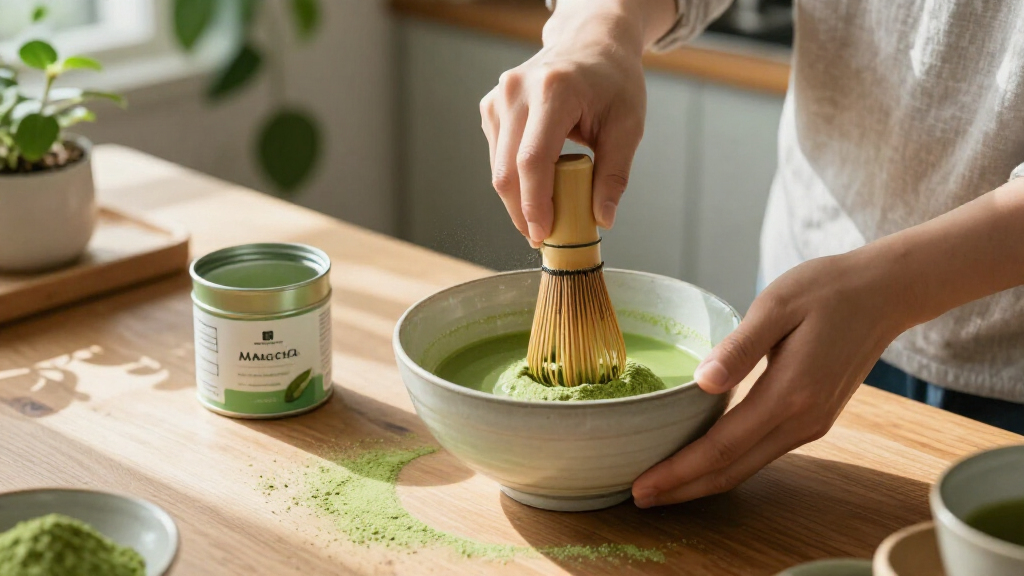
I compared the lineup by how well each product’s stated grade, origin, format, and package size fit common matcha uses: whisked tea, milk-based drinks, baking, and frequent bulk preparation. I gave more weight to a clearly defined use case than to a large package or a premium-sounding label. Small ceremonial-style packs, culinary bags, single-serve sachets, and latte mix solve different problems, so I judged each against the job it appears designed to do rather than treating them as interchangeable.
The order reflects versatility and practical fit first, followed by the strength of the product’s positioning for a more specific buyer. I also considered how package size affects freshness management, whether the format makes preparation easier, and whether the product offers flexibility across recipes. Since the product names alone do not establish details such as harvest date, milling method, or flavor profile, I do not treat those as verified advantages. Each pick has a tradeoff: buyers should match its stated purpose to their own routine before choosing.
| matcha tea powder | Origin |
|---|---|
| O’s Bubble Ceremonial Matcha P | Kagoshima, Japan |
| Organic Culinary Grade Matcha | — |
| 35°N Matcha Powder for Baking | — |
| Jade Leaf Organic Culinary Gra | — |
| Organic Matcha Green Tea Powde | — |
| Organic Japanese Matcha Green | Japanese sourced |
| Satoen Honyama Ceremonial Matc | Shizuoka, Japan |
| Naoki Superior Blend Matcha | Uji, Kyoto, Japan |
| YAMAEI Matcha Powder | Shizuoka, Japan |
| PerfectTed Ceremonial Grade Ja | Japan |
| Aiya Matcha To Go Ceremonial G | Japan |
| Micro Ingredients Organic Japa | Japan |
| FGO Organic Matcha Green Tea P | — |
| Matcha DNA Organic Matcha Gree | — |
| Jade Leaf Matcha Latte Mix | — |
Factors to Consider When Choosing Matcha Tea Powder
Before choosing a bag, I’d settle three things: how you’ll prepare the matcha, how quickly you’ll use it, and whether you want pure powder or a prepared mix. Those choices can matter more to your day-to-day experience than a grade label alone. These factors help prevent common mismatches, like buying a large culinary bag for occasional plain tea or expecting a sweetened latte mix to behave like pure matcha.
Choose the grade for how you’ll drink it
Matcha described as ceremonial is generally positioned for drinking on its own, while culinary grade is commonly chosen for recipes and drinks with milk or other strong flavors. Labels are not a universal quality standard, so I would treat them as a starting point rather than a guarantee of taste. If plain whisked tea is your priority, look for clear sourcing and product details alongside the grade. For baking, a culinary powder may be the more practical choice because you can use it in batter, frosting, or smoothies without paying for features you may not notice once other ingredients are added. A frequent mistake is assuming one grade will excel equally in every use. Pick for your main routine, then check whether the powder’s stated use supports occasional secondary uses.
Treat origin and harvest claims as clues, not promises
Japanese origin and first-harvest wording can help narrow a search, but neither label alone tells you exactly how a powder will taste or how it was processed. Compare what the packaging actually specifies, including origin, grade, ingredients, and any harvest information. If a listing leaves key details unclear, avoid filling the gaps with assumptions based on attractive terminology. This matters most when you plan to drink matcha plain, where the powder is the main flavor rather than one ingredient among many. For a latte or dessert, the difference between a more delicate and a stronger profile may be less central. I’d pay for a more specific product description only when those details matter to your intended preparation.
Size your package to your pace
A large bag can make sense if matcha is part of your daily routine or if you use it across drinks and recipes. For occasional tea drinkers, a smaller container or single-serve pack can reduce the chance of leaving a substantial amount unused. Matcha is a finely ground tea, so air, moisture, light, and heat can diminish its freshness after opening. Check the package’s resealability and storage directions, then plan to close it promptly and keep it stored as directed. Buying in bulk just because the format appears economical can backfire when use is slow. I’d estimate how often you’ll prepare matcha before choosing between the small ceremonial tins, 4-ounce and 16-ounce bags, and one- or two-pound options.
Separate pure powder from latte mixes
Pure matcha powder gives you control over sweetness, strength, and what else goes into the cup. A latte mix may simplify preparation, but its ingredients and flavor balance can differ from those of plain tea powder. Read the ingredient list rather than assuming a product called a matcha latte mix is simply matcha in a different package. If you like adjusting milk, sweetener, or matcha intensity yourself, a pure powder is the more flexible buy. If convenience matters more than recipe control, a mix can be a useful shortcut. The tradeoff is that a mix may not suit baking or traditional whisked tea as neatly as an unsweetened powder.
Match format to preparation and travel
Single-serve sachets can reduce measuring and make portions easy to carry, while a loose powder bag is easier to adapt for different drink sizes and recipes. A kit with a shaker may appeal to someone who wants a simple mixing tool, though it is a different preparation experience from whisking matcha in a bowl. Before choosing a travel format, check whether the pack includes only powder or also a mixing accessory, and consider what liquid and equipment you’ll have nearby. Convenience can help a beginner build a routine, but pre-portioned servings offer less flexibility than scooping from a bag. For home use, the best format is the one that fits your actual preparation habit, not the one with the most accessories.
Think about flavor strength in recipes
Milk, sugar, chocolate, and baked ingredients can soften or compete with matcha’s flavor, so a powder intended for culinary use may be a sensible choice for recipes. For plain tea, the same assertive character may be less appealing if you prefer a gentler cup. Recipe type also matters: a small amount in a smoothie has different demands from a cake where matcha should remain recognizable. Start with the quantity a recipe calls for and adjust in small increments, since adding extra powder can change bitterness as well as color. A common mistake is choosing a powder by color alone; appearance does not fully predict flavor or suitability. If your main use is baking, prioritize clear culinary positioning and a package size you can use while fresh.
Frequently Asked Questions
Can I use culinary-grade matcha for a plain cup of tea?
You can whisk culinary-grade matcha with water, but it is generally positioned for recipes and mixed drinks rather than as a dedicated plain-tea choice. The resulting cup may not match the flavor or texture you want when drinking matcha on its own. If plain tea is your main routine, compare products sold for that use and look for clear sourcing and product details. If you mostly make lattes and only occasionally drink it plain, a culinary powder may still be a practical compromise. The best choice depends on which preparation you make most often.
Should I buy a one- or two-pound bag if I drink matcha every day?
Daily use makes a large bag more plausible, but the right size depends on how much you prepare and whether you also use matcha in recipes. Once opened, powder needs protection from air, moisture, light, and heat, so a big package is not automatically the best fit. Think about how quickly you can use it while maintaining the storage directions on the label. If your use is limited to one small serving a day, a smaller pack may be easier to finish fresh. Bulk makes the most sense when your routine is consistent and the package can be stored well.
Is a ceremonial-grade label enough to choose a matcha for drinking?
No. The label helps identify the product’s intended use, but it does not tell you everything about origin, harvest, processing, or flavor. Check the product details for information that matters to you, and be cautious about assuming a particular taste from the grade name alone. If you plan to drink it plain, those details have a larger effect on your choice than they would in a sweetened latte. For mixed drinks, versatility and ease of preparation may matter more. I’d use the label as one comparison point, not as a complete quality verdict.
Are single-serve matcha packets a good choice for travel?
They can be convenient when you want pre-portioned servings and would rather not carry a larger bag or measure powder on the go. Check whether the packet requires a whisk or shaker, and whether you will have a way to mix it smoothly where you’re headed. A kit that includes a mini shaker may reduce the equipment you need, while sachets without a tool may suit travelers who already have a mixing method. Packets are less flexible if you like changing the strength or serving size. For regular home preparation, a loose bag generally offers more control.
What should I choose if I want matcha for both lattes and baking?
A pure culinary-grade powder is usually the more flexible starting point because you can measure it into both drinks and recipes. A latte mix may be quick for a prepared drink but can limit your control over sweetness and may not work as cleanly in baking. Consider the package size based on how often you expect to use it in each way. If plain whisked tea is also a priority, you may prefer a separate small pack intended for drinking rather than asking one powder to cover every purpose. Matching the product to your most frequent use helps keep the choice practical.
Conclusion
For the broadest range of everyday uses, I’d start with Naoki Superior Blend Matcha as the best overall pick in this comparison. Jade Leaf Organic Culinary Grade is the best value-oriented choice for buyers who mainly make recipes and mixed drinks, while the larger culinary bags make more sense for frequent, high-volume use. For a premium-leaning Japanese-origin option, consider Satoen Honyama; for a beginner who wants portions ready to go, O’s Bubble’s kit or Aiya Matcha To Go offers a simpler format. If baking is the specific goal, compare 35°N with the larger culinary powders; for a ready-made latte routine, choose Jade Leaf Matcha Latte Mix rather than expecting it to work like pure powder. My final filter would be your main preparation, how quickly you’ll use the package, and how much control you want over each cup.
Halloween Picks

15-Foot Halloween Pumpkin Inflatable with LED Lights and Air Blower

Kalolary 11 ft Halloween Inflatable Archway Ghost House Tunnel

MGparty 14.5 ft Halloween Inflatable Walk-In Pumpkin House with LED Lights
As an affiliate, we earn on qualifying purchases.