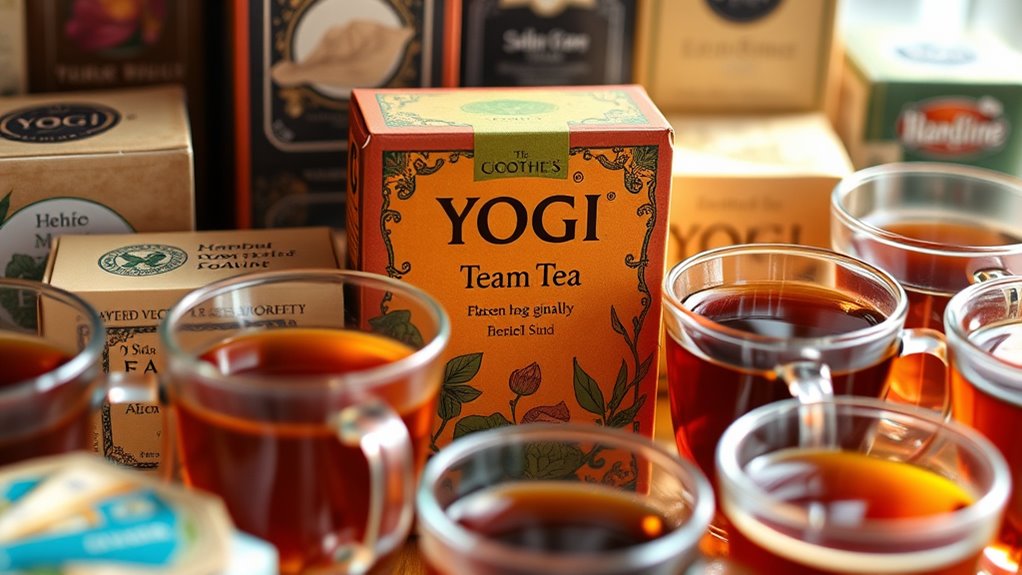

Yogi Tea differs from traditional teas by focusing on herbal blends designed to support health and overall well-being, rather than just flavor or caffeine content. While traditional teas often highlight leaves like black or green tea, Yogi uses herbs like ginger, chamomile, and turmeric to create targeted wellness benefits. Their blends are more complex, emphasizing herbal synergy for holistic support. Keep exploring to discover how these unique infusions can enhance your daily wellness routine.
Key Takeaways
- Yogi Tea focuses on herbal blends designed for health benefits, whereas traditional teas like black or green prioritize flavor and caffeine content.
- Yogi emphasizes herbal synergy and targeted wellness support, transforming tea drinking into a holistic health experience.
- Many Yogi teas are caffeine-free or lower in caffeine, unlike traditional black or green teas which naturally contain caffeine.
- Yogi blends incorporate specific herbs to promote immunity, relaxation, or digestion, while traditional teas rely mainly on tea leaves for flavor.
- Proper brewing techniques are essential for extracting herbal benefits in Yogi teas, whereas traditional teas typically require different steeping methods.

When it comes to choosing a tea, Yogi Tea stands out for its unique blend of herbal ingredients and wellness-focused approach. You’ll notice that Yogi’s herbal blends are carefully crafted to promote health and balance, setting them apart from many traditional teas. Unlike standard black or green teas that focus mainly on flavor and caffeine content, Yogi emphasizes herbal synergy, combining ingredients like ginger, turmeric, licorice, and chamomile to create distinctive flavor profiles. These blends aren’t just about taste; they’re designed to support your well-being, making each cup an experience that nurtures both body and mind.
Yogi Tea blends herbal ingredients to promote health and balance, creating wellness-focused, distinctive flavor profiles.
As you explore Yogi’s offerings, you’ll find that their flavor profiles are quite varied, catering to different preferences and needs. For instance, some blends are warming and spicy, like their Ginger Tea, which features a lively combination of ginger root with hints of cinnamon and black pepper. Others are soothing and calming, such as their Chamomile Night, with gentle floral notes that help you unwind. You might also encounter more complex profiles, like their Echinacea Immune Support, which balances herbal bitterness with a touch of sweetness to make the health benefits more palatable. These herbal blends are thoughtfully designed, so you get a harmonious balance of flavors that appeal to your palate while delivering targeted wellness benefits.
Compared to other teas, Yogi’s focus on herbal blends means you’re often drinking more than just leaves steeped in hot water. Many traditional teas, like black or green varieties, rely on their specific leaves for flavor, but they don’t typically have the added herbal ingredients aimed at supporting health. Yogi’s approach transforms tea drinking into a holistic experience, where each sip can contribute to your overall wellness. This makes it easier to incorporate healthful herbs into your daily routine, especially if you prefer herbal infusions that are naturally caffeine-free or lower in caffeine than typical teas.
While other brands might offer herbal teas, Yogi’s signature is their consistent blending philosophy. They intentionally combine herbs to produce specific effects—calming, energizing, or immune-boosting—so you’re not just drinking a pleasant beverage but also supporting your health goals. Their flavor profiles tend to be more complex and layered, offering more than just a simple herbal taste. Instead, you get a curated experience that marries flavor and function, making Yogi Tea a standout choice for those seeking health-oriented herbal blends with distinctive, memorable flavors. Additionally, accurate water temperature control during brewing can help maximize the herbal infusion, ensuring optimal extraction of flavors and benefits.
Frequently Asked Questions
Are Yogi Teas Suitable for Children?
Yogi teas are generally not recommended for children due to concerns about children’s health and caffeine safety. Many Yogi teas contain herbs and ingredients that may not be suitable for young kids, especially in large amounts. It’s best to consult with a pediatrician before giving any herbal tea to children, as their developing bodies can be more sensitive to certain herbs and caffeine. Always prioritize safe and age-appropriate options for your child’s health.
How Long Does Yogi Tea Stay Fresh?
You’ll find that Yogi Tea stays fresh for about 1-2 years if stored properly. Don’t worry about losing flavor quickly—you can preserve freshness longer by keeping the tea in an airtight container, away from heat and sunlight. Proper storage duration is key to maintaining its quality, so always check the package for a best-by date. Staying mindful of these tips guarantees your tea remains flavorful and aromatic longer.
Can Yogi Tea Be Used in Cooking?
Yes, you can use Yogi Tea in cooking to create flavorful infusions. Simply steep the tea bags or loose leaves in hot water, then use the infusion to enhance your dishes. It adds a unique flavor and depth, making your recipes more aromatic. Whether you’re making soups, stews, or desserts, incorporating Yogi Tea as a tea infusion can elevate your culinary experience and provide a natural flavor enhancement.
Are There Any Allergens in Yogi Tea?
You’ll find that Yogi Tea generally contains allergenic ingredients like herbs, spices, or natural flavorings, so check the label if you’re sensitive. While most flavor variations are free from common allergens, some blends might include ingredients like nuts or soy. Always read ingredient lists carefully, especially if you have allergies, to avoid any adverse reactions. Yogi Tea offers diverse options, but being cautious helps you enjoy your tea safely.
Does Yogi Tea Contain Caffeine?
You’ll be pleased to know that Yogi Tea generally contains caffeine, especially in its traditional chai and black tea blends. notably, the caffeine content varies across herbal variations, with some blends being caffeine-free. On average, a cup of Yogi Tea has about 20-40 milligrams of caffeine, making it an ideal choice if you’re looking to enjoy tea without too much stimulation. Always check the label for specific caffeine details.
Conclusion
So there you have it—Yogi Tea might not be the royal flush of teas, but it sure knows how to dress up a humble cup. Whether you’re after exotic blends or just a caffeine kick, it’s got your back. Sure, other teas might offer more variety or a cheaper buzz, but where’s the fun in that? Embrace the herbal adventure, and remember: life’s too short for boring tea—so sip boldly, my friend.