To collect vintage Japanese iron tetsubin, look for signs of authentic craftsmanship like slight imperfections, unique patterns, and maker’s marks on the bottom. Focus on pieces that show a natural patina, indicating age and use, and steer clear of reproductions. Genuine tetsubin reflect regional or period-specific styles, making each one unique. If you keep exploring these features, you’ll uncover the stories behind each piece and find authentic artifacts of Japanese tradition.
Key Takeaways
- Identify authentic vintage tetsubin by examining maker’s marks, signatures, and signs of hand-forging like imperfections.
- Recognize regional styles and motifs that reflect traditional Japanese craftsmanship and cultural heritage.
- Assess the metal quality, noting the natural patina and even heat distribution for functional value.
- Verify age and authenticity through provenance, craftsmanship details, and signs of wear consistent with vintage pieces.
- Appreciate the cultural and ritual significance, enhancing collection value and connection to Japanese artisan traditions.
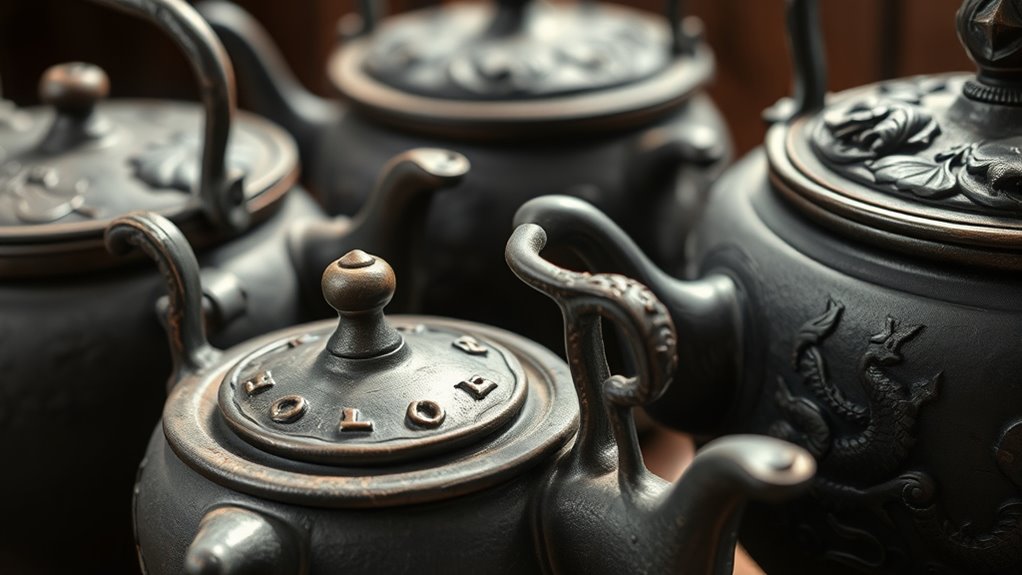
If you’re passionate about Japanese tea culture or keen on building a unique collection, vintage Japanese iron tetsubin offer a fascinating glimpse into traditional craftsmanship. These ornate, historic kettles aren’t just functional; they’re works of art that embody centuries of iron craftsmanship. When you consider adding a tetsubin to your collection, you’re embracing a piece of cultural heritage that enhances your tea brewing experience and elevates your appreciation for artisanal skill.
The beauty of vintage tetsubin lies in their construction. Each piece is carefully forged from iron, showcasing the mastery of Japanese blacksmiths. The iron craftsmanship involved ensures durability, heat retention, and an even distribution of heat—crucial qualities for tea brewing. Unlike modern teapots, these kettles develop a natural, textured patina over time, which many collectors find adds to their charm and value. As you handle a vintage tetsubin, you’ll notice the craftsmanship is meticulous, with intricate patterns, embossed motifs, or traditional designs that reflect regional styles or historical periods. This attention to detail makes each piece unique, giving you a tangible connection to Japanese artisan traditions.
When you use a vintage tetsubin for tea brewing, you experience more than just making tea; you engage in a ritual that’s centuries old. The iron’s excellent heat retention helps you achieve a consistent, gentle boil, which is essential for brewing high-quality Japanese teas like sencha or gyokuro. The process itself becomes meditative, emphasizing patience and mindfulness. Handling a well-crafted tetsubin also means respecting its heritage—avoiding harsh scrubbing, using it gently, and appreciating how it ages gracefully over time. Many collectors cherish the natural patina that develops, seeing it as a badge of authenticity and history. Additionally, practicing mindfulness during the tea ritual can deepen your connection to the tradition and enhance the overall experience.
If you’re hunting for vintage Japanese iron tetsubin, look for signs of authentic craftsmanship. Hand-forged pieces often display slight imperfections or variations, which are signs of true artisanal work. Authentic vintage tetsubin may also bear maker’s marks or signatures, often stamped or engraved on the bottom. Be cautious with reproductions—some modern pieces mimic the traditional look but lack the quality of true vintage items. When you find an authentic piece, you’re not just acquiring a kettle; you’re holding a piece of Japanese history, a tribute to enduring iron craftsmanship, and a perfect vessel for elevating your tea brewing ritual.
Top picks for "collector vintage japanese"
Open Amazon search results for this keyword.
As an affiliate, we earn on qualifying purchases.
Frequently Asked Questions
How Can I Tell if a Tetsubin Is Authentic?
To tell if a tetsubin is authentic, you need to examine its craftsmanship and authenticity markers. Look for detailed, hand-finished features like intricate patterns and smooth seams, which indicate quality craftsmanship. Check for clear, stamped maker’s marks or inscriptions that identify the origin and period. Authentic vintage tetsubin often have a solid weight and natural rust patina, showing age without excessive corrosion. Trust these markers to verify its authenticity.
What Is the Best Way to Clean Vintage Tetsubin?
Gently, you should explore polishing techniques that revive your vintage tetsubin’s charm. Avoid harsh cleaning solutions that could harm its surface. Instead, use a soft cloth and a mild, non-abrasive cleaner to remove tarnish and buildup. Warm water can help loosen grime, but never soak it. Regular, tender care preserves its beauty, ensuring your tetsubin remains a treasured piece for years to come.
Are There Specific Brands Known for Quality Tetsubin?
You’ll find that certain brands are renowned for their quality tetsubin, thanks to strong brand reputation and high craftsmanship standards. Brands like Iwachu and Nagoya Tetsubin are highly regarded because they maintain traditional techniques and produce durable, beautifully crafted kettles. When selecting a tetsubin, it’s best to look for those with a solid reputation for quality and craftsmanship, ensuring you get a piece that’s both functional and collectible.
How Do I Date a Vintage Japanese Tetsubin?
To date your vintage Japanese tetsubin, examine its historical markings and craftsmanship. Look for stamped or engraved symbols, which can indicate the period or maker. Pay attention to manufacturing techniques—older tetsubin often feature hand-hammered surfaces and traditional riveted handles. Research any markings you find, comparing them with known historical identifiers. This approach helps you estimate its age and authenticity, giving you a clearer understanding of its provenance.
Can Tetsubin Be Used for Boiling Water on Modern Stoves?
You can use a tetsubin for boiling water on modern stoves, but you should consider tetsubin safety and modern stove compatibility. Make sure the tetsubin is made of high-quality, heat-resistant iron, and avoid sudden temperature changes to prevent cracking. Keep in mind that some vintage tetsubin may not be suited for direct heat, so it’s wise to check the manufacturer’s instructions or consult an expert before using it regularly on your stove.
Conclusion
As you set out on your journey to collect vintage Japanese iron tetsubin, remember that each piece is like a chapter in a story, rich with history and craftsmanship. With keen eyes and a passionate heart, you’ll uncover treasures that turn your collection into a living museum. Embrace the hunt, cherish the details, and let these timeless kettles pour warmth and character into your life—truly a collector’s paradise waiting to be discovered.