Vacuum-sealed bags save space by compressing soft, bulky items and are great for long-term storage, but they limit airflow, increasing mold risk if moisture is present. Traditional caddies offer easy access and ventilation but take up more space. Your choice depends on whether you prioritize maximizing storage or quick access, and the environment where you’ll store your items. Keep exploring to discover which method suits your needs best.
Key Takeaways
- Vacuum-sealed bags maximize space savings by compressing items, unlike traditional caddies that store items uncompressed.
- Caddies promote air circulation, reducing moisture and mold risk, whereas vacuum bags limit airflow, suitable for dry environments.
- Vacuum-sealed bags are ideal for long-term storage of soft, bulky items, while caddies are better for easy access and breathable storage.
- Environment impacts choice: vacuum bags need dry, climate-controlled spaces; caddies are more vulnerable to dust and pests.
- Combining both methods offers optimized storage—space efficiency with easy access and proper airflow.
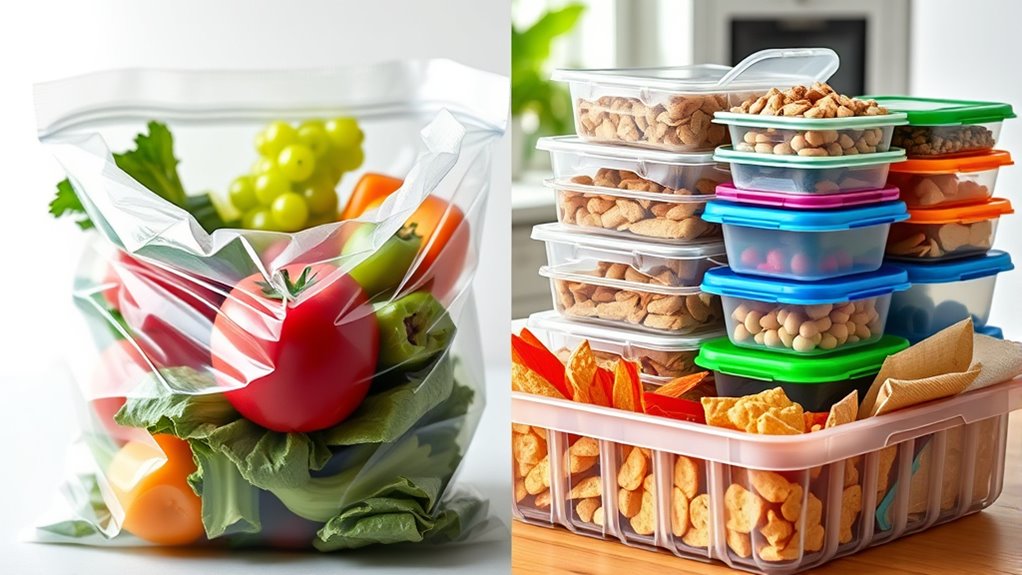
When it comes to organizing and preserving your belongings, choosing the right storage method can make a big difference. Two popular options are vacuum-sealed bags and traditional caddies. Each has its advantages and drawbacks, especially when it comes to air circulation and moisture control. Understanding these differences helps you decide which method suits your needs best.
Vacuum-sealed bags excel at saving space. By removing air, they compress items, making storage more efficient, particularly for bulky items like clothing, bedding, or soft toys. However, because vacuum sealing minimizes air, it also limits air circulation around your belongings. This lack of airflow can become a concern if moisture gets trapped inside, as it increases the risk of mold, mildew, or unpleasant odors over time. If you’re storing items in a humid environment, vacuum-sealed bags might require extra precautions, such as adding moisture absorbers or storing them in climate-controlled spaces.
Traditional caddies, on the other hand, often feature open or semi-open designs with vents or gaps that promote air circulation. This airflow helps prevent moisture buildup, reducing the chances of mold and mildew growth. Caddies are especially useful for storing items that need to breathe, like seasonal clothing, linens, or items stored in damp areas. Their design also makes it easier to access contents quickly without having to reseal or unpack everything. However, because of their open nature, traditional caddies don’t offer the same moisture protection as vacuum-sealed bags. They’re more vulnerable to dust, pests, and humidity, so they work best in dry, clean environments. It’s also important to consider air circulation when selecting your storage method to prevent issues related to trapped moisture.
When choosing between vacuum-sealed and traditional caddies, consider your storage environment and the nature of the items. If space efficiency and protection from pests are priorities, vacuum-sealing can be advantageous, but you’ll need to make certain the storage area remains dry. For items that benefit from airflow or are stored in less controlled environments, caddies provide better moisture management and easier access. Both methods serve different purposes, and sometimes, combining them might be your best bet—using vacuum-sealed bags for long-term, space-saving storage and caddies for everyday access and breathability.
Ultimately, your choice boils down to balancing space, moisture control, and ease of access. Pay attention to your storage conditions and the specific needs of your belongings. By doing so, you’ll keep everything in the best condition possible and streamline your organization efforts.
Frequently Asked Questions
How Long Can Vacuum-Sealed and Traditional Caddies Preserve Items?
You wonder how long vacuum-sealed and traditional caddies preserve items. Vacuum-sealed storage offers better food safety and longer shelf life, often extending freshness by weeks or months. Traditional caddies are convenient but typically keep items fresh for only a few days to a week. For maximum storage efficiency, vacuum sealing is ideal for long-term preservation, while traditional caddies suit short-term needs. Choose based on how long you need to store your items.
Are Vacuum-Sealed Caddies Suitable for All Types of Food?
Imagine storing fresh berries in a vacuum-sealed caddy, keeping them crisp and safe. Vacuum-sealed caddies are great for many foods, especially produce and meats, because they enhance food safety and moisture resistance. However, they aren’t suitable for all foods, like leafy greens or soft cheeses, which need airflow to stay fresh. Always consider the food’s moisture content and storage needs before choosing vacuum sealing.
What Is the Cost Comparison Between Vacuum-Sealed and Traditional Caddies?
When comparing costs, you’ll notice a pricing disparity between vacuum-sealed and traditional caddies. Vacuum-sealed options often have higher upfront costs, but they can save you money long-term by extending food freshness and reducing waste. Traditional caddies are usually cheaper initially but may lead to increased expenses over time due to spoilage. Consider your storage needs and budget to determine which option offers better long-term value for you.
Do Vacuum-Sealed Caddies Require Special Maintenance or Accessories?
Did you know that 85% of users find vacuum-sealed caddies easier to maintain? These caddies do require some special maintenance, like regularly replacing the vacuum seal or checking for leaks, but overall, they’re low-maintenance. You’ll need compatible accessories, such as replacement seals or pumps, to keep them functioning properly. As long as you follow the manufacturer’s instructions, maintaining vacuum-sealed caddies is straightforward and hassle-free.
Which Storage Method Is More Environmentally Friendly?
You might wonder which storage method is more eco-friendly. Vacuum-sealed caddies often have recyclability benefits because they’re made from durable plastics that can be recycled if disposed of properly. Traditional caddies, usually made from sustainable materials like bamboo or metal, offer material sustainability. Choosing one over the other depends on your focus—recyclability benefits or long-term material sustainability—allowing you to make a more environmentally conscious decision.
Conclusion
Ultimately, choosing between vacuum-sealed and traditional caddies is like picking between a sturdy ship and a sleek sailboat—each has its strengths. While vacuum-sealed options lock in freshness like a treasure chest, traditional caddies are more like open waters, ready for quick access. Think of your storage choice as a guiding star—navigate your needs wisely, and your supplies will stay safe and ready, turning everyday storage into a smooth voyage.