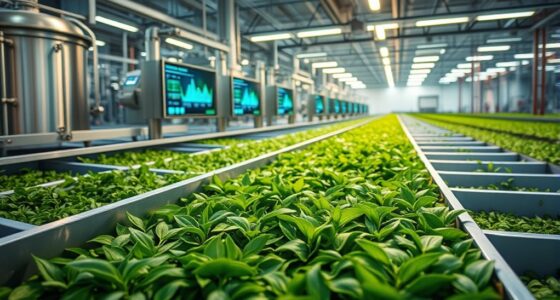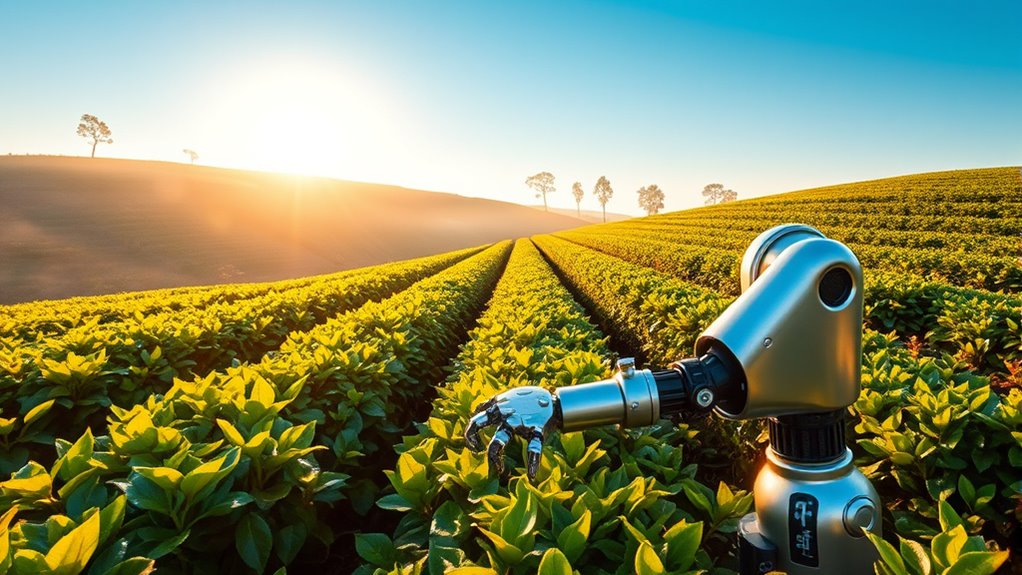

Tea farming robots dramatically increase yields responsibly by using advanced sensors and AI to precisely identify the best harvest times and select only ripest leaves, reducing waste and avoiding plant damage. They work tirelessly for higher efficiency, lowering labor costs while maintaining quality. Regular automated maintenance keeps them running smoothly, ensuring consistent productivity. Designed for sustainability, these robots minimize environmental impact and operate in diverse conditions. If you keep exploring, you’ll discover how these innovations can transform your tea farm.
Key Takeaways
- Advanced sensors and AI enable precise, selective harvesting of ripest tea leaves, reducing waste and improving quality.
- Robotic deployment increases yield by automating labor-intensive tasks and operating continuously without fatigue.
- Regular automated diagnostics and proactive maintenance ensure robots function efficiently, minimizing downtime and costly repairs.
- Consistent harvesting speed and accuracy enhance overall productivity while maintaining sustainable farming practices.
- Energy-efficient robot design and optimized movement reduce environmental impact, supporting responsible and eco-friendly tea farming.

Have you ever wondered how technology is transforming traditional tea farming? It’s changing the way you approach harvesting, making the process more efficient and sustainable. Tea farming robots are now equipped with advanced systems that allow for precise harvesting techniques, which means picking only the ripest leaves while avoiding damage to the plants. These robots use sensors and AI to identify ideal harvest times, reducing waste and ensuring consistently high-quality leaves. Instead of relying solely on manual labor, you can deploy these machines to work tirelessly, increasing your overall yield without overexerting your workforce or harming the environment. Incorporating goal setting and strategic planning can further optimize your robotic deployment for maximum productivity. When it comes to maintaining these high-tech machines, robotic maintenance becomes a crucial part of the operation. Regular upkeep ensures that your robots perform at peak efficiency, preventing breakdowns and costly repairs. Automated diagnostics help identify issues early, so you can schedule maintenance proactively. This minimizes downtime and keeps your harvesting schedule on track. You, as a tea farmer, benefit from reduced labor costs and fewer disruptions, allowing you to focus on other aspects of your farm. The integration of robotic maintenance also means that these machines can often self-diagnose and alert you when attention is needed, streamlining your management responsibilities. Furthermore, the use of robotics in harvesting techniques offers a level of consistency that manual labor often struggles to achieve. Human harvesters, while skilled, can vary in speed and accuracy, especially during long harvest periods. Robots, on the other hand, can work continuously without fatigue, maintaining a steady pace and precision. This consistency not only enhances the quality of your tea leaves but also improves your overall productivity. You’ll find that the ability to automate repetitive tasks frees up time for you to focus on quality control, research, or expanding your farm’s capacity. In addition, these robotic systems are designed with sustainability in mind. They are often energy-efficient and can be programmed to minimize unnecessary movement, reducing your farm’s carbon footprint. Some models are even designed to operate in diverse weather conditions, ensuring that your harvest isn’t delayed by environmental factors. As you adopt robotic harvesting techniques, you’re embracing a future where efficiency goes hand-in-hand with environmental responsibility. Proper robotic maintenance further supports this goal by extending the lifespan of your equipment and reducing waste associated with frequent replacements.
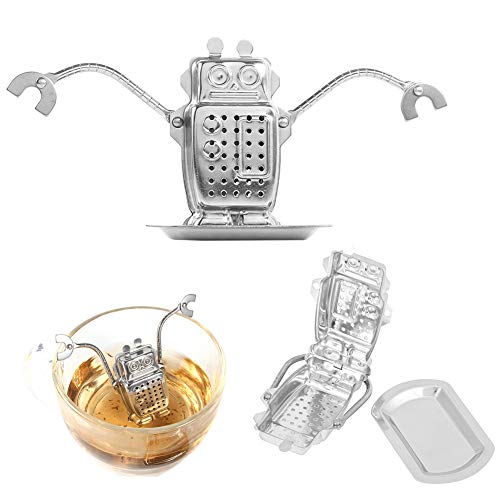
Robot Tea Infuser for Loose Leaf Tea, Cute Stainless Steel Tea Strainer & Steeper, Fine Mesh Tea Ball Filter with Arms to Hang on Mug, Fun Novelty Kitchen Gadget & Gift for Tea Lovers (Robot)
ADORABLE ROBOT DESIGN & A PERFECT GIFTP: Say goodbye to boring tea balls! Our charming robot tea infuser…
As an affiliate, we earn on qualifying purchases.
As an affiliate, we earn on qualifying purchases.
Frequently Asked Questions
What Are the Initial Costs of Implementing Tea Farming Robots?
When considering the initial costs of implementing tea farming robots, you should do a thorough cost analysis and technology investment review. Expect expenses for purchasing the robots, which can range widely depending on features and capacity. You’ll also need to factor in costs for training, maintenance, and integration into existing systems. While the upfront investment might seem high, the long-term benefits often outweigh these costs through increased efficiency and yields.
How Do Robots Impact Tea Plant Biodiversity?
Think of robots as busy bees in your tea garden. They can support tea plant diversity by performing robotic pollination, ensuring even the shyest plants get pollinated. However, over-reliance on automation might limit natural interactions, potentially reducing overall biodiversity. While robots help maintain healthy tea plant diversity, it’s essential to balance technological use with preserving natural pollinators to keep your garden vibrant and resilient.
Are Tea Farming Robots Suitable for Small-Scale Farms?
You might wonder if tea farming robots fit small-scale farms. They can be suitable if you consider robot maintenance and crop monitoring needs. Smaller farms may benefit from robots that are easy to maintain and improve crop health efficiently. However, initial costs and space requirements matter. If your farm can handle these factors, robots could boost productivity without overwhelming your resources. Just verify the technology aligns with your farm’s scale and needs.
What Training Is Required for Farmers to Operate These Robots?
Imagine a farmer confidently guiding a robot through lush tea fields. To operate these robots, you’ll need proper farmer education on robot operation, including understanding controls, maintenance, and troubleshooting. Training programs often combine hands-on practice with classroom lessons, ensuring you’re comfortable managing the technology. With the right training, you’ll efficiently harness robot capabilities, boosting yields while maintaining responsible farming practices.
How Do Robots Adapt to Different Terrain Types?
You might wonder how robots handle different terrains. These robots use advanced sensors and algorithms to adapt to varying terrain types, enhancing their terrain adaptation. They have enhanced robot mobility features like adjustable wheels, tracks, or suspension systems that allow smooth movement across uneven, hilly, or muddy ground. By constantly sensing the environment, they adjust their actions, ensuring efficient operation regardless of terrain challenges.

Heart Shaped Tea Steeper – Telescopic Loose leafs Infuser, Mesh Spoon, Precision Sugar Flour Sifter, Compact Powdered Sugar Shaker | Tea Preparation Tool with Handy Function for Daily Drink Making
Effortless Flour and Sugar Dispensing: With a function design, the long handle tea filter lets you load sugar…
As an affiliate, we earn on qualifying purchases.
As an affiliate, we earn on qualifying purchases.
Conclusion
Embracing tea farming robots means you’re staying ahead of the curve, boosting yields responsibly, and protecting the environment. These innovations help you work smarter, not harder, proving that a stitch in time saves nine. By adopting this technology, you’re not just keeping up—you’re setting the pace for sustainable agriculture. So, don’t wait for the other shoe to drop; seize the opportunity now and watch your tea farm flourish like never before.

PYPYP Soil Meter, 1000g/0.01g Electric Scales High Accuracy Portabl Digital LCD Balance Scale for Foods Gold Jewelry Tea Weighing Tools for Gardening, Farming
1. High Accuracy: Our Electric Scales are designed with high precision strain gauge sensors, ensuring accurate measurements every…
As an affiliate, we earn on qualifying purchases.
As an affiliate, we earn on qualifying purchases.
tea farm robotic maintenance tools
As an affiliate, we earn on qualifying purchases.
As an affiliate, we earn on qualifying purchases.