

Choosing ethically sourced and sustainable teas guarantees fair wages and good working conditions for farmers while reducing environmental harm. Look for certifications like fair trade and organic, which promote fair livelihoods and eco-friendly farming practices. These labels support biodiversity, soil health, and fair industry standards. By prioritizing transparent brands, you help encourage responsible production and create positive change in the tea industry. Keep exploring to discover how your choices can make a meaningful impact.
Key Takeaways
- Certified organic teas avoid synthetic chemicals, promoting environmental health and sustainable farming practices.
- Fair trade certifications ensure fair wages and decent working conditions for tea farmers and workers.
- Many teas combine organic and fair trade labels, supporting both ecological sustainability and social justice.
- Transparent sourcing and certifications encourage ethical industry standards and consumer trust.
- Sustainable tea production benefits ecosystems, preserves biodiversity, and supports fair livelihoods for communities.
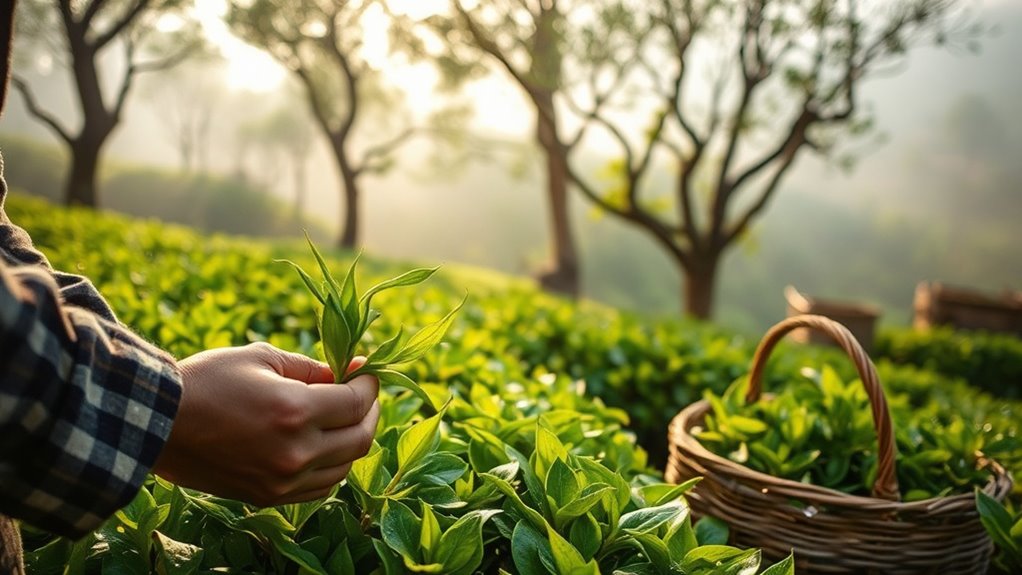
Tea enthusiasts today are increasingly mindful of the ethical and environmental impacts behind their favorite brews. You might find yourself asking how your tea choices affect farmers, ecosystems, and communities around the world. One way to make more responsible choices is by seeking out teas that carry fair trade certifications. These labels ensure that farmers and workers receive fair wages and work under decent conditions. When you buy a fair trade certified tea, you’re supporting equitable trading practices that promote social justice and help lift communities out of poverty. It’s a simple step that makes a significant difference, especially in regions where tea cultivation is a primary source of income. Alongside fair trade labels, organic farming practices are another critical factor to consider. Organic teas are grown without synthetic pesticides, herbicides, or fertilizers, which means fewer harmful chemicals enter the environment and your cup. By choosing organic, you’re not only protecting the health of farm workers but also supporting sustainable agriculture that preserves soil health and biodiversity. These farming methods often involve soil enrichment techniques, crop rotation, and natural pest control, reducing the environmental footprint of tea production. When you opt for organic teas, you’re encouraging farmers to adopt practices that are better for the planet and future generations. It’s important to remember that both fair trade certifications and organic farming practices often go hand in hand. Many certified organic teas also carry fair trade labels, ensuring that the product is both environmentally responsible and ethically produced. Your choice to prioritize these certifications can influence industry standards, encouraging more producers to adopt sustainable and fair practices. Furthermore, by supporting such teas, you’re helping to create a more transparent supply chain, giving consumers like you confidence in where your tea comes from and how it’s made. As a conscious tea lover, you have the power to promote positive change through your purchasing decisions. Seek out brands that openly share their sourcing stories and certifications, and don’t hesitate to ask questions about the origins of your tea. This level of engagement helps build a market that values sustainability and fairness. Additionally, choosing teas grown with sustainable farming practices can significantly reduce the environmental impact of your purchase. Ultimately, your choices can contribute to a more sustainable tea industry, one that respects the environment, supports fair livelihoods, and delivers quality brews. By understanding and prioritizing fair trade certifications and organic farming practices, you’re not just enjoying your favorite beverage—you’re actively supporting a more ethical and sustainable future for tea worldwide.
Frequently Asked Questions
How Can Consumers Verify the Sustainability Claims of Tea Brands?
You can verify sustainability claims by checking if the tea brand participates in third-party audits, which ensure their practices meet ethical standards. Look for transparency in their supply chain, meaning they openly share information about sourcing and production. Research the company’s certifications from reputable organizations, and read reviews or reports to confirm their sustainability commitments. This way, you guarantee your tea choice genuinely supports ethical and sustainable practices.
Are Organic Teas Always More Ethical Than Conventional Teas?
Do organic teas always mean they’re more ethical? Not necessarily. While organic labeling often indicates fewer chemicals and better farming practices, it doesn’t guarantee ethical sourcing or fair labor conditions. You should look for certifications that emphasize ethical sourcing, fair trade, and social responsibility. So, even if a tea is labeled organic, it’s worth researching the company’s practices to ensure you’re supporting truly ethical and sustainable choices.
What Certifications Indicate Ethical and Sustainable Tea Production?
You should look for certifications like Fair Trade, Rainforest Alliance, and UTZ, which indicate ethical and sustainable tea production. These certifications follow strict standards for fair labor practices, environmental protection, and supply chain transparency. When you choose teas with these labels, you support responsible farming that benefits workers and ecosystems, ensuring your tea consumption aligns with ethical principles and promotes sustainability throughout the supply chain.
How Do Fair Trade Practices Impact Tea Farmers’ Livelihoods?
Fair trade practices markedly improve your tea farmers’ livelihoods by ensuring fair compensation for their work. This fair farmer compensation helps farmers invest in better tools, resources, and farm practices, leading to higher-quality tea. Additionally, fair trade supports community development, funding local projects like schools, healthcare, and infrastructure. By choosing fair trade tea, you positively impact farmers’ lives and contribute to sustainable, equitable growth in their communities.
What Are the Environmental Impacts of Different Tea Processing Methods?
You might be surprised to learn that different tea processing methods have varying environmental footprints. For example, traditional withering and rolling produce fewer processing emissions, helping preserve air quality. Conversely, carbon-intensive techniques like firing or drying can markedly increase emissions, impacting climate change. While some methods conserve water and energy, others strain local resources. Your choice of tea can influence these environmental impacts, shaping a more sustainable future.
Conclusion
By choosing ethically sourced and sustainably produced teas, you’re making a positive impact on farmers, the environment, and future generations. Some might say it’s too expensive or inconvenient, but investing in ethical tea guarantees you’re supporting fair labor practices and reducing environmental harm. Your small choice can lead to big change. So next time you brew a cup, remember, your decision can help create a more sustainable and fair world—one sip at a time.