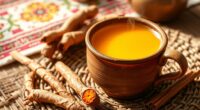
Tea storage containers hold rich cultural significance, reflecting centuries-old traditions, regional identities, and values like respect and craftsmanship. They’re often used in ceremonies to honor purity, harmony, and reverence, and their materials—such as ceramics or lacquer—highlight local artistry. Well-chosen containers showcase personal taste and social status, connecting you to cultural history and family heritage. To discover more about their meaningful roles, explore how these vessels embody traditions and regional pride.
Key Takeaways
- Tea storage containers reflect respect for tea and its preparation customs, embodying cultural and spiritual values.
- Material choices like ceramics, lacquer, or Yixing clay highlight regional craftsmanship and historical influences.
- Well-maintained containers symbolize hospitality, social status, and a host’s attentiveness to guests.
- Their selection and care demonstrate personal taste, cultural awareness, and adherence to traditional practices.
- Containers serve as cultural symbols connecting tea rituals to historical narratives and regional identity.

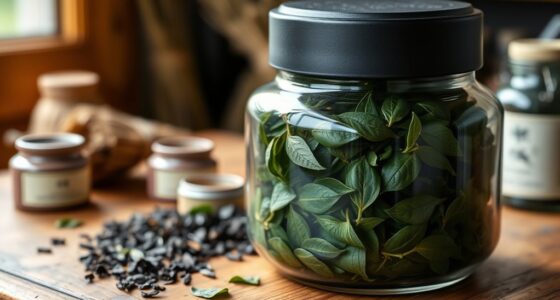
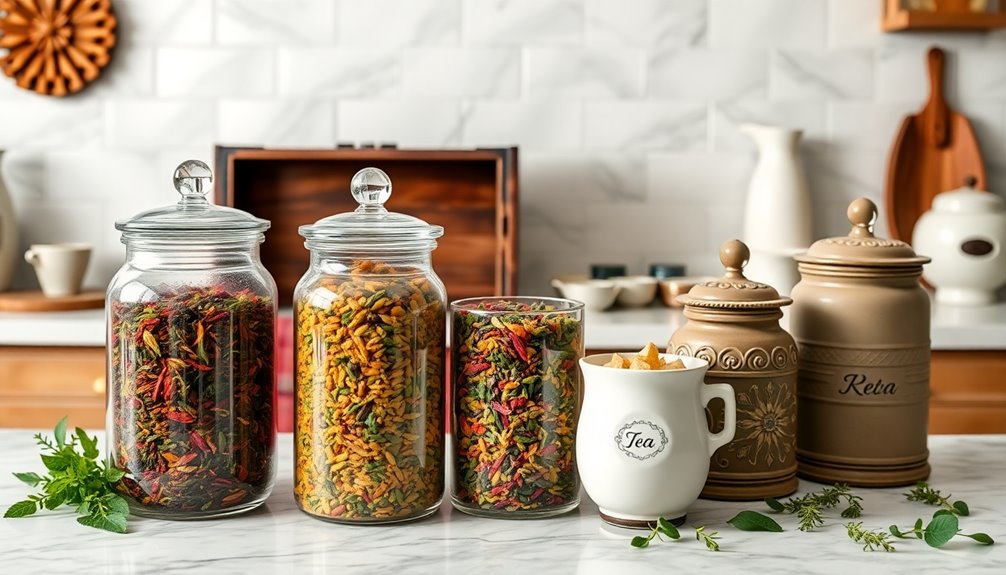
Tea storage containers are more than just practical tools; they hold deep cultural significance across various traditions. In many cultures, how you store tea reflects respect for the beverage itself and the customs surrounding its preparation and consumption. For example, in traditional Japanese tea ceremonies, the storage of tea is a carefully considered practice, emphasizing purity, harmony, and reverence. The containers used are often crafted from specific materials like ceramic or lacquer, chosen for their ability to preserve the tea’s aroma and flavor, which are crucial elements of ceremonial rituals. These containers aren’t just functional; they symbolize the aesthetic values and spiritual focus of the ritual, helping participants connect with centuries-old customs. Similarly, in Chinese tea culture, the choice of storage container can carry regional preferences that highlight local craftsmanship and historical influences. For instance, Yixing clay teapots and containers are highly prized in certain regions for their porous nature, which enhances the aging process and flavor development of teas like oolong and pu-erh. Such regional preferences reveal a deep appreciation for the unique qualities of local materials and techniques, emphasizing the importance of tradition and regional identity in tea culture. Additionally, the material and design of these containers often influence the tea preservation process, ensuring the tea remains fresh over time.
The significance of tea storage containers extends beyond their practical role; they are often regarded as symbols of hospitality, respect, and social status. In many Asian countries, presenting well-stored and carefully kept tea reflects a host’s attentiveness and appreciation for guests. The type of container used can also communicate social standing or personal taste, with ornate or handcrafted pieces often reserved for special occasions. additionally, these containers are sometimes passed down through generations, carrying family history and memories along with the tea stored inside. The way you select and care for your tea storage container demonstrates your understanding of and respect for cultural practices, whether you’re following traditional ceremonial rituals or simply enjoying tea as part of daily life.
In essence, tea storage containers serve as more than mere storage solutions; they embody cultural values, regional preferences, and long-standing traditions. They connect you to a broader cultural narrative, reminding you of the importance of ritual, craftsmanship, and regional identity in every sip. Whether used in formal ceremonies or everyday moments, these containers carry the weight of history and personal significance, making your tea experience not just about taste but also about honoring tradition.
Frequently Asked Questions
How Do Tea Storage Containers Influence Tea Flavor Preservation?
Tea storage containers influence tea flavor preservation by maintaining tea aroma and preventing flavor loss. You should choose containers with airtightness to keep out moisture, light, and air, which can degrade tea quality. When your container seals tightly, it preserves the delicate aroma and flavor of the tea, ensuring each brew remains fresh and vibrant. Properly stored tea stays flavorful longer, making your tea experience more enjoyable.
What Materials Are Traditionally Used for Tea Storage Containers?
You’ll find ceramic craftsmanship at the heart of traditional tea storage containers, often made from porcelain or clay, prized for their beauty and finesse. These materials showcase material durability, guarding your tea against moisture and light. The exquisite craftsmanship guarantees your tea stays fresh, while the sturdy ceramics become almost legendary, protecting the delicate flavors inside. This blend of artistry and resilience makes ceramic containers the ultimate guardians of treasured tea leaves.
Are There Specific Storage Container Designs Linked to Different Cultures?
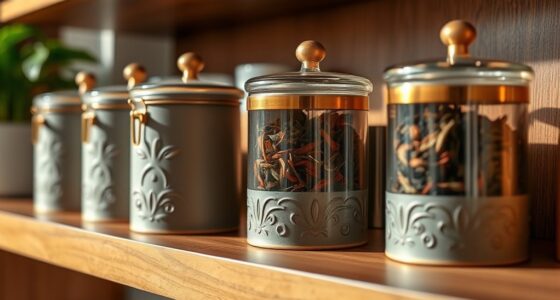
You’ll notice that different cultures have unique storage container designs linked to their traditions. For example, Japanese tea caddies often feature intricate lacquerware, reflecting cultural symbolism of elegance and respect. Chinese tea tins might have ornate patterns and vibrant colors, symbolizing prosperity. These design variations aren’t just aesthetic; they embody cultural values, history, and symbolism, making each container a meaningful part of tea ceremonies and cultural identity.
How Do Cultural Beliefs Affect Tea Storage Practices?
Ever wonder how beliefs shape your tea storage? Cultural symbolism deeply influences your tea ritual, affecting container choices to honor tradition or spiritual values. In some cultures, storing tea in specific containers signifies respect or purity, while others see it as a way to preserve flavor. Your practices reflect these beliefs, ensuring that each sip connects you to centuries of cultural significance and shared identity through thoughtful storage.
What Is the Historical Evolution of Tea Storage Container Designs?
You see, the historical evolution of tea container designs reflects changing tastes and craftsmanship. Early containers used simple materials, but over time, intricate craftsmanship and craftsmanship influenced designs. Influences from Chinese porcelain and Japanese lacquerware shaped elegant, functional containers, while Western styles added practicality. Today, you find a blend of traditional craftsmanship and modern innovation, showcasing how historical design influences continue to inspire tea container craftsmanship, blending beauty with functionality.
Conclusion
In the end, your choice of tea storage containers isn’t just about keeping tea fresh; it’s a reflection of your respect for tradition and culture. When you select the right container, you’re honoring centuries of craftsmanship and philosophy. Think of it as guarding a treasure more valuable than gold—because the way you store your tea reveals your connection to history, art, and the soul of tea itself. Your container becomes a vessel of cultural legacy.