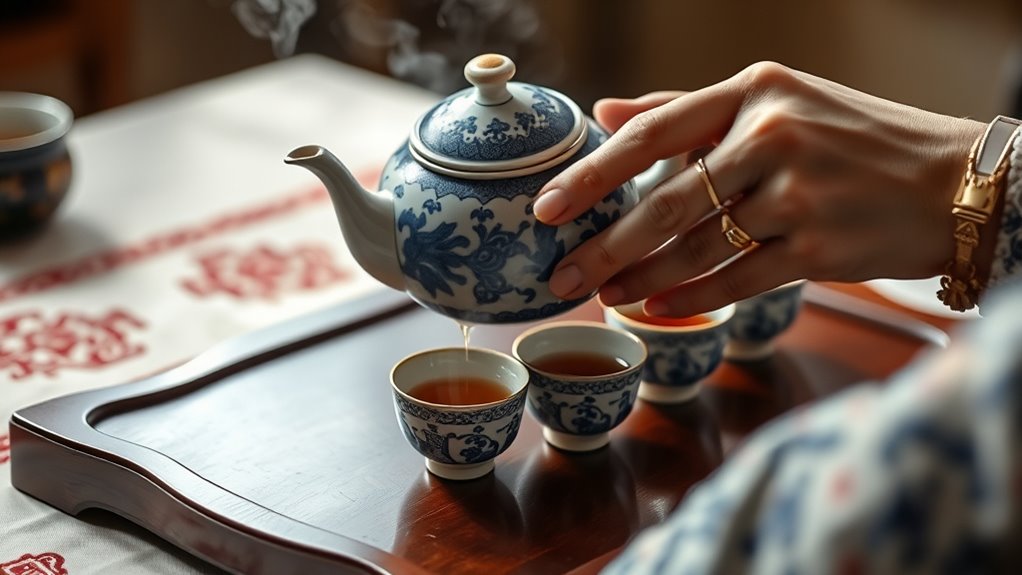

In tea serving etiquette, you show respect and cultural appreciation through precise gestures like using both hands, bowing slightly, and serving slowly. Every action, from handling teaware to presenting the cup, carries symbolic meaning—reflecting values like humility, patience, and harmony. The choice of items and the way you serve reinforce traditions and preserve cultural identity. To discover more about these meaningful customs, continue exploring the rich symbolism behind each step.
Key Takeaways
- Rituals in tea serving embody cultural values like respect, humility, and harmony through precise gestures and deliberate movements.
- Using both hands to pour and passing cups thoughtfully demonstrate attentiveness and reverence for guests.
- Specific teaware and serving order symbolize cultural ideals, emphasizing patience, humility, and mindfulness.
- The temperature and presentation of tea convey care, attentiveness, and foster deeper appreciation of cultural traditions.
- Participating in tea ceremonies reflects respect for cultural heritage and preserves centuries-old symbolic practices.
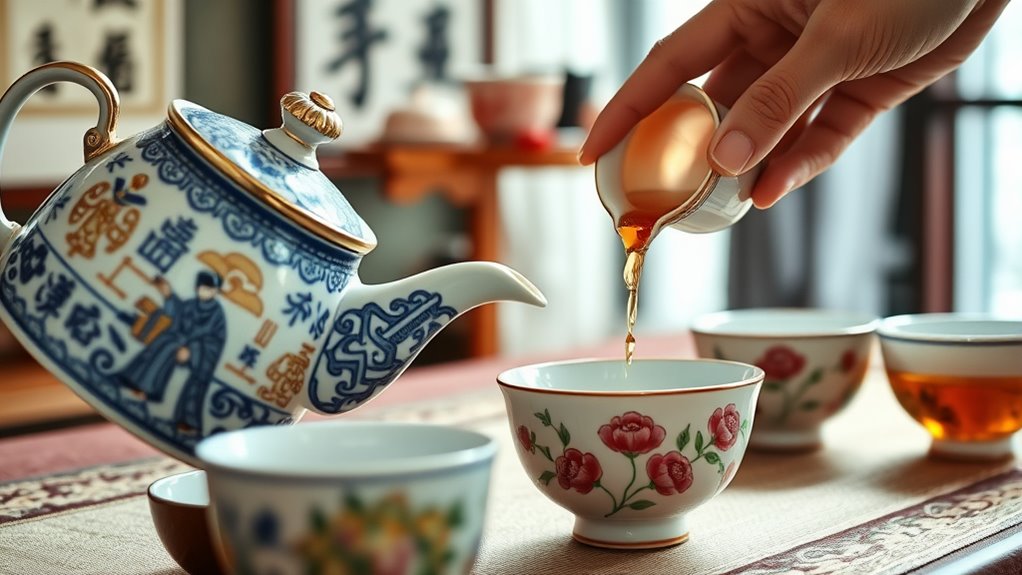
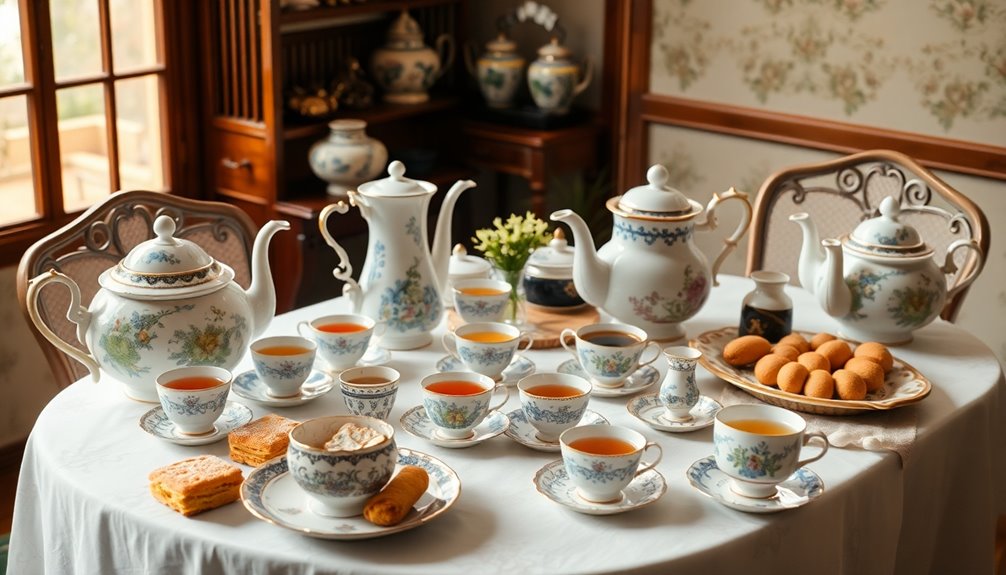
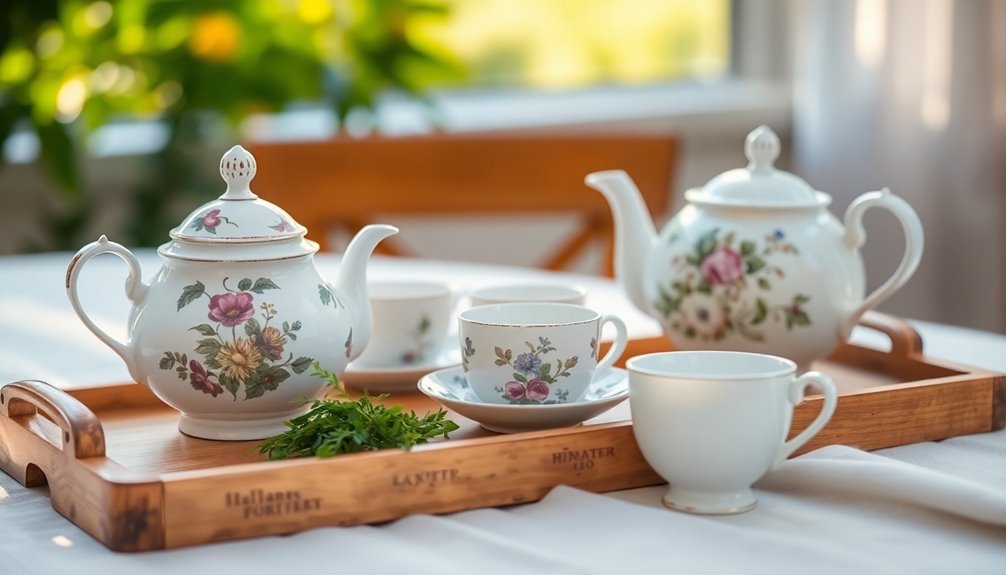
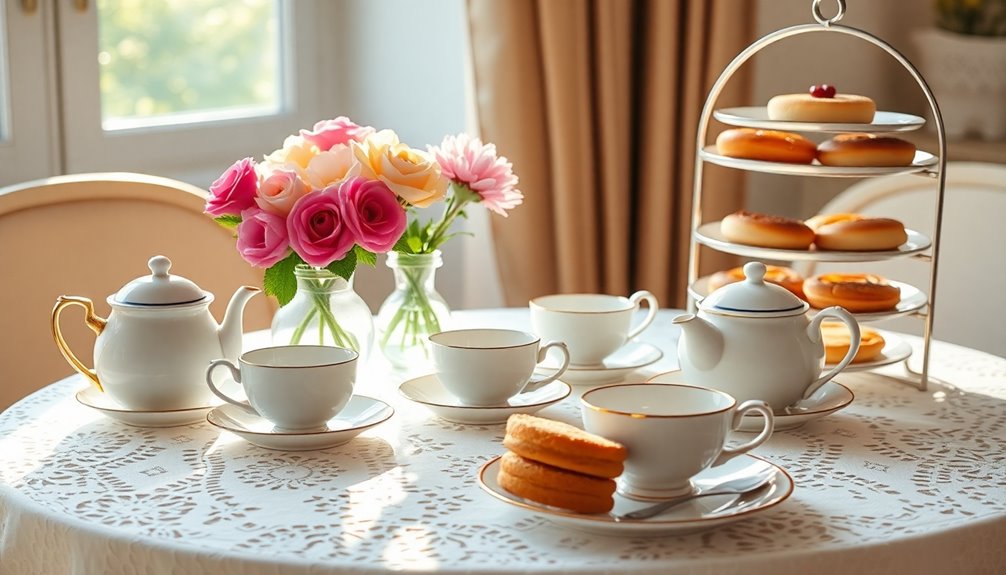
Tea serving etiquette is more than just a set of rules; it reflects respect, tradition, and cultural values. When you participate in a tea ceremony, you’re engaging in a ritual that embodies centuries of history and symbolism. One of the key aspects of this is understanding tea pouring rituals, which are carefully choreographed to honor the guest and the host. For example, you might notice that in many cultures, the person pouring the tea uses both hands—one to hold the teapot and the other to steady or support—signaling attentiveness and respect. The way you pour can also convey humility and deference; in some traditions, pouring tea slowly and deliberately emphasizes mindfulness and appreciation. These rituals aren’t just about the act itself but serve to create a sense of harmony and connection between participants. The precise motions and timing of pouring are imbued with meaning, often symbolizing hospitality, gratitude, or welcome. Additionally, the temperature of the tea can carry symbolic significance, reflecting care and attentiveness in the serving process. Tea ceremony symbolism plays a crucial role in how these rituals are perceived and appreciated. Every gesture, from the way the teapot is held to the placement of the cups, carries significance. In many Asian cultures, for instance, the act of bowing slightly while pouring indicates reverence for the guest. The use of specific teaware, such as small cups or particular tea utensils, also contributes to the symbolic language of the ceremony. These items aren’t chosen at random; they reflect cultural ideals like humility, patience, and harmony. The temperature at which the tea is served, the manner of presentation, and even the order of serving are all deliberate choices that reinforce these values. Understanding tea ceremony symbolism helps you appreciate the deeper meaning behind each step. It’s about more than just drinking tea—it’s a form of communication, a sign of respect, and a way of preserving cultural identity. When you grasp the symbolism, your experience becomes richer, allowing you to honor the traditions behind each gesture. Even simple acts like passing the teacup or wiping it before serving are loaded with meaning, demonstrating thoughtfulness and reverence. By observing and practicing these rituals, you show your respect not only for the ceremony but also for the cultural heritage it represents. So, when you participate in a tea ceremony, remember that every movement and choice echoes centuries of tradition, making each sip a meaningful connection to history and culture.
Frequently Asked Questions
How Do Different Cultures Interpret the Color of Tea?
Different cultures interpret tea color symbolism uniquely. For example, in China, a dark, rich brew signifies strength and tradition, while in Japan, the vibrant green tea symbolizes purity and harmony. Western cultures often see pale teas as delicate or refined. Your understanding of cultural interpretations reveals how tea color reflects values like health, status, or spirituality. Recognizing these differences enhances your appreciation of global tea traditions and their symbolic meanings.
Are There Specific Gestures to Avoid When Serving Tea?
When serving tea, avoid using inappropriate tea pouring gestures, like pointing the spout at someone or rushing the pour. Keep your serving hand etiquette respectful by holding the teapot steadily with both hands if needed and offering the cup with both hands in some cultures. Refrain from rushing or overly casual gestures, as they can be seen as impolite. Focus on smooth, respectful serving to honor tradition and your guests.
What Is the Significance of Tea Utensils in Various Traditions?
Did you know that over 50 countries have unique tea ceremony rituals, each emphasizing different utensil symbolism? In these traditions, utensils like teapots, cups, and trays hold deeper meanings, representing respect, harmony, and purity. The significance of tea utensils goes beyond practicality; they embody cultural values and spiritual beliefs, making each tea service a meaningful ritual that connects you to history, artistry, and the community.
How Does Age or Social Status Influence Tea Serving Customs?
You’ll find that age-based hierarchy and social status protocols greatly influence tea serving customs. Respect for elders often means giving them the best cups or seats, while social standing dictates formalities like specific serving gestures or reserved areas. You may be expected to address elders with honorifics or serve those of higher status first. These customs reinforce respect and social harmony, shaping how everyone participates in tea rituals.
Are There Specific Times Considered More Appropriate for Tea Ceremonies?
While the timing traditions for tea ceremonies vary across cultures, most consider early mornings and late afternoons as the most appropriate ceremonial periods. You’ll find that these times align with natural rhythms, creating a tranquil atmosphere. Embracing these moments allows you to honor the ritual’s significance. By observing the ideal timing traditions, you deepen your appreciation, making each tea experience more meaningful and harmonious.
Conclusion
By understanding the cultural symbols and proper etiquette, you truly honor the traditions behind tea serving. It’s more than just pouring a drink; it’s about respecting the history and customs that make each gesture meaningful. When you embrace these practices, you show you’re willing to go the extra mile. Remember, sometimes the smallest gestures speak louder than words—so pay attention to the details. In doing so, you’ll find that tea becomes a bridge connecting hearts and cultures.