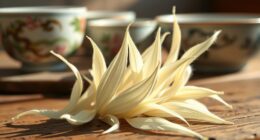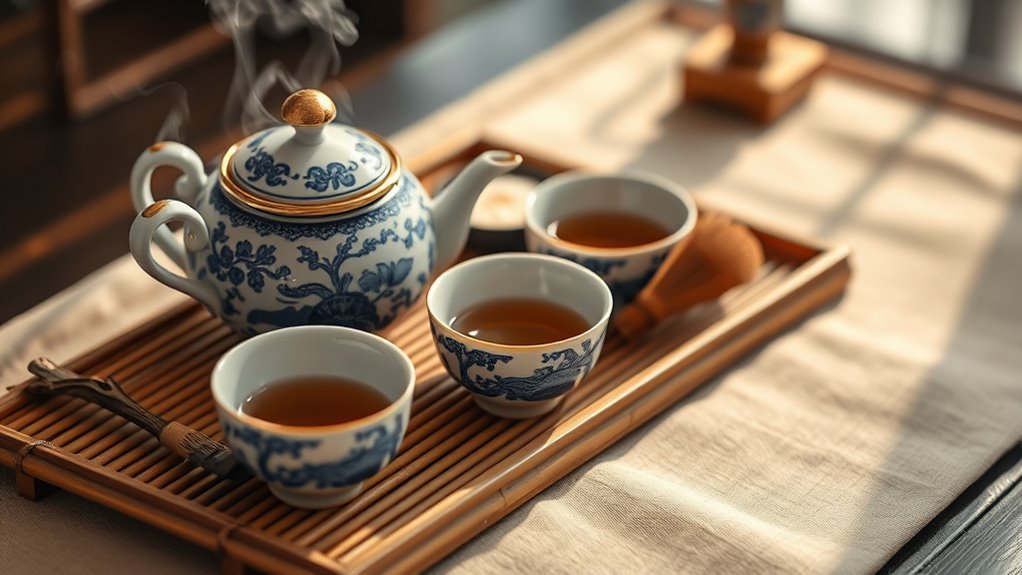
Tea rituals have developed over centuries, reflecting cultural values, spiritual beliefs, and social customs. In Japan, the tea ceremony emphasizes harmony, respect, and discipline, while Chinese rituals focus on balance and philosophical harmony. Western practices often highlight social etiquette and leisure. These rituals symbolize respect, community, and identity, acting as expressive traditions passed down through history. Exploring their origins reveals the deep cultural meanings behind each gesture—so keep exploring to understand how tea unites tradition and individuality.
Key Takeaways
- Tea rituals originated centuries ago, reflecting cultural values and philosophical beliefs across societies like China and Japan.
- They symbolize respect, harmony, and community, serving as expressions of spiritual and social identity.
- Practices involve deliberate gestures and precise steps that embody discipline, humility, and aesthetic appreciation.
- Rituals often function as social gestures, indicating hierarchy, hospitality, and cultural priorities.
- Historically, tea ceremonies have deep cultural significance, connecting tradition, philosophy, and social cohesion across generations.
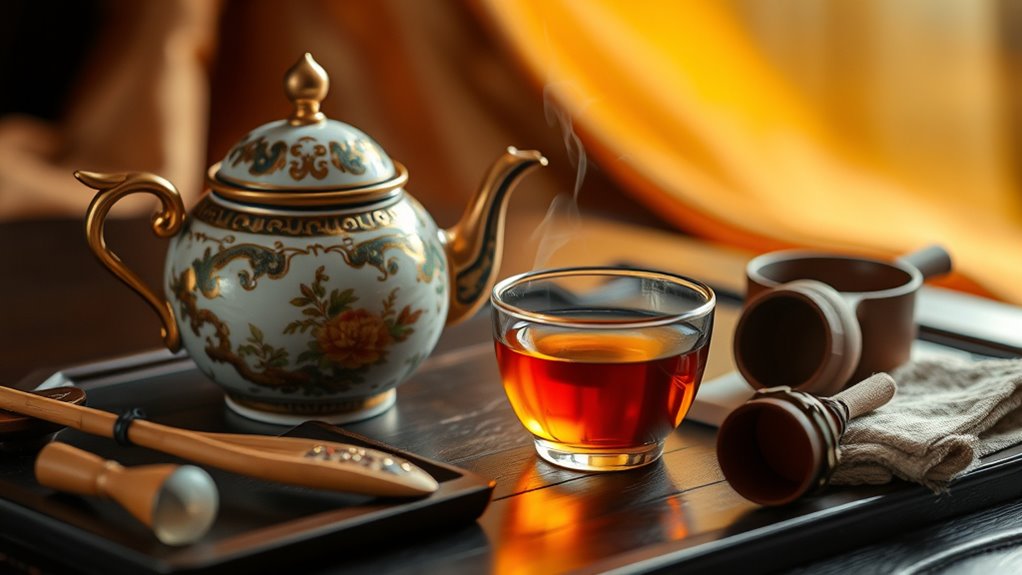
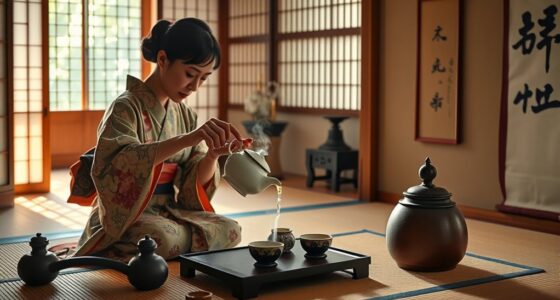
Have you ever wondered why tea rituals vary so much across cultures? The origins of these ceremonies are deeply rooted in history and often reflect the cultural symbolism that a society attaches to tea. The tea ceremony origins trace back centuries, with each culture shaping its own unique practices. In Japan, the traditional tea ceremony, or “chanoyu,” emerged in the 15th and 16th centuries, emphasizing harmony, respect, purity, and tranquility. It’s not just about drinking tea; it’s a spiritual discipline that embodies mindfulness and aesthetic appreciation. Meanwhile, in China, tea drinking dates back over 2,000 years, and the ritual evolved from simple brewing to a sophisticated art form that conveys social status, respect, and harmony. The Chinese tea ceremony emphasizes balance and natural beauty, reflecting the philosophical principles of Taoism and Confucianism. Across these regions, the origins of tea ceremonies reveal more than just a method of preparing a beverage—they symbolize a way of life, emphasizing values like respect, community, and self-awareness. Additionally, the use of specialized utensils and precise movements in these rituals exemplifies the filtration of cultural values into physical form. Cultural symbolism plays a significant role in shaping how these rituals are performed. For many societies, tea becomes a mirror of their values and beliefs. In Japan, the careful, deliberate movements of the tea master symbolize respect for guests and appreciation of beauty in simplicity. Every gesture, from whisking the powdered tea to serving it, carries symbolic weight. The tea ceremony becomes a language of its own, communicating humility, discipline, and harmony. In China, tea’s cultural symbolism is intertwined with notions of hospitality, social hierarchy, and even philosophical ideals. Offering tea to guests signifies respect and kindness, and the way tea is brewed and served can reveal social distinctions or foster unity. In the Western world, tea rituals have often been more about social etiquette and leisure, but even there, symbolic gestures like pouring tea for others or sharing a pot reflect notions of hospitality and connection.
Throughout history, these rituals have served more than practical purposes; they’ve become expressions of cultural identity and spiritual values. Whether it’s the meditative movements of the Japanese tea ceremony or the elaborate process of Chinese gongfu tea, each tradition demonstrates how deeply intertwined tea is with cultural symbolism. When you participate in or observe these rituals, you’re witnessing centuries of history, philosophy, and social values distilled into a simple act of preparing and sharing tea. It’s a reminder that tea isn’t just a beverage—it’s a vessel for cultural expression, a way to honor tradition, and a bridge connecting people across time and space.
Frequently Asked Questions
How Did Tea Rituals Originate Historically?
You might not realize it, but tea rituals originated centuries ago in China, where people developed elaborate methods of tea preparation to honor the beverage. These ceremonies often incorporate ceremonial symbolism, emphasizing mindfulness and respect. Over time, these practices spread to Japan and beyond, evolving into refined rituals that highlight harmony, purity, and tranquility. Your appreciation for tea can deepen as you learn about these rich, ceremonial traditions rooted in history.
What Are the Cultural Differences in Tea Ceremonies Worldwide?
Imagine attending a Japanese tea ceremony where every movement symbolizes harmony, respect, and purity. You’ll notice regional tea customs vary widely—Chinese Gongfu tea emphasizes skillful pouring, while British afternoon tea highlights elegance and socialization. These differences reflect diverse cultural values, with tea ceremony symbolism playing a key role in each tradition. Embrace these regional customs to truly appreciate how tea unites tradition and identity worldwide.
Which Materials Are Traditionally Used in Tea Utensil Making?
You’ll find that traditional craftsmanship often uses materials like porcelain, clay, bamboo, and wood for tea utensils. These materials are valued for their durability, aesthetic appeal, and ability to enhance the tea experience. When choosing tea utensil materials, you appreciate the craftsmanship behind each piece, which often reflects cultural heritage. Whether it’s a delicate porcelain teapot or bamboo tongs, these traditional materials connect you to centuries of tea-making traditions.
How Have Modern Influences Changed Traditional Tea Practices?
Modern influences have profoundly shifted traditional tea practices, as you’ll notice with the rise of tea commercialization and social media influence. These forces foster fast-paced, flashy, and often fleeting tea trends, encouraging you to prioritize popularity over tradition. You might find yourself adopting new, trendy techniques or flavors, but it’s essential to balance these innovations with respect for the cultural roots that make tea ceremonies meaningful and memorable.
Are There Specific Etiquette Rules for Tea Ceremonies?
Yes, there are specific tea etiquette and ceremonial protocol you should abide by during a tea ceremony. You should handle the utensils gently, bow slightly when greeting, and observe silence to show respect. Follow the host’s lead, such as when to drink or serve. Paying attention to these details ensures you honor the tradition, maintain harmony, and show appreciation for the cultural significance of the ceremony.
Conclusion
As you embrace the timeless tea rituals, think of the delicate steam rising like a whisper of history, blending tradition with your moment of peace. Just as each carefully poured cup holds centuries of meaning, your simple act becomes a bridge to cultures past and present. In this quiet ceremony, you find both serenity and connection—an ancient dance of patience and precision—reminding you that in the midst of life’s chaos, a humble cup can bring clarity and calm.