Famous places like China’s Longjing Tea Village and Japan’s Uji tea region have long been central to traditional tea practices. Renowned figures such as Lu Yu, the “Tea Sage,” and Sen no Rikyū, who revolutionized Japanese tea, shaped these rituals. Iconic teahouses and historic ceremonies still showcase their influence today. Exploring their stories reveals the deep cultural roots of tea, offering a fascinating journey through centuries of artistry and spiritual connection.
Key Takeaways
- Lu Yu, known as the “Tea Sage,” authored *The Classic of Tea* in China, foundational to tea culture.
- Sen no Rikyū revolutionized Japanese tea with his minimalist “chanoyu” and emphasized harmony with nature.
- The Chinese city of Hangzhou, home to Longjing tea, is famous for its historic tea houses and cultural tea practices.
- Uji in Japan is renowned for its centuries-old tea rituals and high-quality matcha production.
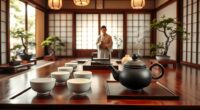
- The Japanese tea ceremony takes place in traditional tea rooms called chashitsu, many designed by master architects and artists.

Tea rituals have shaped cultures around the world, highlighting the significance of this ancient beverage beyond its simple consumption. You might be surprised to learn how deeply rooted these traditions are, with origins dating back centuries and a rich history of artistry and philosophy. The tea ceremony origins trace back to ancient China, where it evolved from simple brewing practices into a refined art form that emphasized mindfulness, harmony, and respect. As you explore these rituals, you’ll discover that they are more than just about drinking tea; they are cultural expressions that reflect values and social bonds. In Japan, the tea ceremony, known as “chanoyu” or “chado,” exemplifies this philosophy through highly disciplined and aesthetic practices that have been passed down through generations. These ceremonies are often performed in serene tea rooms, where every movement and utensil serves a symbolic purpose, creating a meditative atmosphere that fosters connection and contemplation.
Throughout history, renowned tea masters have played pivotal roles in shaping and preserving these traditions. In China, figures like Lu Yu, often called the “Tea Sage,” established fundamental principles for preparing and appreciating tea, elevating it from a casual beverage to an art form. These masters understood the importance of not just the technique but also the cultural significance behind each step, helping to elevate tea into a symbol of refinement and spiritual practice. In Japan, master tea artisans like Sen no Rikyū revolutionized the way tea was served and experienced, emphasizing simplicity, naturalness, and harmony with nature. Their teachings and innovations continue to influence modern tea ceremonies, emphasizing that each element, from the utensils to the setting, carries meaning and purpose.
As you explore the world of tea rituals, you’ll notice how these origins and masters’ teachings influence contemporary practices worldwide. Famous tea centers, historic teahouses, and cultural festivals often pay homage to these traditions, preserving the essence of the craft. Whether you’re participating in a formal ceremony or brewing a simple cup at home, understanding the origins and the mastery behind these rituals can deepen your appreciation for tea’s cultural richness. These traditions remind you that tea is more than a beverage; it’s a portal into history, spirituality, and artistry, connecting you to centuries of cultural wisdom and craftsmanship.
Frequently Asked Questions
How Did Tea Rituals Originate Historically?
You might find that tea rituals originated from the desire to create a mindful, respectful experience around tea. The tea ceremony origins trace back to ancient China, where historical tea practices emphasized harmony, respect, purity, and tranquility. Over time, these practices evolved into elaborate ceremonies in Japan and other cultures, reflecting spiritual and social values. Today, these rituals continue to symbolize tradition, mindfulness, and a deep appreciation for tea’s cultural significance.
What Are the Symbolic Meanings Behind Tea Ceremonies?
Tea ceremonies hold profound symbolic significance, representing harmony, respect, purity, and tranquility. You see, they embody cultural symbolism that connects people across generations, emphasizing mindfulness and unity. This ritual isn’t just about drinking tea; it’s a spiritual practice that nurtures inner peace and social bonds. Through each sip, you embrace centuries of tradition, transforming an ordinary act into a meaningful gesture of respect and connection.
Are There Different Types of Tea Rituals Worldwide?
Yes, there are different types of tea rituals worldwide. You’ll find regional tea customs that vary greatly, from the precise tea ceremony etiquette in Japan to the relaxed, social style in Britain. Each tradition reflects local culture and values, so you should respect and observe these differences when participating. By understanding and embracing regional customs, you enhance your appreciation for the unique significance of each tea ritual.
How Do Tea Rituals Influence Modern Tea Culture?
Tea rituals shape modern tea culture by emphasizing tea etiquette and ceremonial symbolism, creating a sense of mindfulness and respect. You’re likely to notice these traditions in contemporary settings, where they foster connection and appreciation. By following specific customs, you deepen your understanding of tea’s cultural significance, making your experience more meaningful. These rituals influence how people socialize around tea, blending tradition with modern appreciation, enriching your overall tea journey.
Who Are Some Lesser-Known Historical Figures in Tea History?
Imagine lush tea gardens where lesser-known figures like tea plant cultivators and ancient tea scholars work tirelessly. You might not have heard their names, but their dedication shaped tea history. These quiet pioneers cultivated the tea plant and studied its properties, laying the groundwork for modern tea appreciation. Their contributions, though lesser-known, are essential threads in the rich tapestry of tea’s cultural and historical evolution.
Conclusion
As you explore the rich history of tea rituals, remember that great traditions often span generations and borders. From the serene tea houses of Japan to the lively markets of China, these places and people remind us that a simple cup of tea can connect us to centuries of culture. As the saying goes, “A cup of tea is an entire universe in itself,” inviting you to savor the stories steeped within each sip.