The history and evolution of tea pairing with food show a shift from simple traditions to a refined culinary art. Ancient cultures used tea to balance flavors and highlight aromas, with Japanese, Chinese, and British customs leading the way. Over time, intentional pairing based on flavor profiles became popular, allowing chefs and enthusiasts to create harmonious or contrasting combinations. If you keep exploring, you’ll discover how this practice continues to develop into innovative culinary expressions today.
Key Takeaways
- Tea pairing originated centuries ago, evolving from simple traditions to refined culinary practices influenced by trade and societal development.
- Cultural variations, such as Chinese, Japanese, and British traditions, highlight diverse approaches to matching tea with food.
- The shift from ritualistic to deliberate pairing emphasizes matching tea’s flavor profile with dishes for balanced taste.
- Modern culinary expressions explore creative, harmonious, or contrasting tea and food combinations to enhance dining experiences.
- The history reflects a continuous journey toward understanding flavor harmony, integrating traditional customs with contemporary gastronomic innovation.
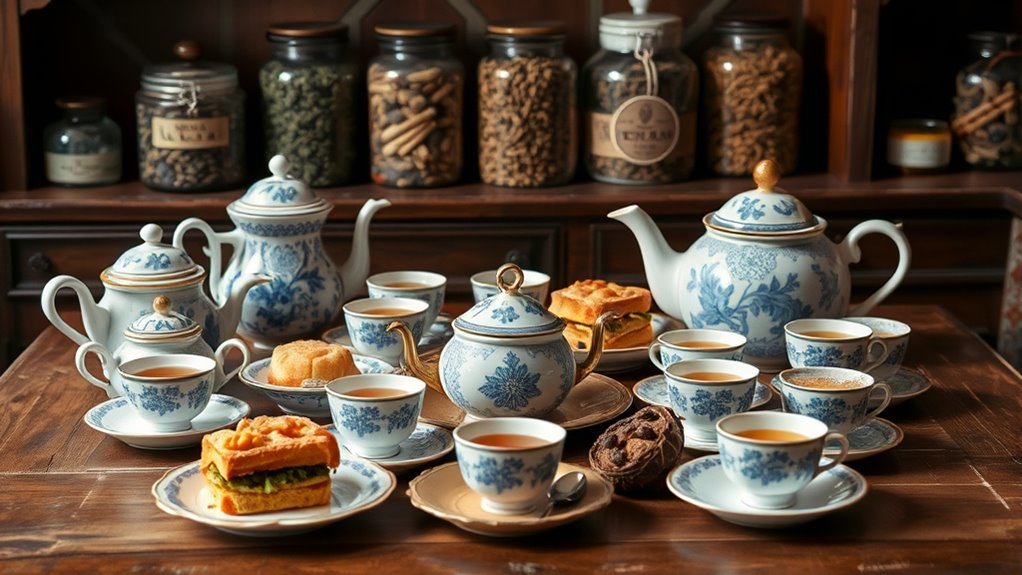
Tea pairing with food has a rich history that dates back centuries, evolving from simple traditions to a refined culinary practice. Throughout history, tea culture has played a significant role in shaping how people approach flavor matching, blending taste and aroma to enhance dining experiences. Early on, tea was primarily enjoyed as a beverage on its own, but as trade routes expanded and societies grew more sophisticated, pairing tea with food became an art form. In many cultures, particular teas were paired with specific dishes to balance flavors, highlight aromas, and create harmonious combinations. You might have noticed how Chinese tea ceremonies often involve meticulously selecting teas to complement the accompanying dishes, emphasizing the importance of flavor matching in traditional tea culture.
Tea pairing history spans centuries, blending tradition and artistry to enhance flavor harmony in culinary experiences.
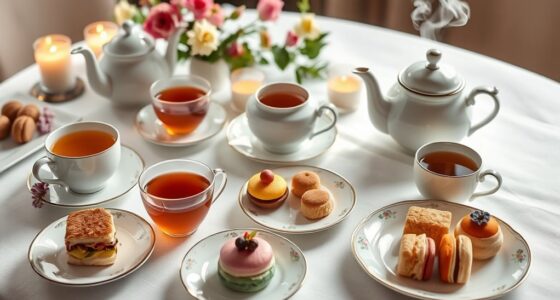
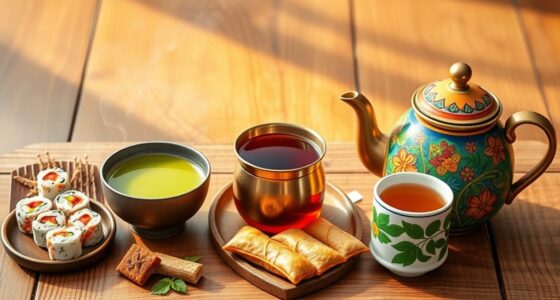
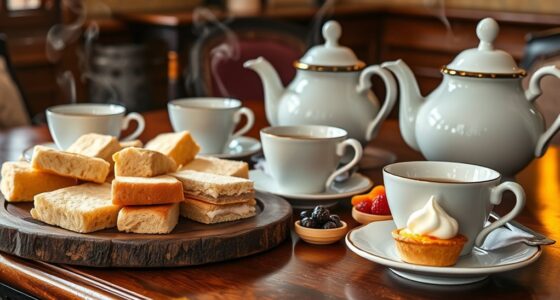
As tea spread across different regions, each culture developed its own approaches to pairing. In Japan, for example, matcha and sencha are paired with a variety of foods, from sweet to savory, with careful attention to how the tea’s umami and vegetal notes interact with different flavors. In Britain, the classic afternoon tea tradition emphasizes pairing black teas like Earl Grey or English Breakfast with scones, finger sandwiches, and pastries, aiming for a balanced taste experience. These regional practices underscore how understanding tea’s flavor profile is crucial for successful pairing, whether you’re matching the delicate floral notes of a white tea with light seafood or the robust, malty flavors of a dark tea with hearty, savory dishes.
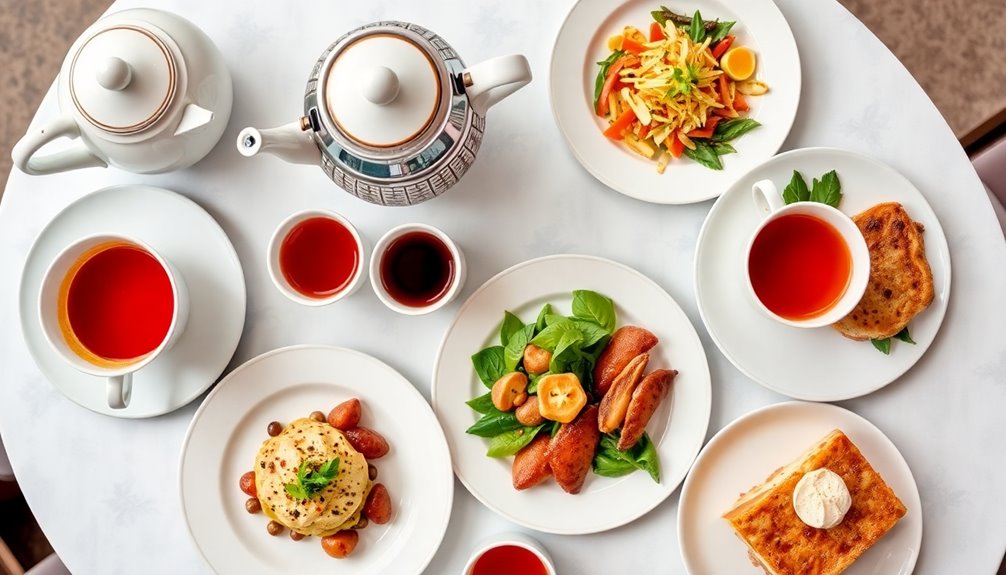
The evolution of tea pairing has also seen a shift towards more deliberate flavor matching, where chefs and tea enthusiasts consider how specific teas can elevate a meal or vice versa. Today, you’re encouraged to think about the tea’s body, aroma, and inherent flavor when selecting pairings. For instance, a smoky lapsang souchang pairs well with rich, spiced meats, while a bright, citrus-infused green tea complements fresh salads or seafood. The focus is on creating a sensory balance—where the tea either enhances or gently contrasts with the food. This approach has transformed tea pairing from a traditional ritual into a culinary expression, allowing you to explore new combinations and deepen your appreciation of both tea and food.
Ultimately, the history and evolution of tea pairing with food reveal a journey toward understanding how flavors can be thoughtfully matched. Whether rooted in centuries-old customs or modern culinary experimentation, the goal remains the same: to craft a harmonious experience where every sip and bite enhances the other, elevating your overall dining pleasure.
Frequently Asked Questions
How Do Regional Cuisines Influence Tea Pairing Choices?
Regional cuisines greatly influence your tea pairing choices by emphasizing regional flavor and ingredient harmony. You’ll find that teas complement local spices, herbs, and cooking styles, enhancing your dining experience. For example, a smoky Lapsang Souchang pairs well with hearty Chinese dishes, while a green jasmine tea complements delicate Southeast Asian flavors. Paying attention to regional flavor traditions helps you select teas that naturally enhance your food’s unique ingredients.
What Are Some Modern Trends in Tea and Food Pairing?
You’ll notice modern tea and food pairings embrace fusion cuisine, blending diverse flavors for exciting experiences. Chefs often incorporate sustainable sourcing, emphasizing eco-friendly ingredients that enhance tea’s natural qualities. Pairing herbal or green teas with spicy, savory fusion dishes creates balanced, vibrant bites. This trend highlights creativity and responsibility, encouraging you to explore innovative combinations that respect both culinary art and environmental sustainability.
How Does Tea Pairing Differ Across Cultures?
You’ll notice that tea pairing varies widely across cultures, guided by cultural rituals and flavor harmony. In Japan, delicate matcha complements traditional sweets, emphasizing harmony and mindfulness. Chinese tea culture often pairs oolong or pu-erh with savory dishes to balance flavors. In Britain, black tea with scones highlights a more relaxed tradition. These differences reflect local customs, ingredients, and values, shaping unique tea and food pairings worldwide.
Can Tea Pairing Enhance the Health Benefits of Food?
Yes, tea pairing can enhance the health benefits of food through nutritional synergy and flavor harmony. When you choose the right tea, it can boost antioxidant absorption, aid digestion, and improve nutrient intake. You actively support your well-being by selecting teas that complement your meal’s ingredients, creating a balanced experience. This mindful pairing not only elevates your flavor experience but also maximizes the health advantages you gain from your food.
What Tools or Techniques Are Best for Pairing Tea With Dishes?
Think of pairing tea with dishes like tuning an instrument for perfect harmony. Use tools like flavor wheels and sensory analysis to identify flavor profiles, balancing sweetness, bitterness, and aroma. A simple technique is experimenting with small sips, noting how the tea complements or contrasts the dish. Trust your palate, and over time, you’ll develop an intuitive sense for selecting teas that enhance your meal’s overall flavor.
Conclusion
Just like a perfectly brewed cup of tea reveals layers of flavor, the history of tea pairing unfolds like a rich tapestry woven through centuries. As you explore its evolution, you’re invited to savor the harmony between tea and food, transforming every meal into a sensory journey. Embrace this timeless dance of flavors, and let each sip and bite become a chapter in your own flavorful story—an ongoing adventure that awakens your palate and deepens your appreciation.