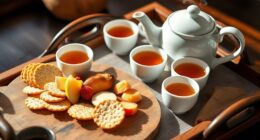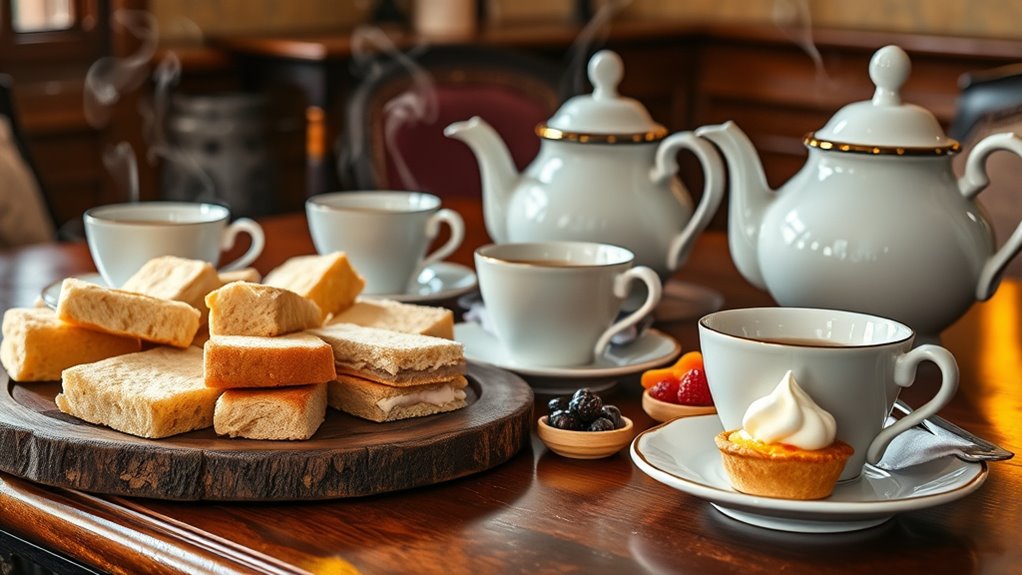
Pairing tea with meals and snacks enhances your dining experience by balancing flavors and creating harmony. Light teas like green or floral varieties work well with lighter foods such as salads or seafood, while stronger teas like black or dark oolong complement richer dishes. Consider temperature and preparation to optimize flavor, and explore cultural traditions for inspiration. To reveal more tips on elevating your meals with tea pairings, keep exploring how different combinations can turn everyday dining into a memorable event.
Key Takeaways
- Match lighter, floral teas with salads, seafood, and pastries, while stronger teas like black or dark oolong suit richer dishes.
- Consider serving hot teas with hearty meals and iced teas to complement spicy or greasy snacks.
- Balance tea strength with food intensity to prevent overpowering flavors and create layered taste experiences.
- Use traditional cultural practices as a guide for harmonious tea and food pairings that enhance flavors.
- Pay attention to flavor nuances and experiment to find combinations that elevate both the tea and the meal or snack.

Tea pairing with food can elevate your dining experience by balancing flavors and enhancing aromas. When you select the right tea, you’re not just enjoying a drink—you’re creating a harmonious connection between what’s on your plate and what’s in your cup. Understanding tea flavor profiles is key to making successful pairings, as different teas bring unique qualities that complement or contrast with various dishes. For instance, a light, grassy green tea can brighten a simple vegetable salad, while a robust black tea might stand up to hearty meats. Exploring these flavor nuances allows you to craft meals that are more satisfying and memorable.
Choosing the right tea enhances flavors and creates a harmonious dining experience.
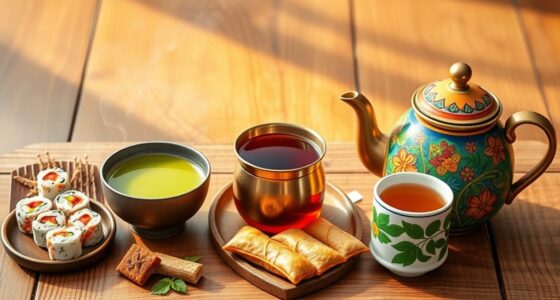
Cultural tea traditions offer valuable insights into pairing strategies as well. Many cultures have developed specific customs around tea and food, often based on centuries of experience. For example, Chinese tea traditions emphasize balancing the taste of teas like oolong or pu-erh with dim sum or roasted nuts, creating a seamless experience where flavors enhance each other. Similarly, Japanese tea ceremonies prioritize subtlety and harmony, pairing delicate green teas with lightly flavored sashimi or rice dishes. These traditions teach you to think about not just the taste of the tea but also the context and ritual surrounding it, enriching your overall dining approach.
When you’re pairing tea with meals or snacks, think about the weight and intensity of both the food and the tea. Light, floral teas work well with lighter dishes like salads, seafood, or pastries, as they won’t overpower delicate flavors. Conversely, stronger, more astringent teas like black or dark oolong are better suited for richer, more substantial foods such as roasted meats, spicy dishes, or even chocolate desserts. The goal is to find a balance where neither the tea nor the food dominates but instead complements each other, creating a layered taste experience. Additionally, considering the cultural context of the tea can help guide your pairing choices and deepen your appreciation for global culinary traditions.
You should also think about the temperature and preparation of the tea. Iced teas can provide an invigorating counterpoint to spicy or greasy foods, while hot teas might be perfect for cozy, hearty meals. If you’re serving a snack or appetizer, a small pot of tea steeped to its ideal flavor can set the tone for the meal, making each bite more enjoyable. Remember, the key is to experiment and learn what works best for your palate. By paying attention to tea flavor profiles and inspired by cultural traditions, you can elevate everyday meals into culinary adventures that tantalize your senses and deepen your appreciation for both food and tea.
Frequently Asked Questions
How Does Tea Pairing Differ Across Various Cultural Cuisines?
You’ll notice that tea pairing varies across cultural cuisines because each has unique tea traditions and regional flavor profiles. For example, Japanese green tea complements sushi, while Indian chai pairs well with spicy curries. In China, oolong enhances dim sum, and in Morocco, mint tea refreshes after meals. These differences reflect cultural preferences, ingredients, and flavor nuances, making tea pairing a rich, diverse experience tailored to each cuisine’s culinary identity.
Can Tea Pairing Enhance the Flavors of Spicy or Savory Dishes?
Yes, tea pairing can considerably enhance the flavors of spicy or savory dishes. You’ll find that certain teas, like green or oolong, help with flavor enhancement by balancing heat and intensifying savory notes. Additionally, tea acts as a palate cleanser, invigorating your palate between bites and allowing you to enjoy the layered flavors more fully. This makes your dining experience more harmonious and enjoyable.
What Are the Best Teas for Pairing With Desserts?
Think of dessert tea pairings as a dance where the tea and sweets move in harmony. You’ll want rich, aromatic teas like jasmine or Earl Grey for sweet flavor enhancements, or fruity infusions that mirror the dessert’s notes. These teas elevate your treats, making each bite more delightful. Choose black teas for chocolate, or green teas with floral hints for fruit-based desserts, creating a perfect symphony of flavors.
How Should I Adjust Tea Brewing for Optimal Food Pairing?
To adjust your tea infusion for ideal food pairing, start by tweaking the brewing temperature based on the tea type. For delicate teas like white or green, use slightly lower temperatures to preserve nuanced flavors. For bolder teas like black or oolong, higher temperatures release richer aromas. Keep an eye on brewing time too, as over-steeping can create bitterness. This careful adjustment enhances the tea’s flavor profile for perfect pairing.
Are There Specific Teas Suited for Breakfast Versus Dinner Meals?
For breakfast, opt for teas with bright, brisk flavor profiles like black or assam teas, brewed with slightly hotter water to enhance their boldness. For dinner, go for milder, calming teas like chamomile or green teas, brewed at lower temperatures to preserve delicate flavors. Adjust brewing techniques accordingly, ensuring each tea’s flavor profile complements your meal, making your dining experience more enjoyable and harmonious.
Conclusion
So, when you pair tea with your meals and snacks, you’re like a chef blending flavors to create harmony. Think of tea as the perfect dance partner, enhancing each bite without overpowering it. Experiment with different combinations, and you’ll discover how tea transforms ordinary snacks into memorable moments. Just as a key open a door, the right tea opens up new tastes and experiences, making every meal a delightful journey.