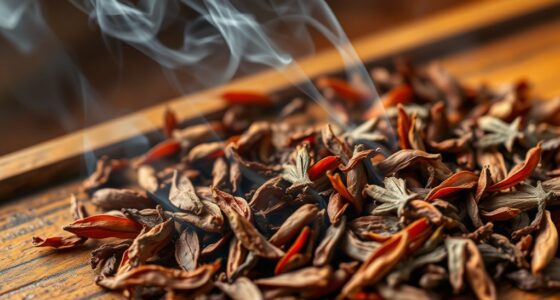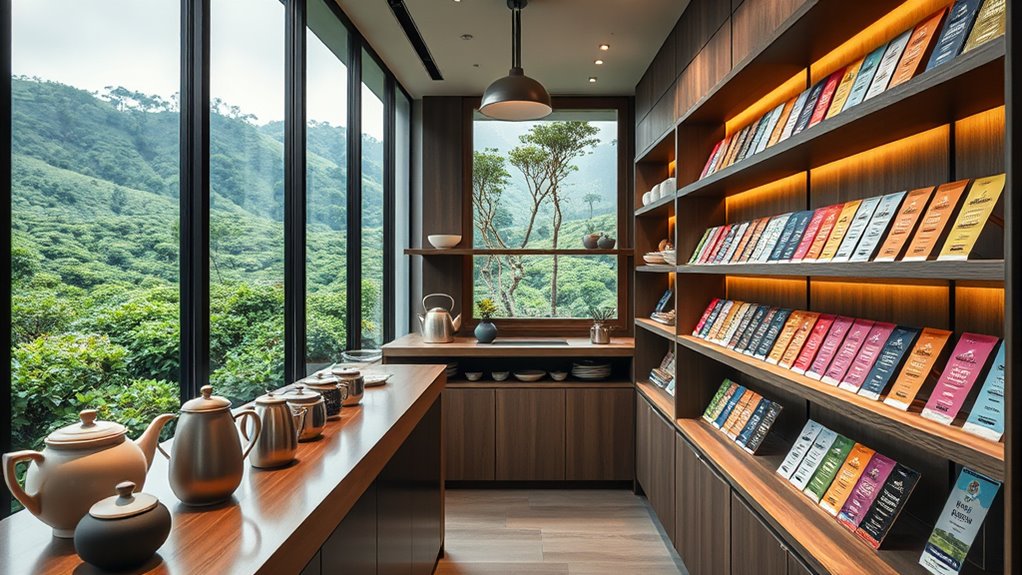

Modern adaptations of tea origins blend ancient traditions with innovative practices. You’ll see traditional growing regions like China, India, and Japan expanding into urban rooftop gardens and organic farms. New cultivation techniques use sensors, drones, and artisanal methods to improve quality. Flavor-wise, teas now incorporate herbs, fruits, and spices through infusion and cold brew techniques, offering exciting taste experiences. Plus, marketing and technology focus on immersive storytelling and sustainability—so if you keep exploring, you’ll discover even more fascinating developments.
Key Takeaways
- Expansion of tea cultivation to urban rooftop gardens and small-scale farms worldwide.
- Adoption of sustainable, organic farming practices beyond traditional regions.
- Integration of modern technology like sensors and drones for precision agriculture.
- Blending traditional tea leaves with herbs, fruits, and spices for innovative flavors.
- Emphasis on artisanal, small-batch production and environmentally friendly methods.
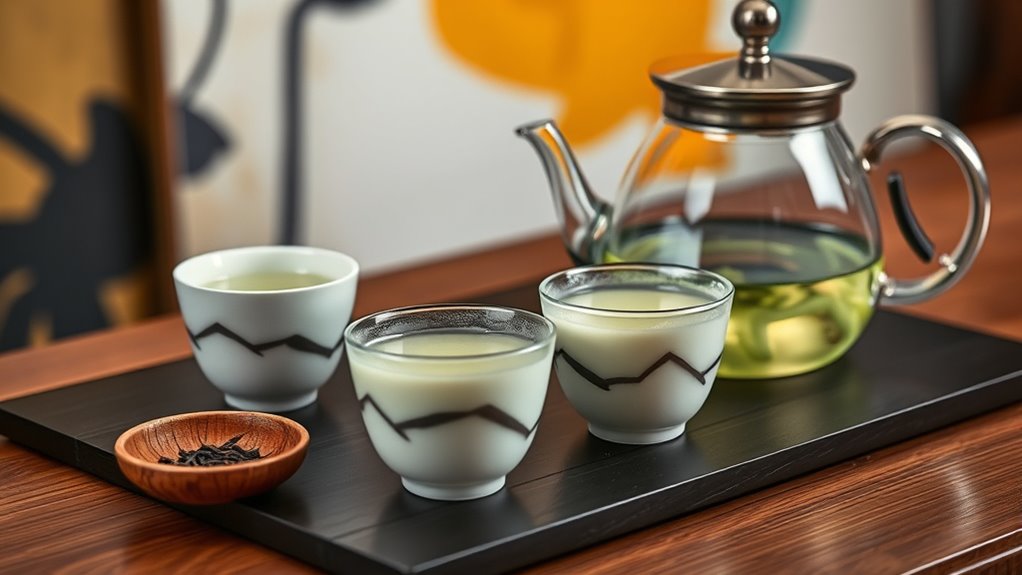
Tea, once rooted solely in traditional regions like China, India, and Japan, has evolved through modern adaptations that blend ancient practices with contemporary tastes. Today, you’re witnessing a dynamic shift driven by innovative tea cultivation methods and a desire for flavor innovation. Tea cultivation has expanded beyond its historic origins, with growers experimenting with new techniques to improve quality, sustainability, and flavor profiles. You might notice that some tea farms now utilize organic farming practices, sustainable water use, and even urban rooftop gardens to produce tea leaves in environmentally friendly ways. These advancements not only aim to enhance the quality of tea but also to meet the rising demand for ethically produced beverages. Additionally, sound design techniques are increasingly used in marketing teas, creating immersive sensory experiences that enhance consumer engagement and brand storytelling. Flavor innovation, in particular, has become a key driver of modern tea adaptation. You’re likely to find teas infused with natural ingredients, like herbs, fruits, and spices, creating entirely new taste experiences. Manufacturers are blending traditional leaves with unexpected flavors—think jasmine, bergamot, or even exotic fruits—giving consumers a broader spectrum of choices. This pursuit of unique flavors helps appeal to a global audience seeking something beyond the classic black, green, or white teas. Additionally, cold brewing and other brewing techniques have been adopted to bring out different nuances in flavor, making tea more versatile and appealing in various settings. The influence of modern technology also plays a significant role. You might notice that tea brands now use precision agriculture tools, such as drones and sensors, to monitor crop health and optimize harvest timings. These innovations ensure that you get consistently high-quality leaves, which directly impact flavor innovation. Moreover, the rise of artisanal and craft teas reflects a focus on small-batch production, where tea makers experiment with rare cultivars and fermentation processes to create distinctive products. All of these changes mean that your tea experience today can be as diverse and inventive as you want it to be. You no longer have to stick to traditional varieties; instead, you can explore teas that are cultivated with advanced techniques and infused with imaginative flavor combinations. Modern tea cultivation and flavor innovation together push the boundaries of what tea can be, making it a continually evolving beverage that respects its roots while embracing the future. So, whether you prefer a classic cup or something more adventurous, the world of tea now offers endless possibilities shaped by modern adaptations.
Frequently Asked Questions
How Have Modern Technology Advancements Influenced Tea Cultivation?
Modern technology advancements have markedly influenced tea cultivation by enabling precision agriculture and genetic modification. You can now use sensors and data analytics to optimize water, fertilizer, and pest control, increasing yield and quality. Genetic modification allows for stronger, more resilient tea plants that resist pests and climate change. These innovations help you produce higher-quality tea more sustainably, ensuring consistent flavor and supply while reducing environmental impact.
Are Traditional Tea Origins Still Relevant in Today’s Market?
Think of traditional tea origins as your vintage vinyl collection—they still hold immense cultural significance and heritage preservation. In today’s market, they remain relevant because consumers crave authenticity and stories behind their brew. While modern blends innovate, the roots of tea remind us of its rich history. You can appreciate the cultural significance while exploring new flavors, blending tradition with modern tastes to keep tea’s legacy alive and thriving.
How Do Modern Adaptations Impact the Authenticity of Tea Flavors?
Modern adaptations can impact the authenticity of tea flavors, but they often aim to balance flavor preservation with innovation. You might notice new blends or techniques that enhance taste without losing cultural authenticity. While some purists worry about losing traditional nuances, thoughtful adaptations can celebrate tea’s rich heritage while appealing to contemporary palates. Ultimately, these changes can enrich your experience without sacrificing the core essence of authentic tea flavors.
What Sustainable Practices Are Integrated Into Modern Tea Production?
You’ll notice that sustainable practices like organic certification guarantee your tea is free from harmful chemicals, supporting eco-friendly farming. Water conservation is also prioritized, reducing water usage during cultivation and processing. These practices help protect the environment and promote healthier tea production. By choosing teas with organic certification and supporting water-saving methods, you contribute to a more sustainable industry that values both quality and ecological responsibility.
How Do Global Trade Policies Affect Tea Origin Adaptations?
You’re caught between a rock and a hard place with trade restrictions and import tariffs shaping tea origin adaptations. These policies can slow down or limit the flow of tea, forcing producers to innovate locally or alter traditional methods. As a result, global trade policies directly influence how teas are developed, marketed, and consumed worldwide, making adaptability essential for maintaining quality and sustainability in a shifting economic landscape.
Conclusion
You see the world of tea evolving with each modern adaptation, blending tradition with innovation. You witness how new flavors, brewing techniques, and cultural influences reshape the origins of tea, just as roots anchor a tree while branches reach for the sky. You embrace the fusion of past and present, honoring history while exploring new horizons. In this ongoing journey, you find that every sip tells a story—of heritage, creativity, and endless possibility.