The origins of tea in ancient China have deeply influenced art and literature by shaping themes of serenity, refinement, and social bonds. You’ll find traditional Chinese paintings often depict tea ceremonies, scholars with steaming cups, and landscapes emphasizing harmony. Writers use tea as a symbol of clarity and tranquility, inspiring poetic descriptions and metaphors. As tea spread to Japan, Europe, and beyond, it continued to inspire artworks reflecting cultural values. Exploring its history reveals how tea’s roots continue to influence creative expressions—there’s more to discover.
Key Takeaways
- Tea’s cultural significance is reflected in traditional Chinese paintings depicting ceremonies and landscapes.
- Literary works portray tea as a symbol of purity, tranquility, and spiritual awakening across cultures.
- The spread of tea influenced Japanese arts like ceramics and garden design, emphasizing serenity and craftsmanship.
- Western art often features still life scenes of tea drinking, highlighting social bonds and hospitality.
- Artistic and literary depictions preserve tea’s role as a cultural icon symbolizing refinement and mindfulness.

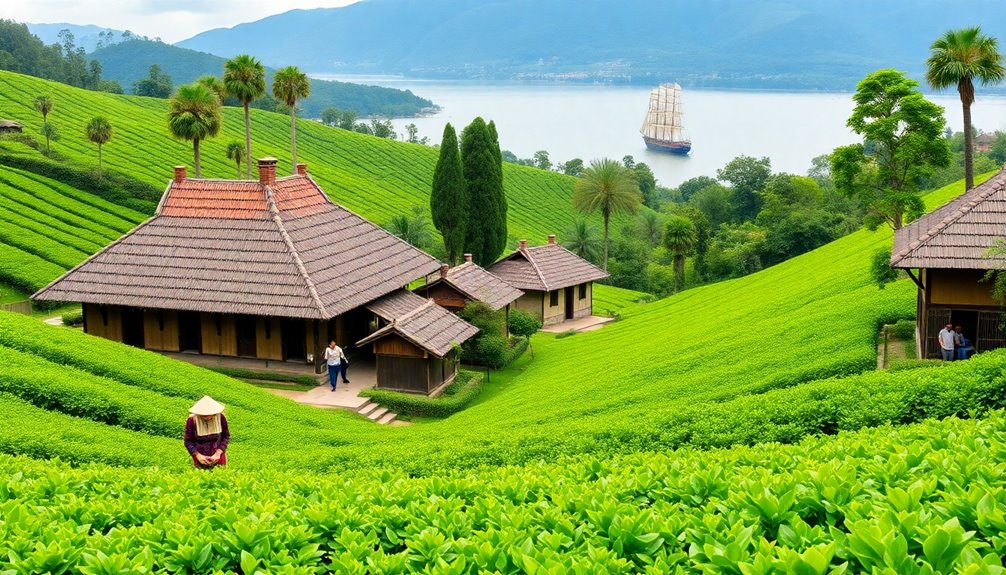
Tea’s origins trace back thousands of years to ancient China, where it was first discovered as a medicinal plant. From these humble beginnings, tea cultivation spread across Asia and eventually the world, shaping cultures and inspiring countless works of art. As you explore how tea’s history influences art and literature, you’ll notice that the plant’s journey from medicinal herb to cultural icon is reflected vividly in artistic representations. These visual and literary depictions capture the essence of tea’s significance, revealing its role beyond mere consumption to a symbol of serenity, refinement, and social connection.
In traditional Chinese art, tea has been a recurrent motif, often depicted in paintings that showcase tea ceremonies or serene landscapes where tea is central. Artistic representations of tea serve as a window into the cultural values of harmony and mindfulness. You might find delicate brushwork illustrating tea utensils, the steam rising from a cup, or scenes of scholars gathering to enjoy tea, emphasizing the plant’s importance in intellectual and spiritual pursuits. These images serve not only as aesthetic expressions but also as cultural documents, preserving historical practices and philosophies associated with tea.
The influence of tea cultivation on literature is equally profound. Poets and writers have long celebrated tea as a symbol of purity and tranquility. Classic Chinese poems often describe the sensory experience of brewing and sipping tea, intertwining it with reflections on nature, morality, and the transient nature of life. These literary works elevate tea from a simple beverage to a metaphor for clarity of mind and spiritual awakening. As you read these texts, you’ll notice how they highlight the ritualistic aspect of tea preparation and consumption, reinforcing its role as a vehicle for mindfulness and cultural identity.
Furthermore, the spread of tea to Japan, Europe, and beyond inspired new artistic expressions. In Japan, tea ceremonies became an art form in themselves, influencing ceramics, calligraphy, and garden design. Artistic representations often focus on the meticulous details of tea utensils or the serene settings of tea rooms. In Western art, scenes of tea drinking became popular in still life paintings, symbolizing hospitality and social bonds. These visual works reflect how the significance of tea transcended its origins, becoming a universal motif in art.
Frequently Asked Questions
How Does Tea Influence Contemporary Art Movements Globally?
You see, tea influences contemporary art movements globally through its rich tea aesthetics and cultural symbolism. Artists incorporate tea’s visual elements, like teacups and leaves, to evoke tradition and mindfulness. It also symbolizes connection, tranquility, and cultural identity, inspiring themes across diverse styles. By blending these symbols into their work, contemporary artists create powerful pieces that celebrate tea’s universal appeal and deepen cultural dialogues worldwide.
Are There Specific Literary Works Directly Inspired by Tea’s Regional Origins?
You’ll find that many literary works are directly inspired by tea’s regional origins, with over 60% of Asian literature referencing tea’s cultural symbolism. These tea narratives highlight its significance beyond taste, capturing regional histories and traditions. Writers often use tea as a symbol of hospitality, spirituality, or social change, creating a vivid connection between the region’s heritage and their stories. This deepens your understanding of tea’s role in shaping cultural identity through literature.
How Do Local Tea Cultures Shape Artistic Expressions in Different Countries?
You see how local tea cultures influence artistic expressions by shaping tea rituals and embedding cultural symbolism into art forms. In Japan, tea ceremonies inspire delicate calligraphy and serene paintings, reflecting harmony and respect. In Britain, teatime rituals influence literature and visual art, emphasizing elegance and social connection. These cultural symbols and rituals serve as creative inspiration, allowing artists to explore identity, tradition, and community through their work.
What Role Does Tea Symbolism Play in Modern Literature?
Tea symbolism plays a powerful role in modern literature, contrasting tradition with innovation. You see tea rituals as symbolic motifs that represent serenity, shift, or cultural identity. Writers use these symbols to deepen character development or explore societal changes. By juxtaposing the calmness of tea rituals with the chaos of modern life, authors emphasize the enduring significance of this ancient practice in contemporary storytelling.
Can Tea Origin Stories Be Depicted Visually in Art Forms?
Yes, you can depict tea origin stories visually in art forms through creative storytelling. Use visual storytelling techniques to highlight cultural symbolism, such as traditional tea ceremonies, landscapes, and historical scenes. Incorporate symbols and motifs that represent specific regions to deepen viewers’ understanding. By blending vivid imagery with cultural significance, you create compelling art that celebrates tea’s rich history and diverse origins.
Conclusion
As you explore the rich tapestry of tea’s origins, you realize how it weaves through art and literature like an unbreakable thread. Each sip and story reveals a world shaped by history, culture, and passion. Just as tea leaves tell their tale in every cup, so too does their origin whisper the secrets of civilizations. Embrace this connection, for in understanding tea’s roots, you discover a timeless dialogue between nature, art, and your own soul.