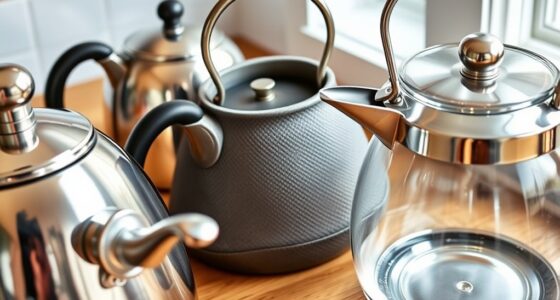
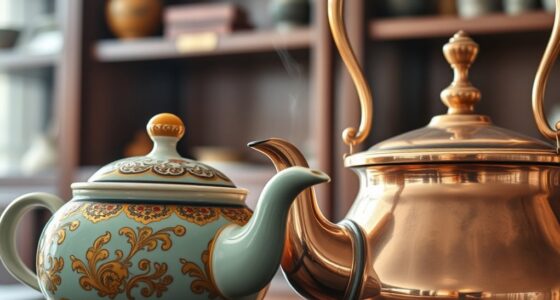
Materials like ceramic and metal are common in tea kettles and teapots. Ceramic offers excellent heat retention, keeps tea warm longer, and resists odors, but can crack if dropped and takes longer to heat. Metals like stainless steel and copper heat quickly and are durable, but may develop hot spots or exterior heat. Each material’s pros and cons impact performance and maintenance—exploring these details will help you choose the best option for your tea experience.
Key Takeaways
- Ceramic offers excellent heat retention and flavor preservation but is prone to cracking and slower heating.
- Metal kettles, like stainless steel and aluminum, heat quickly and are highly durable but may cause uneven heating and hot exterior surfaces.
- Ceramic is ideal for aesthetic and traditional designs, providing long-term sturdiness and odor resistance, though it requires careful handling.
- Metal materials are low-maintenance, resistant to corrosion, and suitable for everyday use, but can develop hot spots and need regular cleaning.
- The choice of material impacts heating speed, durability, safety, and aesthetic appeal, influencing overall tea brewing experience.
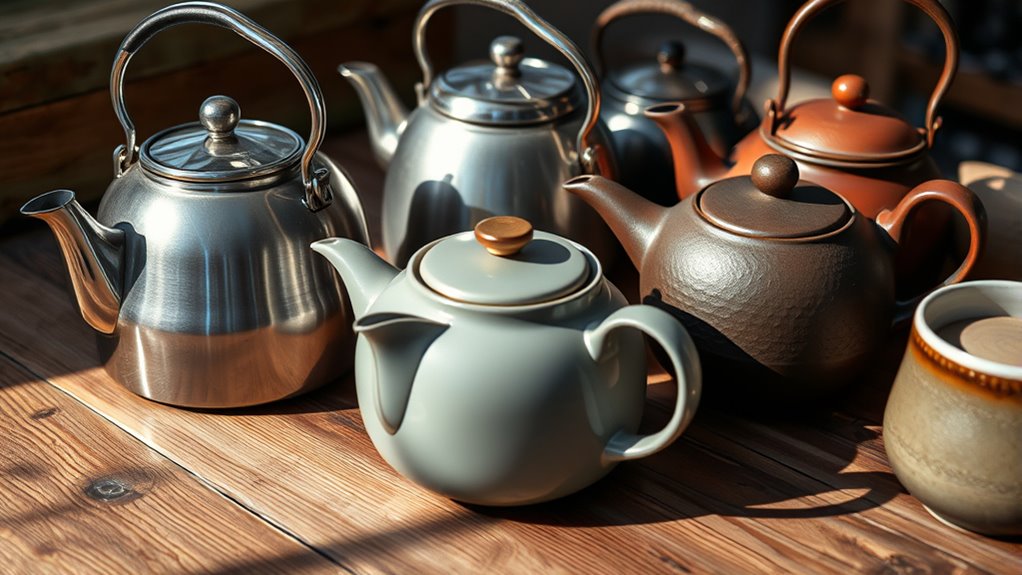
When choosing a tea kettle or teapot, the material it’s made from considerably impacts its performance, durability, and aesthetic appeal. One popular option is ceramic, known for its excellent durability when cared for properly. Ceramic teapots and kettles resist staining and odors, making them ideal for brewing different types of tea without lingering flavors. Plus, ceramic’s heat retention is impressive, helping your tea stay warm longer. However, ceramic isn’t perfect. It can crack or chip if dropped or subjected to sudden temperature changes, so you need to handle it carefully. Despite this, ceramic’s sturdiness over time makes it a reliable choice, especially if you appreciate traditional or artistic designs. Its ability to maintain consistent temperature enhances the brewing process, ensuring your tea reaches the perfect strength and flavor. On the flip side, ceramic isn’t the best conductor of heat, meaning it takes longer to heat up compared to metal options. This slower heat conduction can be a drawback if you’re in a hurry, but it also means your tea cools down more gradually, giving you extra time to enjoy your brew. Additionally, some ceramic teapots feature glazing techniques that can affect their durability and ease of cleaning.
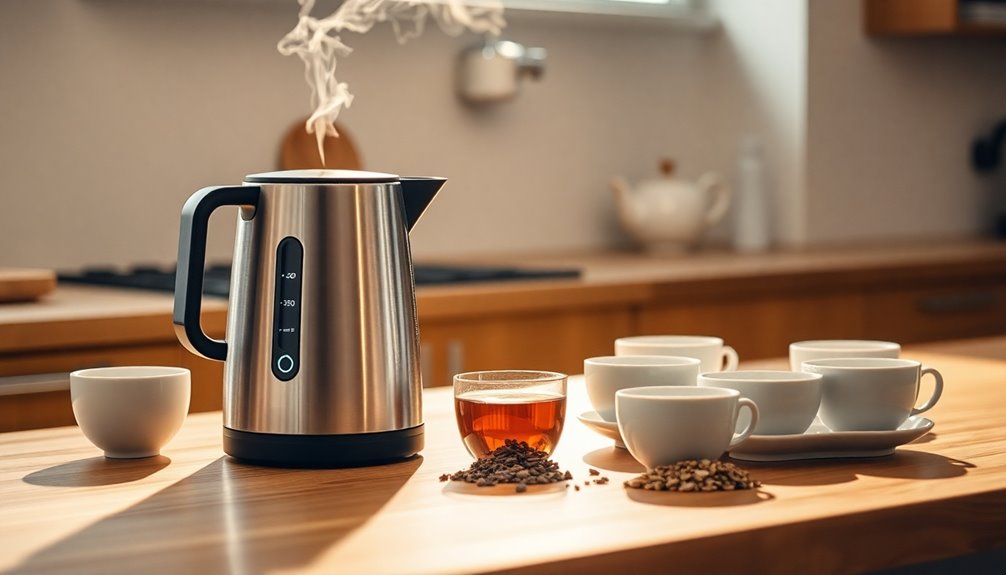
Metal kettles and teapots, on the other hand, excel in heat conduction. Materials like stainless steel, copper, or aluminum quickly transfer heat, making them highly efficient for boiling water. If you value speed and energy efficiency, metal is a smart choice because it heats up rapidly and cools down faster once removed from the heat source. This quick responsiveness is especially useful when you’re making multiple cups or need hot water in a hurry. However, metal’s fast heat conduction can also be a downside. It can lead to hot spots or uneven heating, which might affect the brewing process or cause the exterior to get dangerously hot if you’re not careful. Additionally, some metals, like copper, require regular polishing to maintain their shiny appearance and prevent tarnishing. Stainless steel is more durable and resistant to corrosion, making it a low-maintenance option, though it may not have the same aesthetic charm as copper or ceramic. While metal kettles are generally sturdy and long-lasting, they may not retain heat as evenly as ceramic, but their durability and efficiency make them a favorite for everyday use.
Frequently Asked Questions
Which Material Retains Heat the Longest?
You’ll find that cast iron retains heat the longest because of its excellent insulation properties. Its dense material keeps water hot for an extended period, making it ideal if you want warm tea over time. You’ll notice that stainless steel doesn’t hold heat as well, but it heats quickly. For the best heat retention, choose a cast iron teapot or kettle, as it keeps your tea warm longer and maintains temperature better.
Are There Health Risks Associated With Certain Kettle Materials?
You should be aware that certain kettle materials can pose health risks if they aren’t safe. For example, some non-stick coatings may release harmful fumes over time, and poorly manufactured metal kettles could leach unwanted metals into your water. Always check the material safety of your kettle, opt for high-quality, food-grade options like stainless steel or glass, and avoid materials with questionable safety to protect your health.
How Do Materials Affect Tea Flavor?
You’ll notice that the material of your kettle impacts tea flavor considerably. Ceramic kettles tend to preserve the pure, delicate flavor of your tea, offering a clean taste without additives. Metal kettles, especially those made of aluminum or cast iron, can sometimes impart a metallic taste, affecting the overall flavor. Choosing the right material helps you enjoy tea with the desired flavor profile, free from unwanted ceramic flavor or metal taste.
Which Materials Are Most Eco-Friendly?
Imagine making a positive splash with your choice—sustainable materials are truly eco-friendly options. You should look for options like stainless steel, glass, or ceramic, which are durable and often recyclable. These eco-friendly options minimize environmental impact and promote sustainability. By choosing these materials, you’re supporting eco-conscious living and reducing waste, making your tea ritual not only enjoyable but also kind to the planet.
Can Material Choice Impact Kettle Durability?
Yes, your material choice impacts kettle durability. If you pick a material prone to metal corrosion, like cheap metals, your kettle may rust or weaken over time. Conversely, high-quality stainless steel resists corrosion, lasts longer, and maintains its aesthetic appeal. So, investing in durable, corrosion-resistant materials ensures your kettle stays functional and attractive for years, saving you money and hassle in the long run.
Conclusion
Choosing the right material for your tea kettle or teapot impacts both performance and durability. Did you know that stainless steel accounts for over 60% of the market due to its affordability and longevity? Whether you prefer the quick heating of aluminum or the aesthetic appeal of ceramic, understanding each material’s pros and cons helps you make an informed choice. Ultimately, selecting the right material guarantees your tea experience is enjoyable and long-lasting.