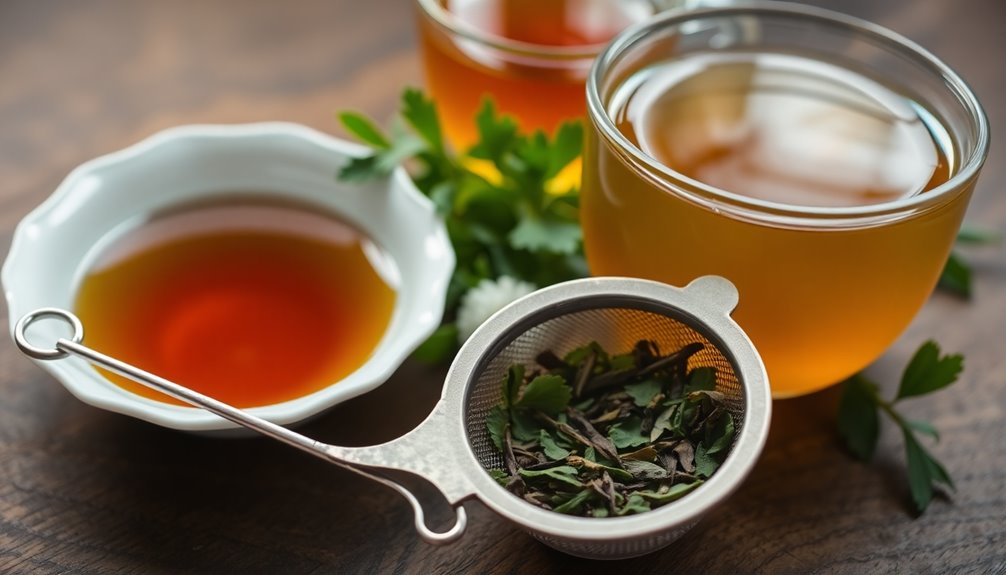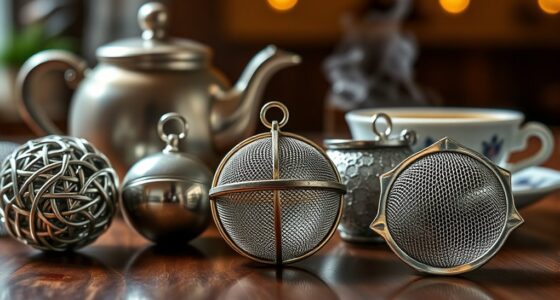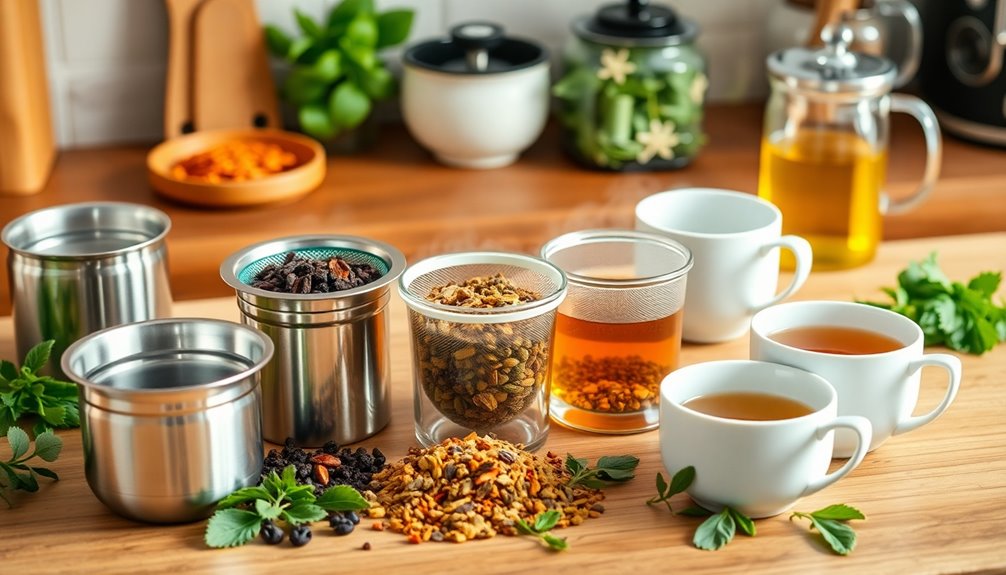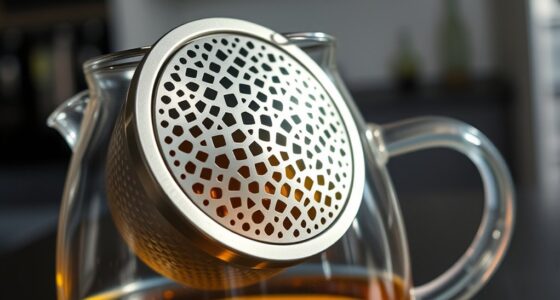
When choosing tea infusers and strainers, your main options are silicone and stainless steel. Silicone is flexible, durable, and resistant to staining, making it easy to handle and store, but quality varies and low-grade silicone may leach chemicals. Stainless steel offers a sleek look, longevity, and easy cleaning, but can be heavier and pricier. Understanding these pros and cons helps you select the best material for your brewing needs—discover more insights as you explore further.
Key Takeaways
- Silicone infusers are flexible, durable, and non-reactive, preventing flavor transfer and staining but may vary in quality and safety.
- Stainless steel infusers offer a sleek appearance, durability, and ease of cleaning, though they can be heavier and more costly.
- High-quality, food-grade silicone ensures safety and prevents chemical leaching, unlike low-grade silicone risks.
- Stainless steel mesh can sometimes be too coarse, risking small leaf escape, but is long-lasting and resistant to rust.
- Material choice impacts flavor preservation, safety, durability, and ease of maintenance, influencing overall user experience.
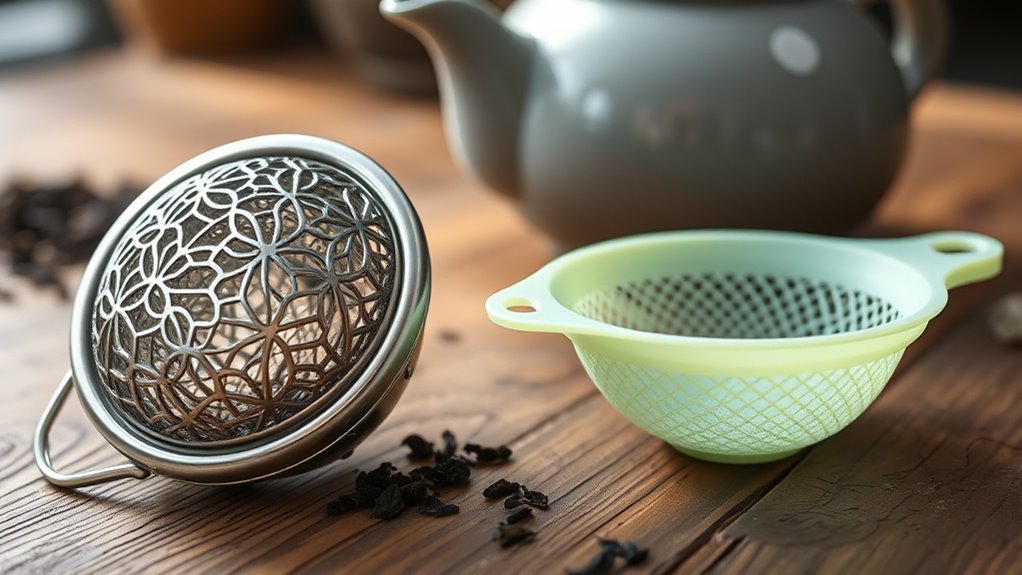
When choosing a tea infuser or strainer, understanding the materials used is essential because they directly impact the flavor, safety, and durability of your brewing tools. Silicone and stainless steel are two popular options, each with distinct advantages and considerations. Silicone infusers are praised for their flexibility and resilience, making them easy to handle and store. Silicone’s durability ensures that your infuser can withstand repeated use without cracking or breaking, even when exposed to high temperatures. Plus, silicone is naturally non-reactive, so it won’t impart unwanted flavors to your tea. However, not all silicone is created equal; high-quality, food-grade silicone is necessary to avoid concerns about chemicals leaching into your brew. When properly made, silicone infusers are safe, long-lasting, and resistant to staining or odor retention, which makes them a practical choice for everyday use.
On the other hand, stainless steel infusers appeal to those who value aesthetics and longevity. Stainless steel offers a sleek, modern look that easily complements any kitchen or tea setup. Its stainless steel aesthetics are not only attractive but also durable, resisting rust, corrosion, and staining over time. This material’s robustness means your infuser can handle frequent use without showing signs of wear, maintaining its appearance and functionality for years. Stainless steel is also easy to clean and typically dishwasher safe, adding to its convenience. Nevertheless, stainless steel infusers can sometimes be heavier or more cumbersome than silicone options, and if the mesh isn’t fine enough, small tea leaves might escape into your cup. Despite these minor drawbacks, stainless steel remains a top choice for those who want a stylish, long-lasting infuser that stands up to daily use.
Frequently Asked Questions
How Do Material Choices Affect Tea Flavor?
The material influence considerably impacts your tea flavor. For instance, stainless steel infusers won’t alter taste but may retain heat, affecting infusion time. Glass infusers allow you to see the steeping process, preserving pure flavors. Silicone is flexible and easy to handle but might introduce subtle flavors over time. Your choice of material can either enhance or subtly change the tea’s natural aroma and taste, so select wisely based on your flavor preferences.
Are There Eco-Friendly Options for Tea Infusers?
You’ll love exploring eco-friendly tea infusers! Reusable options like stainless steel or silicone are durable and gentle on the planet, while biodegradable materials like bamboo or cornstarch offer a more natural touch. These choices help reduce waste and keep your tea rituals sustainable. Embracing eco-conscious options means you enjoy your tea while caring for the environment, making each sip feel even more rewarding and guilt-free.
Can Material Impact Brewing Temperature?
Yes, the material of your tea infuser can influence brewing temperature. Some materials, like stainless steel, offer better thermal insulation, helping maintain consistent brewing temperature and improving brewing consistency. Conversely, porous materials like ceramic or certain plastics may allow heat to escape more easily, causing temperature fluctuations. Choosing a well-insulated infuser guarantees your tea steeps at the ideal temperature, delivering better flavor and aroma every time.
How Do I Prevent Rust With Metal Infusers?
To prevent rust with your metal infuser, guarantee you thoroughly dry it after each use to avoid metal corrosion. Avoid soaking it in water for extended periods, and occasionally scrub away any buildup. Use infusers made of rust-resistant materials like stainless steel, which offers better rust prevention. Additionally, store your infuser in a dry place, and consider applying a light coat of food-grade oil to protect against moisture and corrosion.
Are There Health Concerns With Certain Plastics?
You might be surprised, but plastic safety is a real concern when it comes to tea infusers. Certain plastics can leach chemicals into your tea, especially when heated. To stay safe, look for BPA-free options and avoid older plastics that may contain harmful substances. Being mindful of chemical leaching helps guarantee your tea remains healthy and free from unwanted toxins. Always choose high-quality, food-grade plastics for peace of mind.
Conclusion
Choosing the right material for your tea infuser or strainer impacts flavor, durability, and safety. Stainless steel is popular for its longevity, while silicone offers flexibility. Did you know that over 70% of tea drinkers prefer stainless steel for its rust resistance? By understanding each material’s pros and cons, you can enjoy a perfect brew every time. Make an informed choice, and your tea experience will be more satisfying and worry-free.