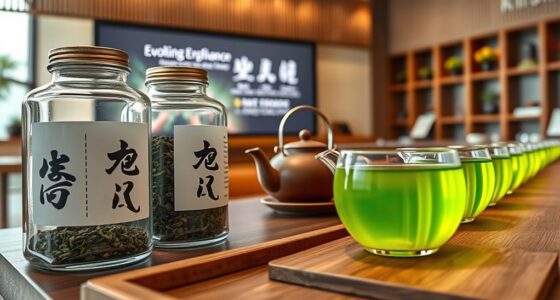
The tea industry has experienced major shifts over centuries, with innovations shaping how you grow, brew, and enjoy tea. Early methods focused on simple techniques, but now modern cultivation uses precise practices like shading and pest control to boost quality. Brewing has advanced from basic steeping to precision tools, allowing customization based on tea types. These innovations keep the industry vibrant and connected to tradition while embracing new trends, so explore further to see how these developments continue to evolve.
Key Takeaways
- The tea industry evolved from basic cultivation and brewing methods to advanced techniques like shading and precise harvesting.
- Historical brewing practices shifted from simple infusions to specialized methods such as Gong Fu Cha and modern temperature-controlled brewing.
- Industry trends moved toward customization, with consumers experimenting based on tea chemistry and oxidation levels.
- Technological innovations from cultivation to packaging increased global access and diversified tea styles.
- Ongoing development blends traditional practices with modern technology, ensuring a dynamic, innovative future for the tea industry.

The tea industry has evolved dramatically over centuries, driven by innovations in cultivation, processing, and distribution. As you explore this history, you’ll see how advancements in tea cultivation laid the foundation for quality and scale. Early on, tea farmers experimented with different methods of planting, pruning, and harvesting to maximize leaf quality and yield. Modern tea cultivation now employs precise techniques like shading to influence flavor profiles and pest management to guarantee healthier plants. These innovations have allowed growers to produce consistent, high-quality leaves more efficiently, meeting the demands of global markets.
Alongside cultivation, brewing techniques have also transformed how you enjoy tea. Historically, tea was brewed using simple methods, but over time, enthusiasts and professionals alike have developed a variety of ways to extract the best flavors. Today, you might use temperature-controlled kettles, steeping timers, or even specialty equipment to refine your brew. Techniques such as Gong Fu Cha, originating in China, emphasize multiple short infusions to reveal complex flavors from the leaves, while Western methods often favor longer steeping times for a more robust taste. These innovations in brewing not only enhance your experience but also allow you to appreciate the nuanced profiles of different teas, from delicate green teas to bold black teas.
The shift in brewing techniques reflects a broader trend towards customization and precision in tea preparation. As you learn about these methods, you’ll notice how they’re driven by a deeper understanding of tea chemistry and leaf processing. For example, the oxidation level of leaves influences brewing temperature and time, optimizing flavor extraction. The industry’s focus on educating consumers about brewing techniques has led to a more sophisticated appreciation of tea, encouraging experimentation and personalization.
Moreover, these advances in cultivation and brewing have contributed to the global popularity of tea. You now have access to a diverse array of teas, each with unique origins and preparation styles, thanks to innovations that span from farm to cup. The industry’s evolution continues as new techniques in both cultivation and brewing emerge, often inspired by traditional practices but enhanced with modern technology. This ongoing development guarantees that your tea-drinking experience remains dynamic, exciting, and rich in history, connecting you with centuries of tradition while embracing the future of tea innovation.
Frequently Asked Questions
How Has Climate Change Affected Tea Cultivation Globally?
Climate change has considerably impacted tea cultivation globally by disrupting traditional growing regions and threatening crop yields. You need to focus on building climate resilience and adopting new crop adaptation strategies to cope with unpredictable weather patterns. These measures help guarantee tea plants can survive and thrive despite changing conditions, safeguarding your harvests and supporting the industry’s future stability. Proactive adaptation is essential to minimize risks linked to climate variability.
What Are the Latest Technological Advancements in Tea Processing?
You’ll find that the latest technological advancements in tea processing include enhanced automation and precise tea fermentation controls. Processing automation streamlines production, reducing labor and ensuring consistent quality. Innovations also focus on optimizing tea fermentation, allowing producers to better control flavor development and aroma. These advancements help meet rising demand and improve efficiency, making tea production more sustainable and consistent while preserving unique regional qualities.
How Do Consumer Preferences Influence Tea Industry Innovations?
Think of the tea industry as a ship steering through changing seas—you’re the captain responding to every wave of consumer demand. When flavor trends shift toward wellness teas or exotic blends, innovators adapt quickly, crafting products that meet these preferences. Your focus on consumer demand guides the development of new flavors, packaging, and even brewing methods, ensuring your offerings stay relevant and appealing in a competitive market.
What Role Do Small-Scale Farmers Play in Industry Trends?
Smallholder contributions are essential to shaping industry trends, as they often introduce innovative local farming practices that improve quality and sustainability. You see, small-scale farmers adapt quickly to changing consumer preferences and environmental conditions, influencing broader industry shifts. By embracing new techniques and organic methods, they help set sustainable standards and diversify product offerings. Your support for these farmers encourages continued innovation and preserves traditional practices that benefit the entire tea industry.
How Is Sustainability Integrated Into Modern Tea Production Practices?
You see sustainability in modern tea production through organic certification and fair trade initiatives. These practices guarantee that farmers use eco-friendly methods, reduce chemical use, and support fair wages. By choosing teas with organic labels, you promote environmentally responsible farming. Fair trade initiatives help small-scale farmers thrive, fostering social and economic sustainability. Together, these efforts create a more ethical and sustainable industry that benefits both producers and consumers alike.
Conclusion
As you reflect on the evolution of the tea industry, you’ll see how innovation has shaped its journey like a steady stream carving new pathways. From ancient traditions to modern trends, each development has refreshed the industry’s landscape, much like a gentle breeze invigorates a still pond. Embracing these changes guarantees you stay connected to the rich heritage and exciting future of tea, making every sip a proof to how tradition and innovation blend seamlessly.