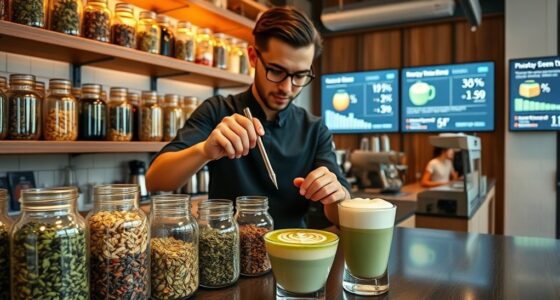
The tea industry is shifting towards eco-friendly packaging, with brands embracing biodegradable, recycled, and reusable materials. Innovative designs focus on minimalism and sustainability cues like certifications and QR codes for transparency. Sellers aim to reduce waste through sustainable sourcing and print-on-demand methods, helping lower environmental impact. If you want to discover how these advancements are shaping your favorite tea choices and how brands communicate their green efforts, there’s more to explore.
Key Takeaways
- Growing adoption of eco-friendly, biodegradable, and reusable packaging materials to reduce environmental impact.
- Emphasis on minimalistic, modern packaging designs that highlight sustainability certifications and eco-friendly features.
- Enhanced supply chain transparency with labels, QR codes, and certifications promoting ethical and sustainable sourcing.
- Increased use of print-on-demand packaging to minimize waste and inventory excess in the industry.
- Industry innovation driven by consumer demand for sustainable practices, product transparency, and environmentally responsible solutions.
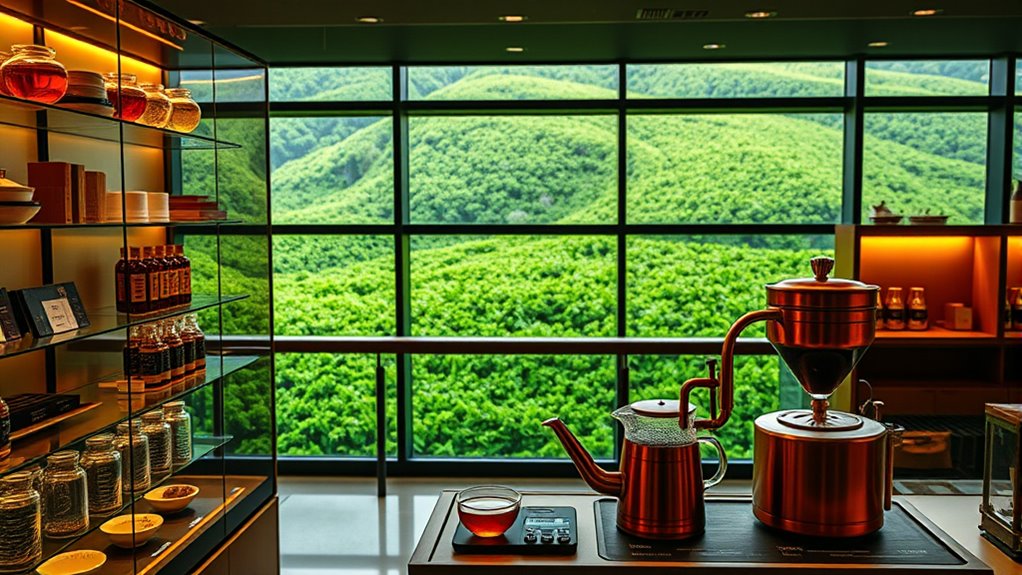
Have you ever wondered how the tea industry is evolving in response to changing consumer preferences and technological advancements? One clear area of transformation is tea packaging. Gone are the days when simple paper or foil pouches sufficed; today, companies are innovating with eco-friendly, biodegradable, and reusable packaging solutions. You’ll notice a shift toward minimalistic designs that not only look modern but also communicate a brand’s commitment to sustainability. Many brands now opt for packaging made from recycled materials or plant-based plastics, reducing environmental impact without compromising freshness or quality. This shift is driven by consumers like you who increasingly prioritize eco-conscious choices, prompting brands to rethink their packaging strategies. Additionally, incorporating easy-to-clean features in packaging can extend product freshness and lifespan, aligning with sustainability goals. Sustainability practices are at the core of these packaging innovations. You might see tea brands adopting practices such as using biodegradable tea bags instead of traditional paper or plastic ones, or switching to reusable tins and containers that can be repurposed long after the tea is gone. Companies are also exploring innovative ways to reduce waste throughout their supply chains. For example, some are sourcing packaging from suppliers that adhere to strict environmental standards or employing print-on-demand methods to minimize excess inventory. These initiatives not only help lower the carbon footprint but also resonate with consumers who want their purchasing decisions to reflect their environmental values.
Furthermore, transparency plays a vital role. Brands are now more willing to share the story behind their packaging and sustainability efforts, which helps build trust. Labels prominently display certifications for organic or fair-trade practices, emphasizing a commitment to ethical and eco-friendly standards. You’re likely to see labels highlighting “biodegradable,” “recyclable,” or “carbon-neutral” as key selling points, giving you confidence that your purchase aligns with your values. This transparency encourages you to make more informed choices and fosters a deeper connection between you and the brands you support. The integration of technology has also enhanced the sustainability aspect of tea packaging. Innovative solutions like QR codes on packaging allow you to scan and access detailed information about the product’s origins, sustainability practices, and recycling instructions. This technological integration empowers you to participate actively in sustainable consumption, making it easier to make choices that benefit the environment. As the industry continues to evolve, expect even more creative, sustainable packaging solutions that prioritize environmental health while maintaining quality and freshness. Ultimately, these trends reflect a shared responsibility among producers and consumers to foster a greener, more sustainable future for the tea industry.

Aksuaple Eco-Fil Disposable Tea Filter Bags for Loose Tea, Wood Pulp Material, Biodegradable and Compostable, Unbleached Empty Tea Infuser Sachets with Drawstring, 100 Pack (3.2inch x 4.0inch)
Biodegradable Material: The Ultra-violet ray sterilized tea bags are made of wood pulp paper, sealed by heat press,…
As an affiliate, we earn on qualifying purchases.
As an affiliate, we earn on qualifying purchases.
Frequently Asked Questions
How Do Regional Climate Changes Affect Tea Cultivation Worldwide?
Regional climate changes directly impact your tea cultivation by altering growing conditions. You need to focus on climate adaptation strategies to manage unpredictable weather patterns, such as temperature shifts and irregular rainfall. These changes challenge crop resilience, requiring you to select hardy tea varieties and adjust farming practices. By doing so, you can safeguard your harvests, maintain quality, and ensure sustainable production despite the unpredictable effects of climate change.
What Are the Most Sustainable Packaging Options for Tea Products?
Like a leaf floating gently on water, sustainable tea packaging offers eco-friendly options. You should choose biodegradable packaging to break down naturally, reducing waste. Reusable containers are also excellent, allowing you to refill and reuse, cutting down on single-use plastics. These choices help protect the environment and appeal to eco-conscious consumers, making your tea brand more responsible while maintaining freshness and quality.
How Is AI Transforming Quality Control in Tea Production?
You’ll find AI transforming quality control in tea production through automation and precision. AI automation streamlines processes, reducing human error, while advanced quality sensors monitor leaf quality, aroma, and color in real-time. This combination enables you to detect defects early, guarantee consistency, and maintain high standards efficiently. As a result, you can deliver superior tea products, minimize waste, and stay competitive in a rapidly evolving industry.
What Are Emerging Markets for Specialty and Organic Teas?
You might think emerging markets for specialty and organic teas are limited, but they’re expanding rapidly. Market expansion in regions like Southeast Asia, Latin America, and Africa shows growing consumer interest. You’ll see product diversification as brands introduce unique blends tailored to local tastes. This trend proves that global demand for high-quality, organic teas isn’t slowing down, making these markets exciting opportunities for growth and innovation in the industry.
How Do Consumer Preferences Vary Across Different Age Groups?
You’ll notice that consumer behavior varies markedly across age demographics. Younger consumers often prefer innovative, flavored, and specialty teas, seeking unique experience and health benefits. Middle-aged groups tend to prioritize organic and functional teas for wellness. Older adults usually favor traditional teas, valuing familiarity and comfort. Understanding these preferences helps you tailor products to different age groups, ensuring your offerings meet diverse needs and maximize appeal across the consumer spectrum.

Tianhui 3 Packs Tea Tin Canister for Loose Tea Metal Tea Canister 9 oz 15 oz Round Tin Can for Coffee Beans Tea Container for Kitchen Storage Sugar Matcha Spice Powder (Mint Green, S_2.95×2.95)
Reliable Material: tea caddy is made of quality tinplate material with exquisite workmanship, can directly contact food and…
As an affiliate, we earn on qualifying purchases.
As an affiliate, we earn on qualifying purchases.
Conclusion
As you sip through the evolving landscape of the tea industry, you’re tasting more than just flavors—you’re savoring innovation’s vibrant bloom. From sustainable practices to bold new blends, the industry is a garden of endless possibilities. Embrace these trends like a gentle breeze, carrying you into a future where tradition dances with creativity. With every cup, you’re part of a story steeped in progress, inviting you to enjoy the rich aroma of a world continuously brewing fresh ideas.

MAQIHAN 50 Stand Up Pouches Bags – 3.5"×5.5" Resealable Ziplock Kraft Paper Bags Window Food Packaging Homemade Bagel Bread Cookie Candy Tea Herb Spice Coffee Jerky Dog Treat Small Business
Convenient Stand Up Bag:MAQIHAN stand up pouch has a flat bottom ,after putting into items , the bottom…
As an affiliate, we earn on qualifying purchases.
As an affiliate, we earn on qualifying purchases.

100PCS Customized Logo & QR Code Resealable Packaging Bag Zipper Paper Bags with Clear Window for Coffee, Tea, Snacks, Candy, and More (Kraft, 7 * 9CM/2.8"*3.5"-100PCS-One Color One Side Print)
Customized Service:Elevate your brand with our single-sided, single-color customization service. You can print your logo, QR code, brand…
As an affiliate, we earn on qualifying purchases.
As an affiliate, we earn on qualifying purchases.