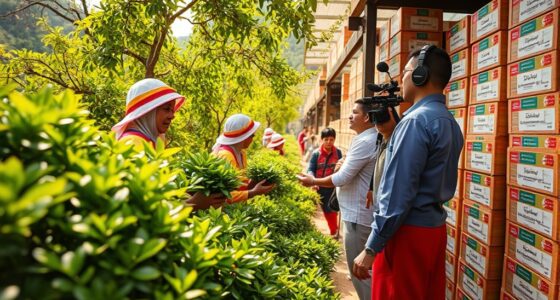
The tea industry has a long history, beginning thousands of years ago in China and India, with traditional cultivation methods evolving alongside modern techniques like organic farming and sustainability. As consumer preferences shift toward healthier, ethically sourced teas, the industry expands globally, incorporating new regions and diverse flavors. Market trends now focus on transparency, fair trade, and innovation. To discover how these changes shape today’s tea landscape and what’s next, keep exploring this fascinating evolution.
Key Takeaways
- The tea industry has ancient origins in regions like China, India, and Sri Lanka, shaping cultural and economic developments over millennia.
- Traditional cultivation methods have evolved with modern techniques, including organic and sustainable practices, to improve yield and quality.
- Market trends favor organic, specialty, and ethically sourced teas, driving innovation and diversification in global tea offerings.
- Expansion into new regions and increased consumer awareness have transformed supply chains, emphasizing transparency and fair trade.
- Ongoing news highlights industry shifts toward sustainability, ethical sourcing, and technological advancements in cultivation and processing.
The tea industry has a rich history that spans thousands of years, shaping cultures and economies around the world. As you explore this industry, you’ll notice that tea cultivation plays a essential role in determining the quality and variety of teas available today. From the lush hills of China to the sprawling plantations in India and Sri Lanka, the way tea is grown has evolved considerably over centuries. You might find it interesting that traditional methods of tea cultivation are now often complemented by modern agricultural techniques, aimed at increasing yield and sustainability. This shift has been driven by changing market trends, which influence everything from the types of tea produced to the regions that prioritize tea farming.
Market trends have become a powerful force in shaping the development of the tea industry. As consumer preferences shift toward healthier, organic, and ethically sourced teas, producers are adjusting their practices accordingly. You’ll see a growing demand for specialty teas like matcha, herbal infusions, and wellness blends, which reflect broader health-conscious trends. The rise of e-commerce has also transformed how tea is marketed and sold, making it easier for small-scale farmers and boutique brands to reach a global audience. This digital shift influences market trends by increasing competition and encouraging innovation in product offerings.
Historically, tea cultivation was limited to specific regions, but today, you can find tea plantations in countries that weren’t traditionally associated with tea production. This expansion is partly driven by market trends favoring diverse flavors and unique blends, which encourages farmers in new territories to start cultivating tea. As a result, the industry experiences a diversification that impacts global supply chains and pricing. You’ll also notice that sustainability and fair trade practices are becoming more central to market trends, as consumers become more aware of the environmental and social impacts of their tea choices. Furthermore, advancements in agricultural techniques such as organic farming and sustainable practices are shaping how tea is produced to meet these evolving demands.
In addition, market trends now emphasize transparency and traceability in the supply chain. This means you can expect companies to share more about their sourcing practices, ensuring that the tea you buy is ethically grown and harvested. These evolving trends influence how tea is cultivated, marketed, and consumed worldwide. By understanding the link between tea cultivation and market trends, you gain insight into where the industry is heading and how it continues to adapt to changing consumer demands. Whether you’re a casual tea drinker or a dedicated connoisseur, keeping an eye on these developments helps you appreciate the dynamic nature of the tea industry and its ongoing evolution.
Frequently Asked Questions
How Have Global Climate Changes Affected Tea Production?
Climate change has profoundly impacted tea production by causing unpredictable weather patterns and rising temperatures. You need to focus on climate resilience and crop adaptation strategies to cope with these changes. By adopting new farming techniques and selecting resilient tea varieties, you can help guarantee consistent yields. Staying proactive in managing climate risks allows you to maintain quality and sustainability in your tea cultivation despite ongoing environmental challenges.
What Are the Latest Innovations in Tea Processing Technology?
You’ll find that the latest innovations in tea processing technology include advanced processing automation, which streamlines production and guarantees consistent quality. Additionally, new methods in tea fermentation allow for precise control over flavor profiles and health benefits. These innovations enable you to produce high-quality teas more efficiently, meet growing consumer demands, and explore unique flavor combinations, making your tea offerings more competitive and appealing in the global market.
How Do Trade Policies Impact the Global Tea Market?
Trade policies, like tariffs and trade agreements, directly impact the global tea market by influencing prices and supply chains. When tariffs increase, you might face higher costs, reducing profit margins or raising prices for consumers. Conversely, favorable trade agreements can lower tariffs, making tea more affordable and accessible worldwide. These policies shape trade flows, determine market competitiveness, and ultimately affect your access to a variety of teas and the industry’s growth.
What Are Emerging Trends in Tea Consumer Preferences?
You’ll notice that 60% of tea drinkers now prefer organic blends, highlighting a shift towards health benefits and natural options. Consumers are increasingly seeking teas that offer functional benefits like stress relief or immune support. This trend reflects a growing awareness of health, prompting producers to innovate with organic ingredients and wellness-oriented flavors, making your choices more personalized and health-conscious than ever before.
How Is Digital Marketing Transforming Tea Brand Outreach?
Digital marketing transforms your tea brand outreach by leveraging social media platforms to reach wider audiences quickly. You can use influencer marketing to build trust and authenticity, showcasing your tea products through engaging content. By doing so, you connect directly with consumers, boost brand awareness, and foster loyalty. This dynamic approach allows you to stay ahead of competitors, adapt to consumer preferences, and create a strong online presence that drives sales.
Conclusion
As you reflect on the journey of the tea industry, remember how it’s like a delicate leaf, nurtured through centuries of innovation and tradition. Just as a single sip can evoke comfort and connection, the industry’s story is woven with resilience and passion. From humble beginnings to global influence, it’s a demonstration to how something simple can become a treasured part of lives worldwide, reminding you that perseverance brews the sweetest successes.