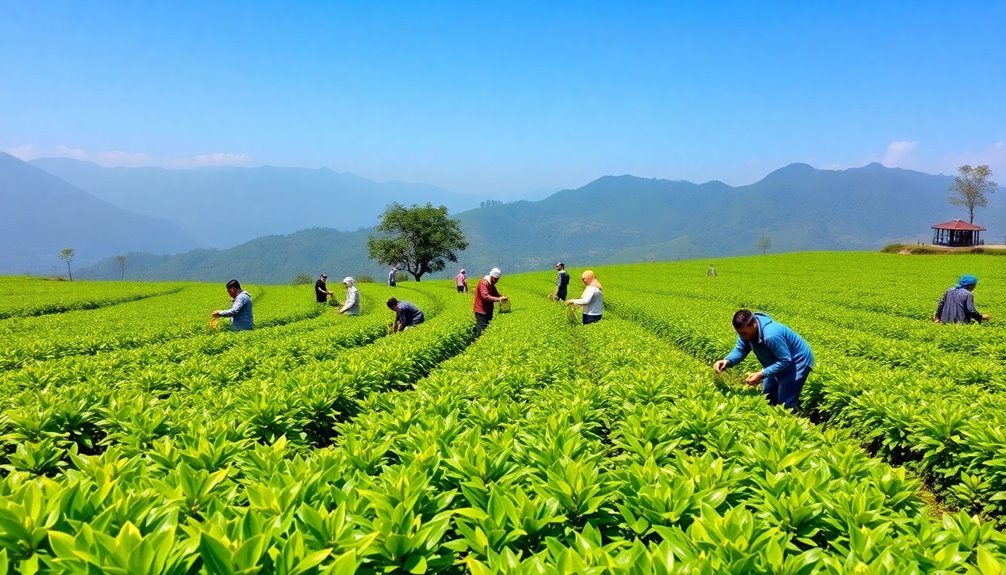

The future of the tea industry looks promising, driven by a shift toward sustainability, technology, and consumer transparency. You’ll see brands adopting organic farming, eco-friendly practices, and traceability from farm to cup. Innovation in flavors, wellness blends, and direct-to-consumer sales will expand opportunities. As these trends grow, the industry aims for responsible growth and differentiation. Continue exploring to discover how these changes will shape your tea choices and the market landscape ahead.
Key Takeaways
- Sustainability practices will become essential for competitiveness, emphasizing organic farming, water conservation, and supply chain transparency.
- Market diversification into herbal, functional, and wellness teas will expand consumer segments and reduce reliance on traditional varieties.
- Technological innovations like IoT, blockchain, and e-commerce will enhance quality control, traceability, and direct consumer engagement.
- Transparency and ethical sourcing will strengthen consumer trust and brand loyalty in a rapidly evolving market.
- Industry growth will be driven by responsible practices, product diversification, and technological adoption aligned with changing consumer preferences.

The tea industry is poised for significant transformation as evolving consumer preferences, technological advancements, and sustainability concerns reshape the market. You’ll find that sustainability is no longer just an optional aspect but a core focus for industry players looking to meet the demands of eco-conscious consumers. Implementing sustainable practices, such as organic farming, water conservation, and waste reduction, becomes essential to differentiate your brand and build trust. These efforts not only support environmental health but also appeal to a growing segment of buyers who prioritize ethically produced products. As sustainability takes center stage, companies are increasingly transparent about their supply chains, ensuring consumers can trace their tea from farm to cup. This transparency fosters loyalty and aligns your brand with the global shift toward responsible consumption.
Market diversification is another critical factor shaping the future of the tea industry. You’ll see brands expanding beyond traditional black and green teas to include a wider variety of herbal infusions, functional teas, and wellness blends. This diversification helps you tap into new customer segments and adapt to different tastes and health trends. For example, herbal teas with added vitamins or adaptogens are gaining popularity among health-conscious consumers seeking functional benefits. By diversifying your product offerings, you can reach out to niche markets and create unique experiences that stand out amid intense competition. This approach also mitigates risks associated with reliance on a few product lines and prepares your business for shifting market dynamics.
Technological advancements play a pivotal role in this transformation. Innovations such as precision agriculture, IoT sensors, and blockchain traceability make it easier for you to monitor quality, improve supply chain transparency, and reduce environmental impact. Additionally, e-commerce platforms and digital marketing enable you to connect directly with consumers, offering personalized experiences and fostering brand loyalty. These tools make it easier to introduce new products, gather customer feedback, and adapt quickly to market trends. The integration of technology not only enhances operational efficiency but also helps you align with sustainability goals by minimizing waste and optimizing resource use.
Top picks for "future outlook industry"
Open Amazon search results for this keyword.
As an affiliate, we earn on qualifying purchases.
Frequently Asked Questions
What Are the Emerging Sustainable Practices in Tea Production?
You can enhance tea farm sustainability by adopting eco-friendly practices like organic farming, reducing chemical use, and implementing water conservation techniques. Using renewable energy sources and waste management strategies also promote eco-friendly practices. These approaches help protect the environment, improve soil health, and ensure long-term productivity. By prioritizing sustainable methods, you support a healthier ecosystem and meet consumer demand for ethically produced, environmentally conscious tea.
How Will Climate Change Impact Global Tea Cultivation?
Climate change will challenge your tea cultivation by causing unpredictable weather patterns and rising temperatures. To stay resilient, you need to focus on climate adaptation strategies like selecting crop varieties with higher resilience and adjusting planting schedules. These practices help improve crop resilience, ensuring your tea plants can withstand environmental stresses. Staying proactive in adopting these measures is essential to maintain quality and yield in a changing climate.
What Are the Latest Technological Innovations in Tea Processing?
You might be surprised to learn that recent technological innovations in tea processing include advanced processing machinery that boosts efficiency and consistency. Coincidentally, new methods in tea fermentation are enhancing flavor profiles and health benefits. These innovations streamline production, reduce waste, and improve quality, making your favorite teas more flavorful and sustainable. As technology advances, you’ll notice better quality teas reaching your cup faster and more reliably than ever before.
How Is Consumer Behavior Shifting Towards Organic and Specialty Teas?
You notice that consumer preferences are shifting towards organic and specialty teas because of growing health trends. You see more people seeking natural, high-quality options that promote wellness and sustainability. This change influences your choices, encouraging you to explore unique blends and organic varieties. As health-conscious consumers, you prioritize teas that align with your values, driving demand for premium, organic, and artisanal products in the market.
What New Markets Are Expected to Grow in the Next Decade?
Imagine new horizons like untapped tea gardens waiting to be explored. You’ll see emerging markets in Asia, Africa, and Latin America flourish through tea export growth and market diversification. These regions symbolize fresh beginnings and vibrant opportunities. As you expand your reach, you’ll tap into these dynamic markets, fueling your growth. Embrace this journey, because the next decade promises exciting chances to grow your brand and deepen your global presence.
Conclusion
Looking ahead, the tea industry shows promising growth, with global consumption expected to rise by 4% annually over the next five years. As a tea enthusiast or industry stakeholder, you’ll want to stay alert to trends like organic and specialty teas gaining popularity. This shift reflects consumers’ increasing health consciousness. Embrace these changes, and you’ll be part of a vibrant, evolving market that’s projected to reach over $50 billion worldwide by 2025.