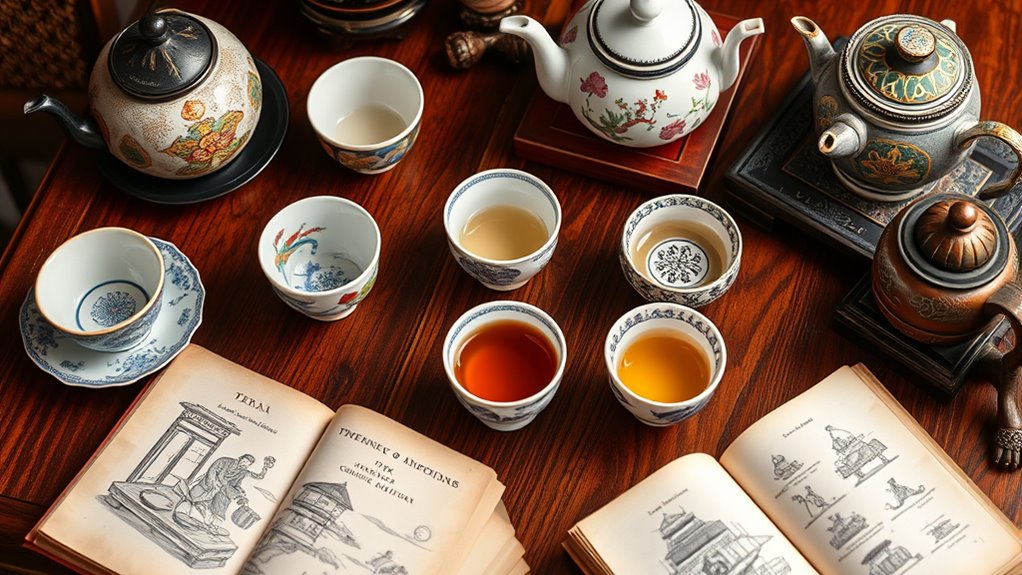

Tea’s impact on art and literature varies across cultures, reflecting deep-rooted values and beliefs. In East Asia, you’ll find it symbolizing harmony, spirituality, and mindfulness, inspiring poetry, paintings, and rituals. In Europe, especially during the Victorian era, it represented civility and social status, often critiquing societal norms. Across all traditions, tea acts as a powerful motif for inner peace and cultural identity. Exploring this influence further reveals how tea continues to shape human expression worldwide.
Key Takeaways
- Tea symbolizes harmony, tranquility, and spiritual enlightenment in East Asian art and literature, influencing themes of transcendence and mindfulness.
- In European culture, tea represents civility, social status, and elegance, shaping narrative character traits and societal norms.
- Tea acts as a metaphor for inner peace and societal balance across diverse cultural stories and artistic expressions.
- Artistic portrayals depict tea as a vessel for emotional depth, philosophical ideas, and cultural identity globally.
- Modern interpretations explore tea’s evolving symbolic meanings through innovative art forms and cultural narratives worldwide.
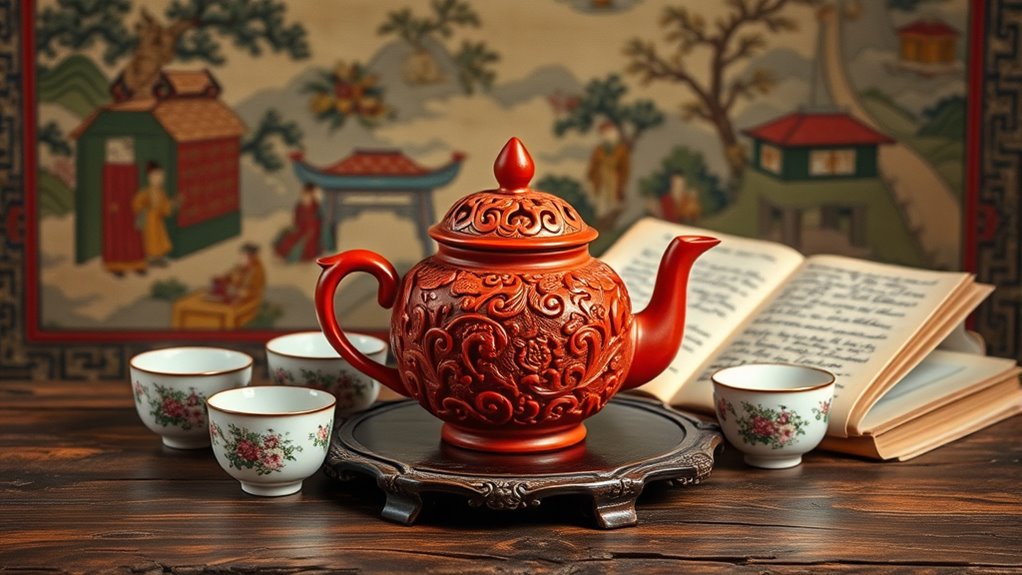
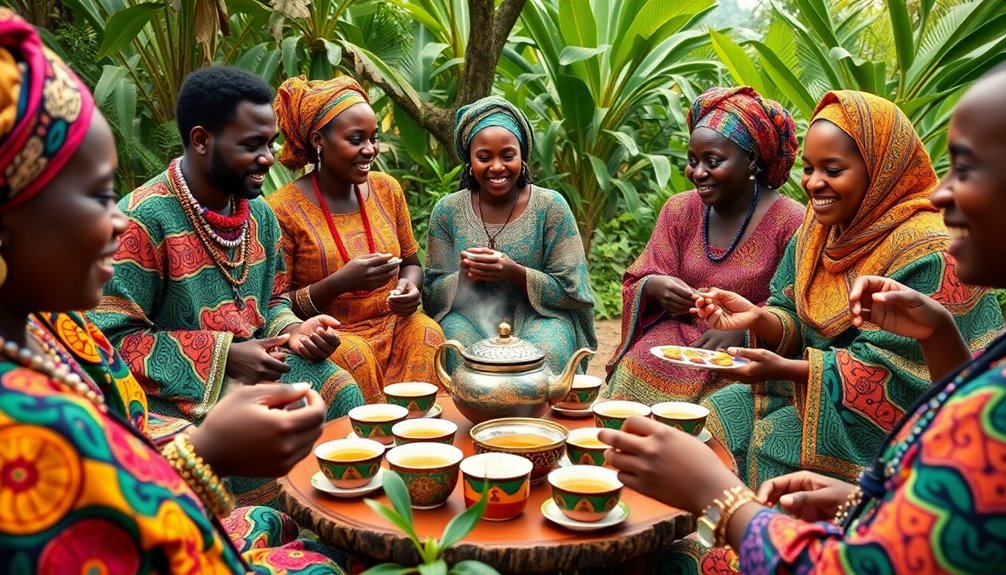
Tea has long been more than just a beverage; it’s a powerful cultural symbol that influences art and literature across the world. When you explore different cultures, you’ll find that tea embodies much more than its physical presence—it represents hospitality, tradition, and philosophical reflection. In many societies, tea symbolism carries deep meanings that resonate through centuries, shaping stories, artworks, and customs. For instance, in East Asia, tea is often associated with harmony, tranquility, and spiritual enlightenment. Artists and writers incorporate these themes into their work, using tea as a metaphor for inner peace or societal balance. Literary references frequently depict tea as a catalyst for social bonding or a symbol of refinement, highlighting its role in shaping cultural identity.
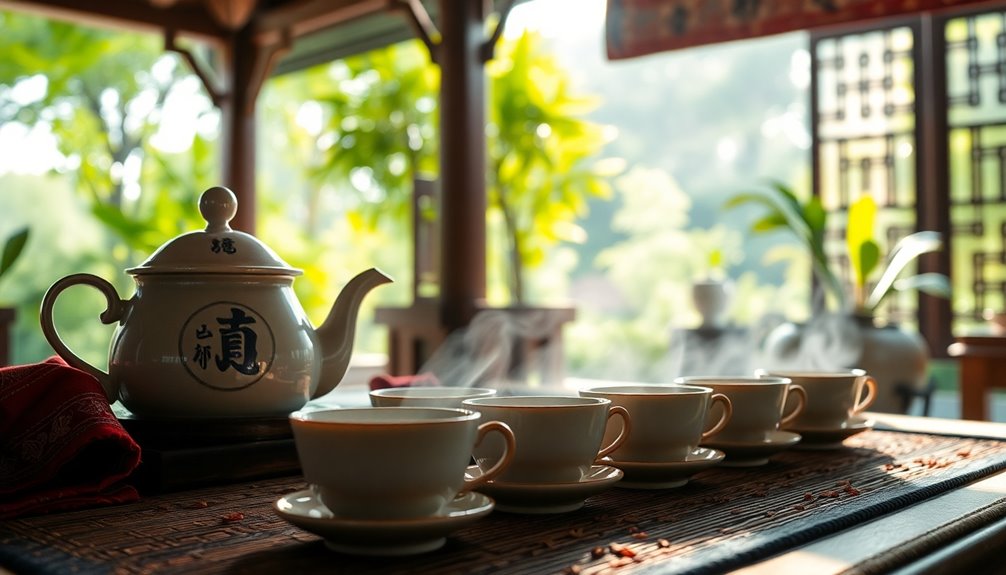
In Chinese literature, tea’s significance is profound. Classic poems and stories often elevate tea as a symbol of simplicity and purity, echoing Taoist and Buddhist philosophies. The act of tea preparation and drinking becomes a ritual that signifies mindfulness and respect. You might notice that poets use tea imagery to explore themes of harmony and transcendence, elevating everyday moments into profound reflections on life. Similarly, Japanese haiku frequently reference tea to evoke serenity and fleeting beauty, emphasizing the transient nature of existence. These literary references reinforce tea’s role as a vessel for philosophical ideas and emotional depth, making it an essential motif in Asian art and literature. Additionally, the advent of adaptive learning technologies in education has led to more nuanced interpretations of cultural symbols like tea, allowing scholars to explore their evolving meanings in modern contexts.
Across Europe, tea’s arrival sparked a different set of symbols and literary allusions. During the Victorian era, tea became synonymous with civility, social status, and elegance. Writers used tea symbolism to critique societal norms or to highlight the importance of hospitality and social etiquette. In literature, scenes centered around tea often reveal character traits—politeness, sophistication, or even subtle rebellion against tradition. For example, authors like Jane Austen used tea scenes to underscore social dynamics and personal relationships, embedding tea into the fabric of cultural storytelling. These references serve to remind you of tea’s ability to act as a social lubricant and a marker of cultural identity.
Throughout history, the presence of tea in art and literature underscores its role as a universal symbol that transcends borders. Whether representing spiritual enlightenment, social hierarchy, or personal reflection, tea remains a powerful motif. As you observe these literary references and artistic portrayals, you’ll see how tea’s symbolism continues to influence cultural narratives, shaping how societies understand themselves and their traditions. Its enduring presence in art and literature highlights its profound impact on human expression, making tea much more than just a beverage—it’s an emblem of cultural identity and philosophical insight.
Frequently Asked Questions
How Did Tea Influence Traditional Clothing Styles Across Cultures?
Tea influenced traditional clothing styles by inspiring unique cultural attire like the Tea dress, which became popular in Western fashion, reflecting elegance and leisure. In Asian cultures, tea ceremonies influenced clothing choices, encouraging intricate designs and delicate fabrics in cultural attire. You can see how tea’s cultural significance shaped traditional clothing, blending practicality with tradition, and inspiring fashion that echoes the importance of tea in social and cultural rituals across different societies.
Are There Specific Tea Ceremonies That Inspired Famous Artworks?
Yes, certain tea ceremonies have inspired famous artworks through tea-infused paintings and ceremonial aesthetics. You can see how artists capture the serenity and elegance of rituals like the Japanese tea ceremony or Chinese Gongfu tea. These scenes often highlight intricate details, emphasizing the beauty of the utensils and setting. By observing these paintings, you gain insight into the cultural significance and delicate artistry that define these timeless traditions.
How Does Tea’s Symbolism Vary Between Eastern and Western Literature?
You’ll notice that in Eastern literature, tea symbolizes harmony, mindfulness, and spiritual growth, often serving as a Cultural symbolism reflecting Zen ideals. In Western works, tea can represent social status, hospitality, or even transience, becoming a Literary motif that highlights societal values. This contrast enriches your understanding of how tea’s symbolism varies, revealing deeper cultural meanings and shaping storytelling across different traditions.
What Role Did Tea Play in the Development of Calligraphy and Visual Arts?
Tea served as a gentle muse, guiding your hand in calligraphy and visual arts. You’ll find that tea’s influence flows through your brushstrokes like a calming stream, inspiring delicate, fluid ink designs. The warmth of tea fuels your creativity, turning simple moments into masterpieces. Its subtle aroma and ritualistic presence unleash ink inspiration, making each stroke a reflection of serenity and harmony rooted deep in cultural artistry.
How Has Modern Art Reinterpretated Historic Tea-Related Themes?
Modern art reinterprets historic tea-related themes by blending traditional symbols with contemporary styles, inviting you to see the cultural significance in new ways. Artists use vibrant colors, abstract forms, and mixed media to explore tea’s role in identity, rituals, and social change. This cultural reinterpretation challenges old perspectives, making you reflect on tea’s enduring influence while showcasing its evolving presence across different artistic movements today.
Conclusion
Throughout history, tea has woven itself into the fabric of diverse cultures, inspiring art and literature that reflect their unique traditions and values. It’s more than just a beverage; it’s a symbol of hospitality, reflection, and social connection. As you explore these cultural influences, ask yourself—can we truly understand a society without appreciating the role tea plays in shaping its creative expressions? Embrace this universal brew and see how it enriches the stories we tell.