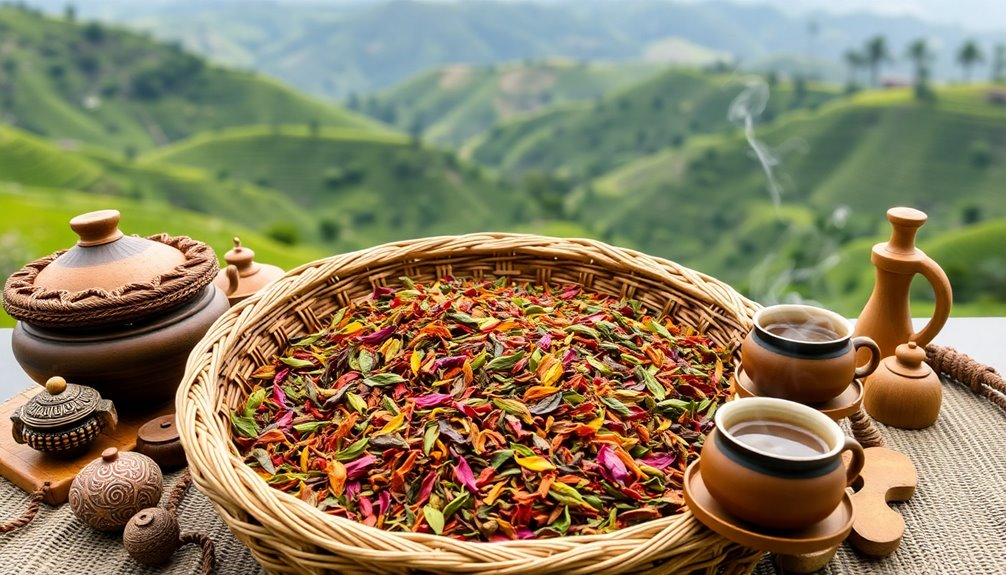

Tea’s history and meaning vary across cultures, serving as symbols of tradition, respect, and social bonds. In Japan, the tea ceremony embodies harmony and mindfulness, while in China, it emphasizes craftsmanship and patience. Western customs like afternoon tea highlight generosity and social connection. Across these cultures, tea acts as a language of tradition, reflecting societal values and history. Exploring these rituals reveals how tea transforms simple acts into meaningful cultural expressions—if you continue, you’ll discover even more fascinating insights.
Key Takeaways
- Tea rituals symbolize cultural identity, social bonds, and hospitality across diverse societies like Japan, China, and Britain.
- The Japanese tea ceremony embodies principles of harmony, respect, purity, and tranquility, reflecting spiritual values.
- Chinese Gongfu tea emphasizes craftsmanship, patience, and balance, highlighting cultural artistry and social etiquette.
- Western traditions like British afternoon tea serve as gestures of generosity and social refinement.
- Tea practices act as cultural symbols and unspoken language, connecting history, social hierarchy, and shared values.
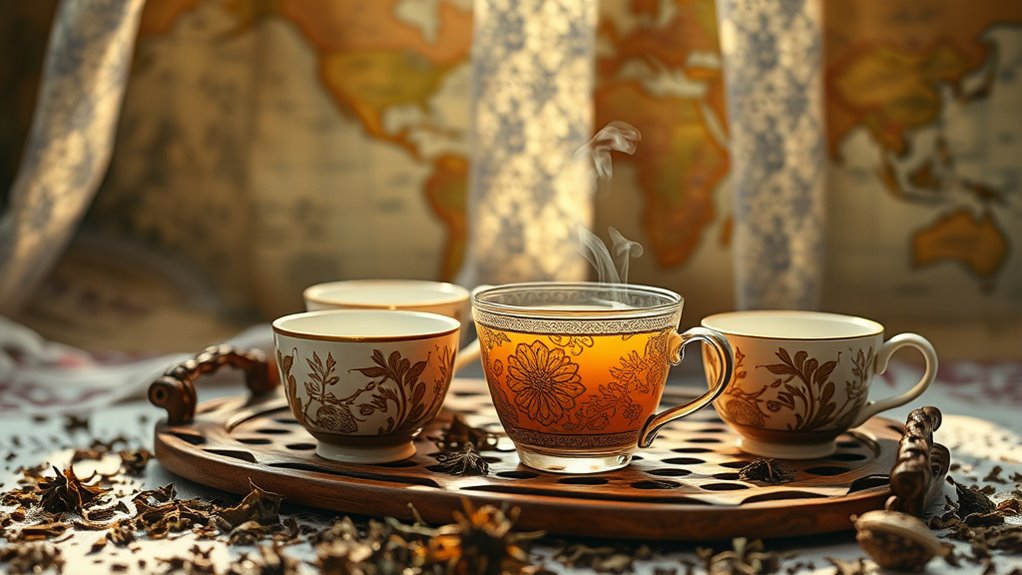
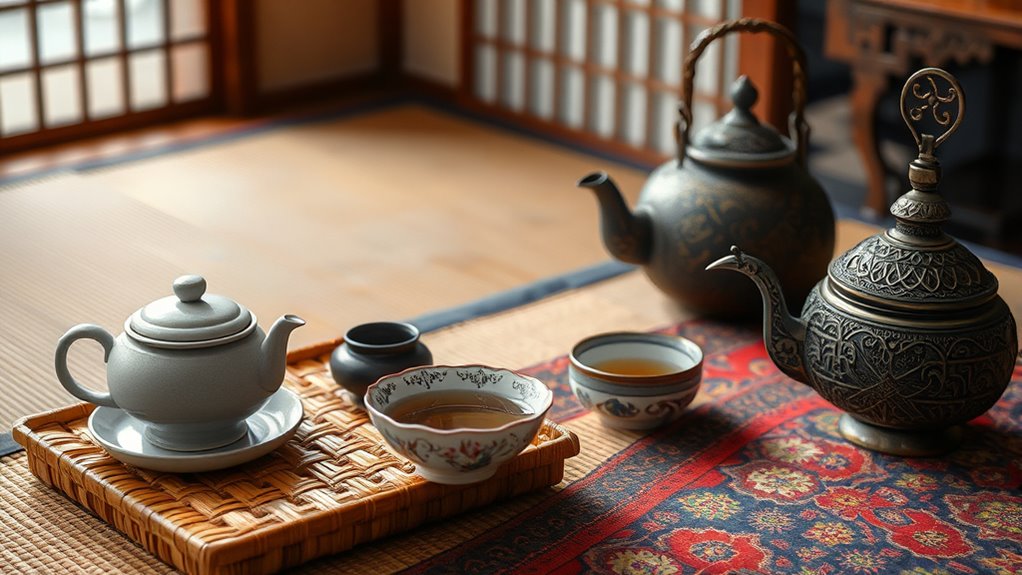
Tea has played a significant role in shaping cultures around the world, serving not just as a beverage but as a symbol of tradition, hospitality, and social connection. When you participate in tea rituals, you’re engaging in a practice that often carries deep cultural symbolism, reflecting centuries of history and societal values. These rituals are more than just brewing or drinking tea; they are expressive acts that convey respect, unity, and identity. In many cultures, the way you prepare and serve tea tells a story—about heritage, social hierarchy, or spiritual beliefs. For example, in Japan, the tea ceremony, known as chanoyu, embodies harmony, respect, purity, and tranquility. Every movement, from whisking the matcha to serving it in delicate bowls, is deliberate, emphasizing mindfulness and reverence. This ritual isn’t just about drinking tea but about cultivating a moment of calm and connection with others, illustrating the profound cultural symbolism behind the practice.
Participating in tea rituals reveals profound cultural symbols of respect, harmony, and social connection across societies.
Similarly, in China, tea rituals have been refined over thousands of years, emphasizing balance and harmony. The Gongfu tea ceremony, with its precise steps and elegant utensils, reflects an appreciation for craftsmanship and patience. Here, tea is more than a refreshment; it’s a gesture of respect and an expression of hospitality. You might notice how the act of serving tea in Chinese culture symbolizes welcoming guests and fostering social bonds. The ritual underscores the importance of etiquette and mindfulness, turning a simple act into an art form that embodies cultural values. Additionally, the development of cultural rituals around tea demonstrates how a simple beverage can embody complex social and spiritual meanings.
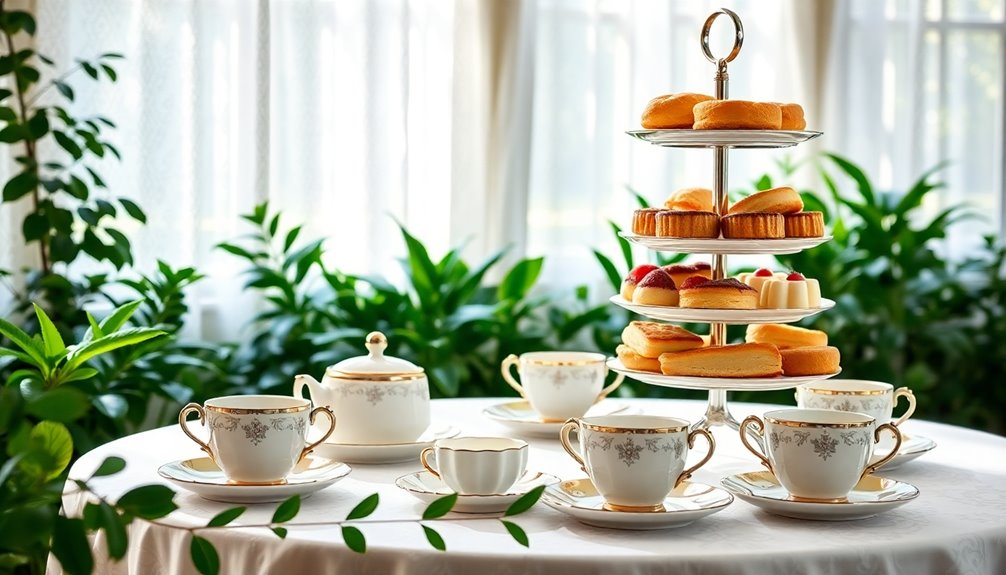
In the West, tea often signifies comfort and social bonding. Think about afternoon tea in Britain, where serving tea is a gesture of hospitality and a chance to connect with friends or family. The ritual may involve delicate china, sugar cubes, and scones, but its core remains a symbolic act of generosity and community. Across different cultures, the specific tea rituals you observe or participate in serve as tangible expressions of cultural symbolism, reinforcing shared identities and histories. They transform a common drink into a meaningful tradition, fostering respect and understanding across generations.
Whether in Japan, China, Britain, or elsewhere, tea rituals encapsulate more than just the act of drinking tea. They represent a cultural language—an unspoken dialogue that celebrates heritage, values, and social cohesion. When you take part in these rituals, you’re not just enjoying a beverage; you’re engaging with a rich tapestry of cultural symbolism that has been cultivated over centuries.
Frequently Asked Questions
How Did Tea Originally Arrive in Western Countries?
You can see that tea originally arrived in Western countries through the tea trade, which began in the 17th century. Traders brought tea from Asia, especially China and Japan, and it quickly gained popularity. As it entered Western markets, people started cultural adaptations like afternoon tea and tea parties, making it not just a beverage but a social ritual. This process helped embed tea into Western culture over time.
Are There Specific Rituals Associated With Tea in Certain Cultures?
Like a delicate dance, tea rituals hold deep significance in many cultures. You’ll find that tea ceremonies often symbolize respect, harmony, and mindfulness, serving as a ritual that elevates a simple drink into an art form. In Japan, the tea ceremony embodies ritual significance, emphasizing precision and serenity. In Morocco, the elaborate process of preparing and serving mint tea reflects hospitality and tradition, making each sip a meaningful cultural experience.
What Are the Health Benefits Historically Linked to Tea Consumption?
You benefit from tea’s health benefits that have been linked to its antioxidant properties and digestive aid qualities. Drinking tea can help protect your cells from damage caused by free radicals, supporting overall health. Additionally, it may soothe your stomach and improve digestion, making it a natural remedy for discomfort. Incorporating tea into your daily routine can promote better health and well-being through these traditional benefits.
How Has Tea’s Significance Evolved Over Centuries Worldwide?
You might be surprised to learn that over 2 billion cups of tea are consumed daily worldwide. Its significance has evolved from a simple beverage to a symbol of cultural identity and social rituals. Today, tea fosters community and tradition, representing peace and hospitality in many societies. Its role shifts from medicinal to ceremonial, reflecting changing values and social connections across generations and cultures.
Do Different Types of Tea Hold Spiritual Meanings in Various Cultures?
Yes, different types of tea hold unique spiritual meanings in various cultures through tea symbolism and cultural rituals. For example, green tea often symbolizes purity and renewal in Japan, while black tea can represent strength and resilience in Western traditions. By participating in these rituals, you connect with the deeper spiritual significance, appreciating how tea fosters mindfulness, community, and cultural identity across the world.
Conclusion
As you sip your tea, remember it’s more than just a drink—it’s a symbol of connection, tradition, and serenity across cultures. Like a gentle ripple in a still pond, its significance spreads through history, uniting people in shared moments of reflection and hospitality. Let each cup remind you of the deep roots and diverse meanings behind this ancient beverage, inviting you to embrace its timeless symbolism of peace and unity in your own life.