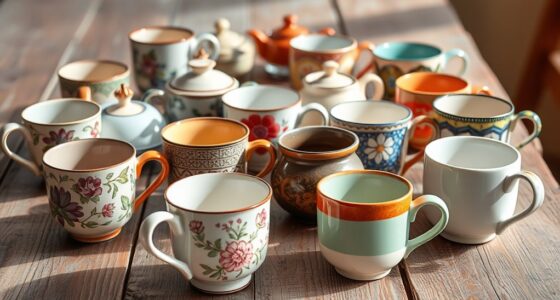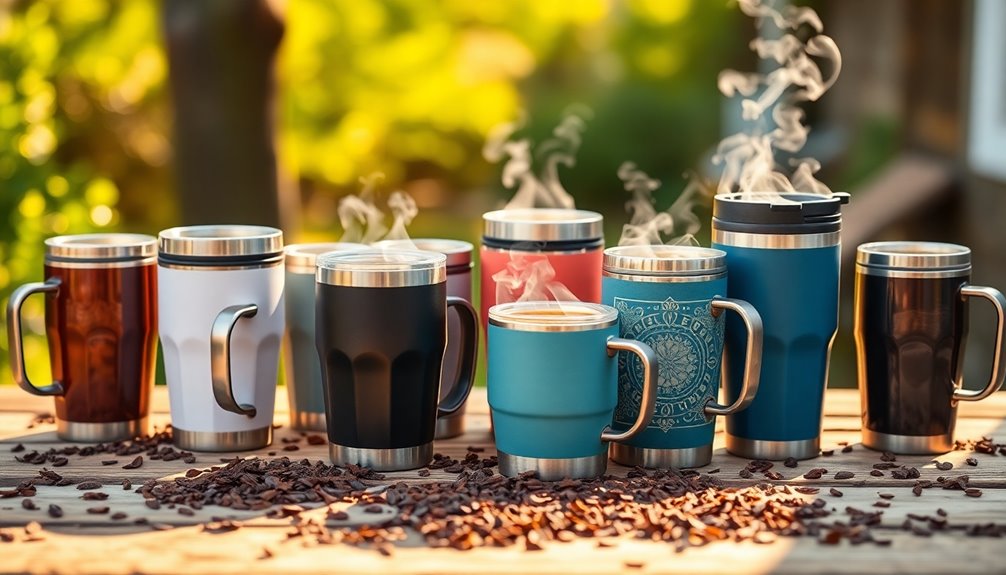
When choosing tea cups and mugs, you’ll find ceramic and glass options each with their pros and cons. Ceramic is durable, retains heat longer, and offers many styles, but it’s heavier and can chip if dropped. Glass lets you see your tea’s color, looks modern, but isn’t as durable and cools faster. Considering your needs for durability, aesthetics, and heat retention will help you pick the best material—more details await if you continue exploring.
Key Takeaways
- Ceramic mugs are durable, retain heat well, and offer diverse designs, but can be heavy and prone to cracking if mishandled.
- Glass cups provide transparency to view tea color and a sleek appearance but are more fragile and less insulating than ceramic.
- Ceramic material resists chipping and cracking, making it suitable for everyday use, though it may be heavier to handle.
- Glass cups showcase tea layers aesthetically and are easy to clean, but they cool faster and require careful handling.
- Both materials are non-reactive, ensuring no taste alteration, with ceramic favored for heat retention and glass for visual appeal.
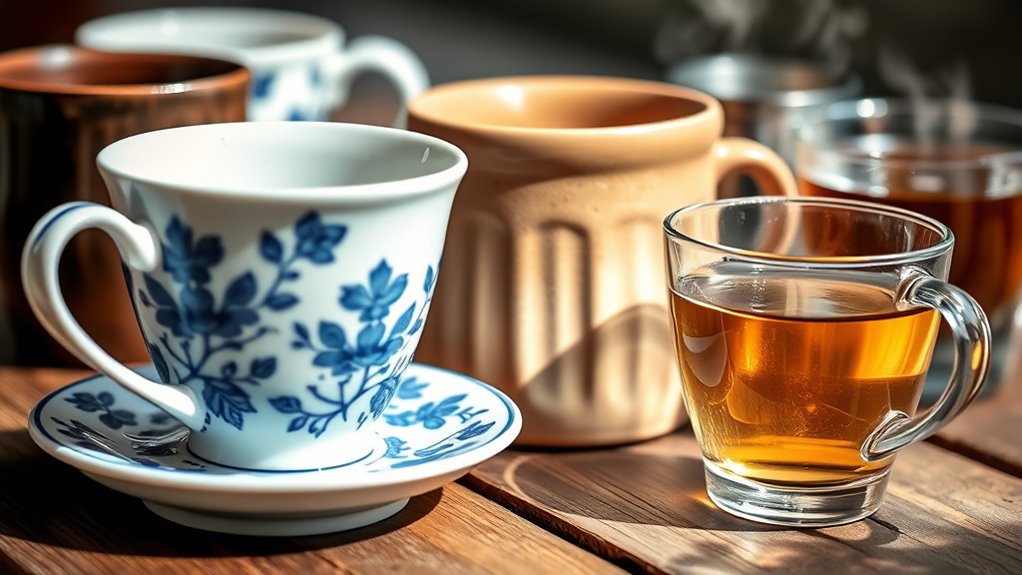
When choosing a tea cup or mug, understanding the materials used can help you find the best option for your needs. One popular material is ceramic, known for its durability and insulating properties. Ceramic mugs are sturdy and can last for years if handled carefully. Their durability means they resist chipping and cracking better than some other materials, making them a practical choice for everyday use. Plus, ceramic’s natural heat retention helps keep your tea warm longer, enhancing your drinking experience. On the downside, ceramics can be heavy, which might make them less comfortable for extended holding or travel. They can also crack if dropped or subjected to sudden temperature changes, so you need to handle them with care. Additionally, ceramic materials often feature various glazes and surface designs, offering a wide range of aesthetic options.
Ceramic mugs are durable, heat-retentive, but heavy and prone to cracking if mishandled.
Glass is another common material for tea cups and mugs, offering a very different set of advantages and disadvantages. One of the main benefits of glass is its transparency, allowing you to see the color and clarity of your tea. This feature adds an aesthetic appeal and can enhance your drinking experience, especially with colorful or layered teas. Glass mugs are generally made from borosilicate or tempered glass, which increases their resistance to thermal shock and makes them less likely to break when pouring hot liquids. However, despite this increased durability, glass remains more fragile than ceramic overall. It can break or chip if dropped or knocked over. Glass also tends to be less insulating than ceramic, meaning your tea might cool down faster unless the mug is double-walled or specially designed for insulation.
In terms of maintenance, ceramic mugs often require gentle cleaning to avoid damaging their glaze or surface decorations, but they are generally dishwasher safe. Glass mugs are also dishwasher safe, but they can show water spots or fingerprints more prominently, requiring regular cleaning to maintain their clarity. Both materials are non-reactive, so they won’t alter the taste of your tea, but their aesthetic appeal varies. Ceramic offers a wide range of colors and patterns, making it customizable and personal. Glass provides a sleek, modern look that complements contemporary styles.
Understanding the impact of material choice on durability and heat retention can help you select a mug that best suits your daily habits and preferences. Ultimately, your choice depends on what you value most—whether it’s the durability and warmth of ceramic or the visual appeal and transparency of glass. Both materials have their strengths and weaknesses, so consider how you use your mug daily, how much care you’re willing to give, and what visual experience you desire when selecting the perfect tea cup or mug for your collection.
Frequently Asked Questions
Are There Eco-Friendly Materials for Tea Cups and Mugs?
Yes, eco-friendly materials for tea cups and mugs include biodegradable ceramics and recycled plastics. You can choose biodegradable ceramics that break down naturally, reducing waste in landfills. Recycled plastics offer a sustainable option by repurposing existing materials, lowering environmental impact. By opting for these materials, you help reduce pollution and promote sustainability. So, when selecting your mug, look for those made from biodegradable ceramics or recycled plastics to make greener choices.
How Do Temperature Changes Affect Different Mug Materials?
Temperature changes cause different mug materials to react uniquely. For example, ceramic and glass experience thermal expansion, which can lead to cracks if heated unevenly. Stainless steel and insulated mugs handle heat retention better, keeping your tea warm longer, but they may feel hot to touch. Be mindful of rapid temperature shifts—they can weaken the material over time or cause cracks, especially in brittle materials like ceramic or glass.
Can Certain Materials Transfer Flavors or Odors?
Think of your mug as a sponge soaking up stories from every brew. Porcelain is gentle, but it can sometimes carry a subtle porcelain taste transfer, like a whisper from the past. Metal mugs, on the other hand, might absorb metal odor, turning your tea into a metallic symphony. So, choose your materials wisely, knowing they can influence your sip, adding or stealing flavors along the way.
Which Materials Are Safest for Microwave Use?
You should look for microwave safe ceramics and heat resistant glass when choosing a mug. These materials are designed to withstand microwave heat without cracking or releasing harmful chemicals. Always check the bottom or packaging for a microwave safe label. Avoid metal or non-heat resistant plastics, as they can cause sparks or melt in the microwave. Using safe materials guarantees your mug remains intact and safe for reheating beverages.
Are There Durable Materials Suitable for Outdoor Use?
Over 60% of outdoor mugs face wear and tear, so durability matters. You’ll want materials like stainless steel, which resists metal corrosion potential and handles outdoor conditions well. Ceramic mugs are attractive but have a higher crack risk when dropped outdoors. For long-lasting use, choose stainless steel or insulated tumblers—they’re tough, won’t rust, and withstand the elements better than ceramic options.
Conclusion
Choosing the right material for your tea cup or mug is like picking the perfect partner—you want one that suits your style and needs. I once tried a delicate porcelain mug that cracked after a single drop, teaching me to value durability. Whether you prefer the warmth of ceramic or the resilience of stainless steel, knowing the pros and cons helps you make smarter choices. Ultimately, your perfect mug is the one that keeps your tea just right, sip after sip.