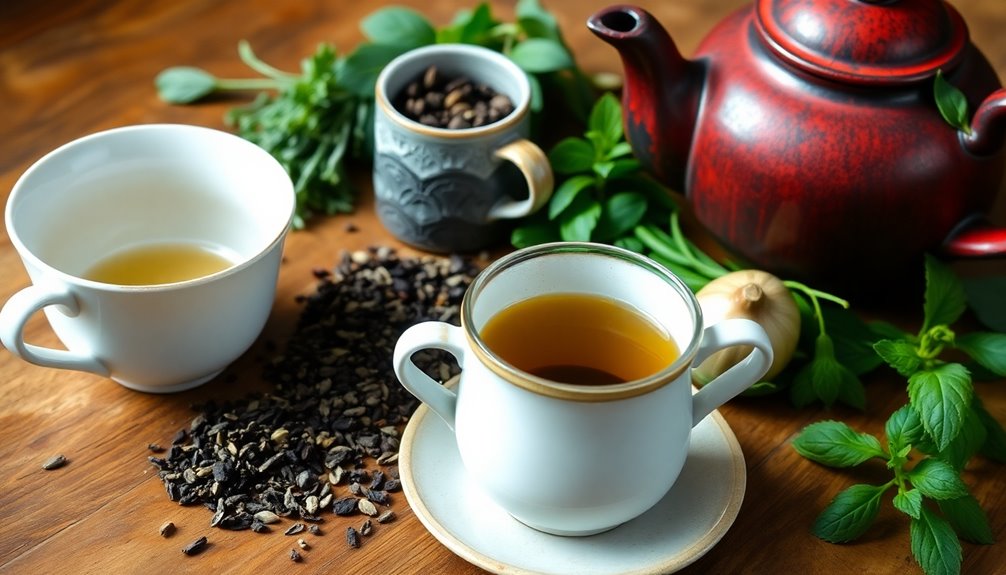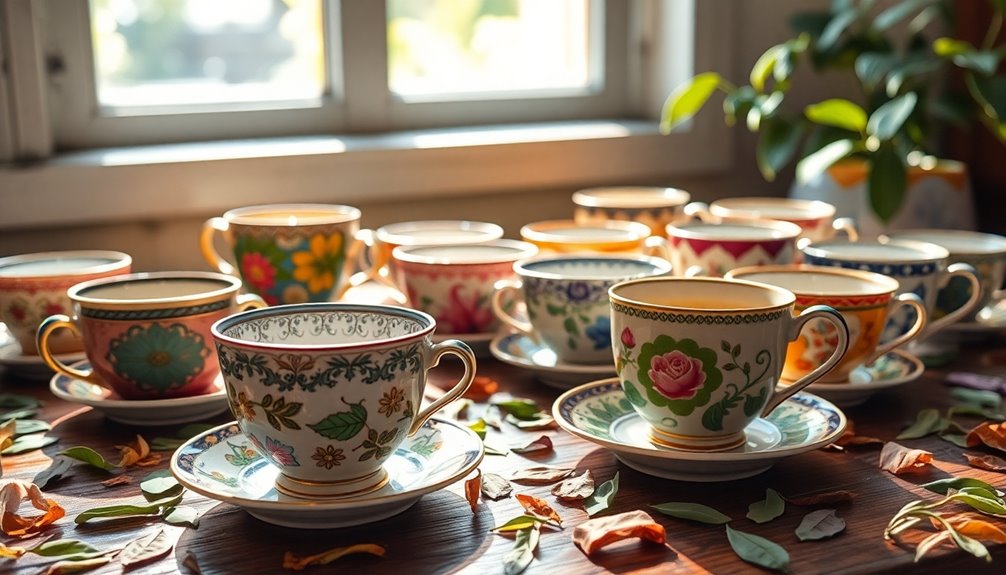
Tea cups and mugs carry deep cultural meanings that reflect traditions, social customs, and personal identities worldwide. They symbolize hospitality, respect, and community, often embodying cultural values through their design, materials, and use. Handling and serving etiquette reveal social harmony and reverence, while craftsmanship connects you to regional histories and artisanal skills. These vessels act as bridges across generations, making every sip a richer, more meaningful experience—keep exploring to discover how they connect us deeply to culture.
Key Takeaways
- Tea cups and mugs symbolize hospitality, respect, and community across diverse cultures worldwide.
- Their design, material, and style reflect cultural values, social status, and regional identity.
- Handling and serving etiquette demonstrate politeness, reverence, and social harmony in traditional tea rituals.
- Craftsmanship and regional techniques embody cultural heritage and artisan skills passed through generations.
- Objects of tea ware act as vessels of tradition, fostering social connection and cultural continuity.

Tea cups and mugs are more than just vessels for your favorite beverages; they carry deep cultural meanings that reflect traditions, social rituals, and personal identities around the world. When you pick up a delicate porcelain teacup in Japan or a sturdy, handcrafted mug in Ireland, you’re participating in a centuries-old tradition that goes beyond mere hydration. These vessels serve as symbols of hospitality, respect, and community, often embodying cultural values through their design, material, and the way they’re used.
Understanding tea etiquette is essential to appreciating the significance of these cups. In many cultures, the way you handle a cup—how you hold it, the manner in which you serve others, and even the timing of your sips—reflects respect and social harmony. For example, in China, the proper way to serve tea involves specific gestures that convey politeness and reverence, often complemented by the choice of a particular type of cup. The size, shape, and material of the cup all contribute to the ritual, emphasizing mindfulness and connection during the tea-drinking process. Similarly, in the UK, the tradition of afternoon tea emphasizes elegance and conversation, with the style of your mug or cup subtly indicating social status or personal taste.
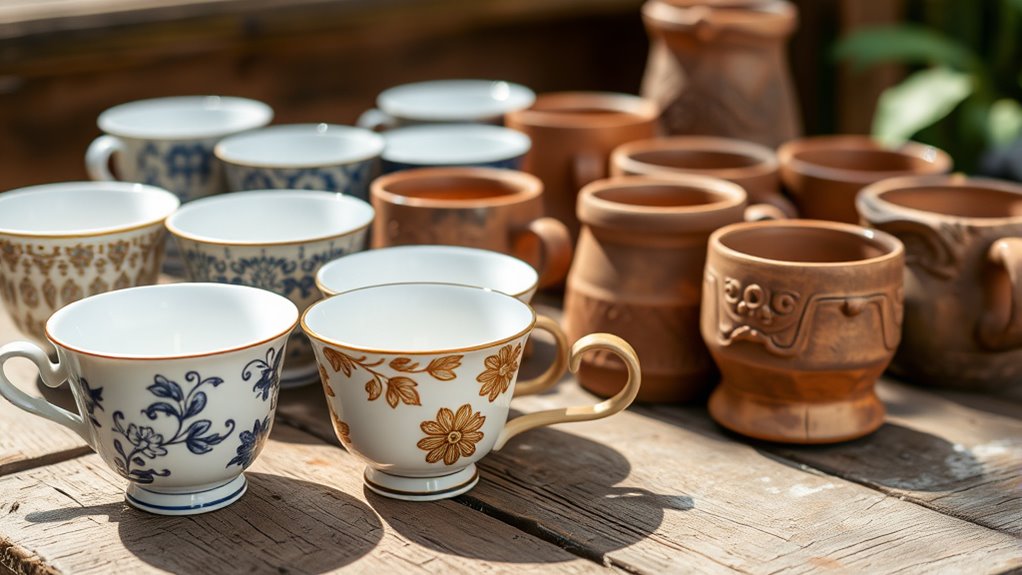
Ceramic craftsmanship plays a vital role in shaping the cultural meaning of tea cups and mugs. Skilled artisans use techniques passed down through generations to create vessels that are not only functional but also works of art. The choice of clay, glazing techniques, and decoration all speak to regional identities and historical influences. For instance, the fine porcelain of China symbolizes sophistication and centuries of ceramic mastery, while the rustic, hand-thrown mugs of Ireland evoke a sense of tradition and warmth. When you hold such a handcrafted piece, you’re not just holding a vessel—you’re experiencing a piece of cultural heritage, a tangible connection to the artisans’ skills and the stories embedded in their craft.
In addition, the prevalence of regional styles in tea ware demonstrates how local materials and techniques shape cultural identity.
In essence, the way you interact with your tea cup or mug—mindful of customs and craftsmanship—can deepen your appreciation of the cultural narratives behind it. Whether it’s the respectful bow in Japan, the gentle clink of a teacup in Morocco, or the cozy grip of a handmade mug, these objects serve as vessels of tradition, identity, and social connection. They remind you that drinking tea is more than a routine; it’s a shared experience that bridges generations and cultures, rooted in centuries of meaningful craftsmanship and etiquette.
Frequently Asked Questions
How Do Tea Cup Designs Influence Cultural Identity?
Your choice of tea cup design influences cultural identity through its cultural symbolism and aesthetic expression. When you select cups with specific motifs or styles, you’re showcasing your cultural heritage or personal identity. These designs serve as visual cues, connecting you to traditions and values. By appreciating or sharing these designs, you reinforce cultural pride and foster a sense of belonging within your community or cultural group.
Are There Specific Rituals Associated With Tea Mug Usage?
You step into a quiet moment, where every sip is like a whispered secret. Yes, there are specific rituals with tea mugs, like honoring tea ceremony etiquette and ritualistic brewing that transform drinking into a mindful act. You might gently cradle the mug, appreciating its shape and warmth, turning a simple drink into a ceremony. These rituals deepen your connection to tradition, making each moment of tea-drinking meaningful and intentional.
What Materials Are Traditionally Used for Culturally Significant Tea Cups?
You’ll find that traditional tea cups often use ceramic craftsmanship, especially porcelain and clay, which are valued for their durability and beauty. These materials carry deep material symbolism; porcelain, for example, signifies elegance and refinement, while earthenware reflects humility and connection to nature. By choosing these materials, you honor the cultural significance and craftsmanship behind tea drinking, making each sip a meaningful experience rooted in tradition.
How Do Tea Cups Reflect Social Hierarchy in Different Cultures?
Think of tea cups as mirrors of social stratification, revealing your place in society. In many cultures, ornate or fine porcelain cups act as status symbols, reserved for the elite, while simpler mugs are for everyday use. By choosing certain cups, you signal your social standing, and these distinctions help maintain hierarchies. Your choice of tea cup becomes a subtle yet powerful way to reflect and reinforce social hierarchy.
Can the Shape of a Tea Mug Affect the Taste of the Beverage?
Yes, the shape of a tea mug can affect the taste of your beverage. An ergonomic design guarantees comfort, making it easier to enjoy every sip, while the aesthetic appeal enhances your overall experience. A wider opening may let more aromatics escape, intensifying flavor, whereas a narrower mug could concentrate aromas. So, choosing a mug with the right shape can subtly influence how you perceive and enjoy your tea.
Conclusion
As you hold a tea cup or mug, you’re gently embracing centuries of tradition and unspoken stories. These humble vessels quietly foster connection, comfort, and reflection, weaving a subtle tapestry of shared moments. Though small in size, their significance whispers softly, reminding you that sometimes, the simplest objects carry the deepest meanings. So, cherish these quiet treasures—they’re more than just cups; they’re gentle guardians of culture and memory.