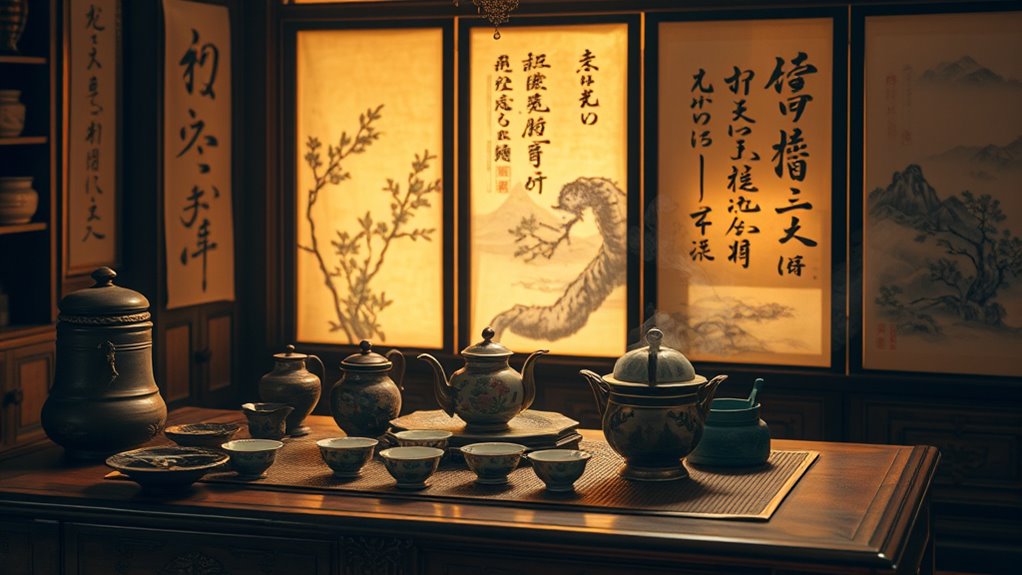
Tea culture and traditions deeply influence art and literature by inspiring symbolic motifs that represent serenity, mindfulness, and cultural identity. You’ll find tea featured in paintings, poetry, and craftwork, often symbolizing fleeting beauty and social harmony. These traditions also shape aesthetic practices and storytelling, highlighting themes of transience and discipline. Exploring this connection reveals how tea serves as a bridge between past and present, enriching cultural expressions in meaningful ways—discover more about these enduring artistic influences as you continue exploring.
Key Takeaways
- Tea symbolism enriches art and literature by embodying themes of serenity, transience, and social harmony.
- Cultural tea rituals inspire artistic expressions that emphasize mindfulness, aesthetic appreciation, and cultural identity.
- Artistic forms like calligraphy and ceramics incorporate tea motifs to reflect craftsmanship and traditional values.
- Literature often uses tea to deepen emotional narratives, symbolize wisdom, and explore personal and cultural growth.
- Tea culture acts as a bridge connecting historical traditions with contemporary art, fostering cross-generational cultural understanding.
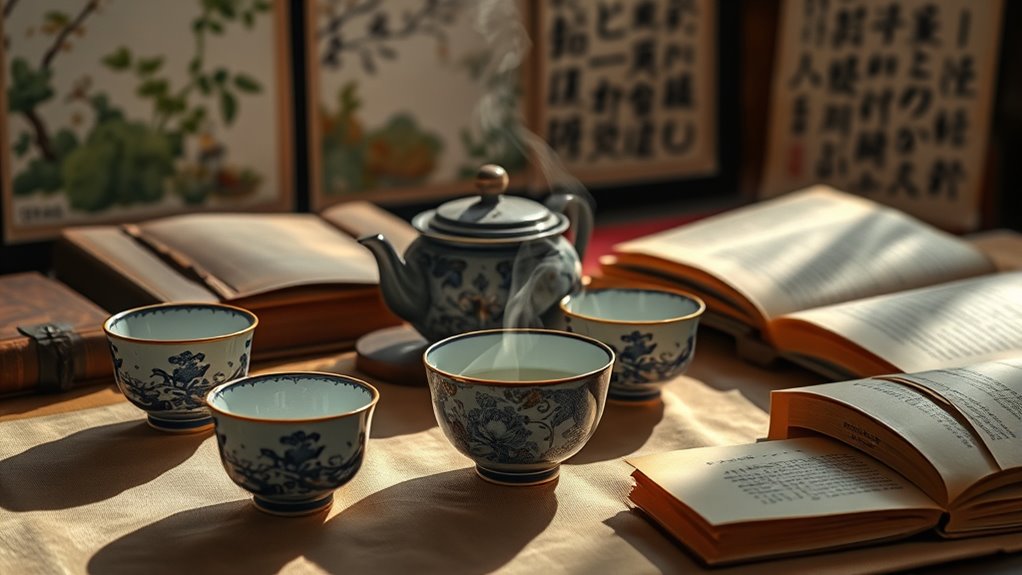
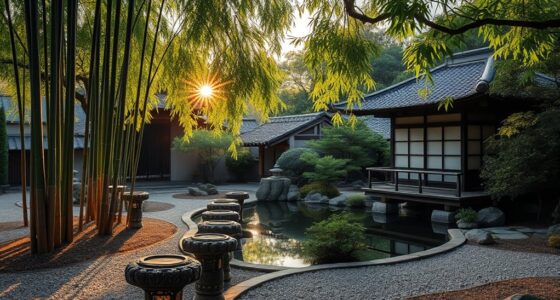
Tea culture and its rich traditions have profoundly influenced art and literature across different societies. As you explore these cultural landscapes, you’ll notice how tea symbolism often appears as a powerful motif, representing themes like serenity, hospitality, and spiritual awakening. Artists and writers have long used tea as a symbol to evoke deeper meanings, capturing moments of reflection or social connection. For instance, in traditional Chinese paintings, delicate tea sets and blooming teacups symbolize harmony and the fleeting nature of life. Similarly, in Japanese art, the tea ceremony—chanoyu—is depicted as a form of artistic expression that embodies simplicity, mindfulness, and aesthetic appreciation. These visual elements serve not just as decorative details but as carriers of cultural values, inspiring viewers to contemplate the transient beauty of life.
Tea symbolism reflects harmony, mindfulness, and cultural values across art and tradition.
In literature, tea often functions as a device to foster intimacy or mark significant moments. Writers use tea symbolism to deepen characters’ emotional landscapes, illustrating their rituals, contemplations, or social interactions. Whether it’s the detailed description of a cozy tea gathering or a solitary moment over a steaming cup, these scenes underscore themes of tradition, patience, and mindfulness. You might find classic poetry referencing tea leaves to symbolize wisdom gained through patience or the ephemeral nature of beauty. Modern authors continue to draw on this symbolism, weaving tea into narratives that explore identity, cultural heritage, and personal growth. This blend of symbolism and storytelling creates an artistic expression that resonates across generations.
Moreover, the influence of tea extends into various artistic forms beyond visual art and literature. Calligraphy, ceramic design, and even performance art incorporate tea motifs to express cultural ideals. You may observe how ceramicists craft intricate teapots with delicate motifs, symbolizing craftsmanship and cultural pride. In performance arts, tea rituals are performed as meditative acts or cultural showcases, emphasizing harmony and respect. These artistic expressions serve as tangible links to centuries-old traditions, allowing contemporary audiences to connect with their historical roots. They also reveal how deeply tea symbolism has permeated diverse artistic practices, shaping a cultural identity that values serenity, discipline, and aesthetic beauty. Additionally, the meticulous craftsmanship involved in creating traditional tea ware highlights the importance of artistic skill in preserving cultural heritage.
In essence, tea culture‘s impact on art and literature lies in its ability to symbolize universal themes and inspire creative expression. Whether through paintings, poetry, or craft, its symbolism invites you to reflect on life’s transient moments and the importance of tradition. As you engage with these artistic expressions, you’ll discover how tea’s rich symbolism continues to serve as a bridge between past and present, fostering a deeper appreciation for the cultural significance woven into everyday life.
Top picks for "impact culture tradition"
Open Amazon search results for this keyword.
As an affiliate, we earn on qualifying purchases.
Frequently Asked Questions
How Has Tea Influenced Modern Visual Arts Globally?
You see that tea-inspired motifs frequently appear in modern visual arts worldwide, shaping contemporary artistic expressions. Artists incorporate tea cups, leaves, and brewing scenes into their work, symbolizing tranquility and cultural exchange. These motifs inspire innovative designs across various mediums, from paintings to digital art, allowing artists to explore themes of tradition, serenity, and social connection. Tea’s influence continues to enrich and diversify modern visual arts globally.
Are There Specific Literary Genres Centered Around Tea Culture?
Tea culture deeply influences literary genres like tea poetry and brewing narratives, where authors craft stories around tea’s symbolism and rituals. You’ll find these genres blooming across cultures, serving as a mirror to tradition and personal reflection. Like a delicate leaf unfurling, tea poetry captures moments of serenity, while brewing narratives stir cultural histories, inviting you to savor each story as if you’re sipping a warm cup of history and emotion.
What Are Unique Symbols of Tea in Traditional Art Forms?
You’ll notice that in traditional art forms, tea symbolism often appears through delicate teapots, steaming cups, and tea leaves, representing hospitality, peace, and reflection. Artistic representations highlight these symbols to evoke calmness and social harmony. You can see these motifs in paintings, ceramics, and textiles, where the nuanced details of tea utensils and leaves convey deeper cultural meanings, making tea a powerful symbol in visual storytelling.
How Does Tea Ceremony Symbolism Vary Across Cultures?
Imagine tea symbolism as a delicate dance, shifting with each culture’s rhythm. Across cultures, tea symbolism varies like a kaleidoscope—sometimes representing hospitality, purity, or spiritual awakening. In Japan, it embodies Zen and harmony; in Britain, it symbolizes comfort and civility; in China, it reflects respect and tradition. These cultural variations paint a rich mosaic, showing how tea’s meaning adapts while uniting people through shared rituals.
Can Tea Traditions Inspire Contemporary Literary Works?
Yes, tea traditions can inspire contemporary literary works. You might explore tea-inspired narratives that weave brewing literary symbolism into stories, creating rich, layered meanings. By incorporating tea rituals, you can evoke themes of patience, tradition, and transformation. These elements help you craft compelling characters and settings, connecting readers with cultural depth. Ultimately, tea traditions offer a unique lens through which you can explore universal human experiences in your writing.
Conclusion
As you immerse yourself in tea’s rich tapestry, you’ll see how its gentle steam wisps weave through art and literature like delicate brushstrokes on a timeless canvas. Tea’s traditions act as a whispering muse, inspiring masterpieces and poetic verses that dance with history and culture. When you embrace these customs, you open a world where every sip sparks creativity, turning ordinary moments into vibrant stories that linger long after the cup is empty—like a lingering aroma in the soul.