Tea culture and traditions have deep roots, transforming a simple beverage into a symbol of respect, mindfulness, and social connection. You see centuries-old rituals like the Japanese tea ceremony and Chinese gongfu tea as expressions of artistry and cultural identity. These ceremonies emphasize careful preparation, symbolism, and shared experience, elevating tea to an art form. If you’re curious about how these practices reflect history and values, exploring further reveals fascinating stories behind each tradition.
Key Takeaways
- Tea culture originated in ancient China, evolving into elaborate ceremonies like Gongfu and Japanese Chanoyu that emphasize mindfulness and craftsmanship.
- Tea rituals serve as expressions of respect, social bonding, and cultural identity across societies such as China, Japan, and Britain.
- The ceremonial preparation of tea transforms a simple beverage into an art form, reflecting values of harmony, patience, and reverence.
- Historically, tea has been used to promote social cohesion, spiritual reflection, and cultural heritage preservation worldwide.
- Different traditions highlight unique symbolism and purpose, elevating tea from everyday refreshment to a meaningful cultural practice.

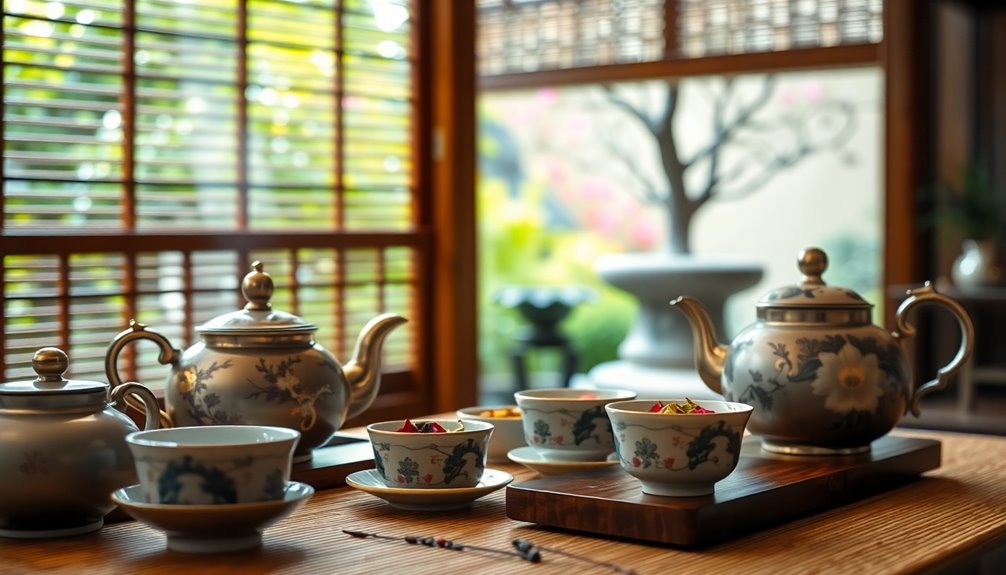
Tea culture and traditions have a rich history that reflects the diverse ways people around the world enjoy and honor this ancient beverage. From the steeping of leaves to intricate ceremonial rituals, every culture has crafted its own unique approach to tea that embodies respect, mindfulness, and social connection. When you explore the history of tea, you recognize that tea preparation isn’t just about making a drink—it’s a meaningful act rooted in centuries of tradition. In many cultures, the way you prepare tea conveys respect for the process and the people you’re sharing it with. For example, in Japan, the traditional tea ceremony, or chanoyu, emphasizes meticulous tea preparation, where every movement is deliberate and meaningful. The ritual involves carefully measuring the tea powder, whisking it to perfection, and serving it with grace. These ceremonial rituals serve as a form of meditation, fostering mindfulness and a sense of harmony. You might find that such rituals are designed to cultivate patience and appreciation, transforming a simple act into an art form. Recognizing the importance of cultural intelligence can help deepen your understanding and appreciation of these diverse tea traditions.
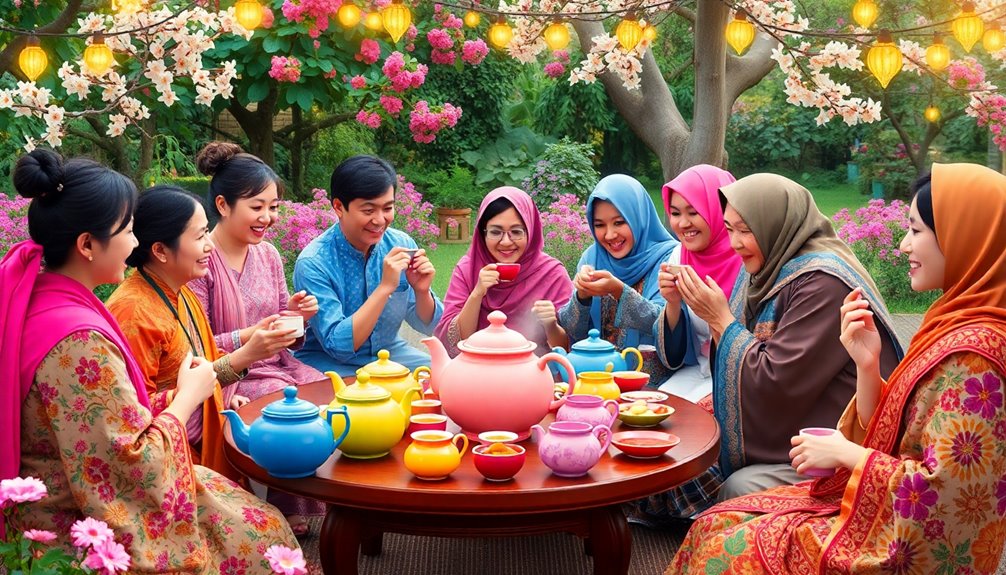
Across China, the Gongfu tea ceremony also highlights the importance of precise tea preparation. Here, small teapots and multiple infusions allow you to savor different layers of flavor and aroma, emphasizing the skill involved in brewing the perfect cup. These rituals are more than just brewing; they’re a conversation with history and culture, inviting you to slow down and truly enjoy the moment. In Britain, the tradition of afternoon tea with its elegant presentation and social etiquette reflects a different aspect of tea’s cultural significance. The ritual of pouring tea, offering a milk or sugar, and engaging in conversation is a cherished social activity that dates back centuries. These ceremonial rituals, whether formal or informal, serve to foster community, create bonds, and honor hospitality.
Understanding the history and meaning behind these rituals helps you appreciate the depth of tea culture worldwide. Every step in tea preparation, from selecting leaves to serving the final brew, carries symbolism and purpose. These ceremonies elevate the act of drinking tea from a simple refreshment to a spiritual or social practice. When you engage in these traditions, you’re participating in a centuries-old practice that celebrates mindfulness, respect, and connection. Whether it’s the quiet reverence of a Japanese tea ceremony or the conviviality of a British afternoon tea, each ritual reflects a profound respect for the beverage and the cultural heritage it represents.
Frequently Asked Questions
How Did Tea Originally Arrive in Different Regions Worldwide?
You can see that tea originally arrived in different regions through the tea trade, where merchants carried it along trade routes like the Silk Road and maritime pathways. These exchanges facilitated cultural interactions, allowing tea to reach places like Europe, Africa, and the Americas. As traders and explorers moved, they introduced tea to new territories, helping it become a global beverage and fostering cultural exchanges that shaped local traditions.
What Are Some Unique Tea Etiquette Practices Across Cultures?
Did you know that in Japan, the tea ceremony involves precise etiquette customs like bowing and handling utensils with care? In China, pouring tea with both hands signifies respect. Meanwhile, in Morocco, serving mint tea involves a specific pouring style from a height to create foam. These unique practices highlight how tea etiquette customs reflect deep cultural values, making every sip a meaningful tradition.
How Has Tea Production Evolved Over Centuries?
You see, over centuries, tea production has evolved considerably. You might notice that tea fermentation techniques have become more refined, allowing for diverse flavors and qualities. Modern tea harvesting techniques now involve precise plucking methods to guarantee quality, while processing methods like withering, rolling, and drying have advanced with technology. These changes help maintain consistency and enhance flavor profiles, making tea production more efficient and tailored to consumer preferences.
What Are the Health Benefits Historically Associated With Tea?
You benefit from tea’s medicinal and health properties by boosting your immune system, improving digestion, and reducing stress. Historically, people believed tea helped detoxify the body, enhanced mental clarity, and provided calming effects. Its antioxidants protect your cells from damage, while compounds like catechins support heart health. Drinking tea offers these health benefits naturally, making it a valued beverage for wellness across many cultures over centuries.
How Do Modern Tea Trends Influence Traditional Practices?
You might think modern tea trends are just fads, but they actually reshape traditional practices by blending old and new. Fusion brewing introduces innovative flavors, while sustainable sourcing guarantees authenticity and respect for heritage. These trends add layers to your tea experience, enriching it without losing roots. As the saying goes, you can’t teach an old dog new tricks, but these modern twists show that tradition and innovation can go hand in hand.
Conclusion
As you explore the rich history and traditions of tea, you’ll realize it’s more than just a beverage—it’s a gateway to centuries of culture and ritual. But the true depth of its meaning might still be hidden, waiting for you to uncover. Will you embrace the quiet elegance of a traditional ceremony or create your own unique tea story? The journey into tea’s world is just beginning, and what you discover next could change how you see this ancient drink forever.