Famous places linked to tea culture include Kyoto’s serene tea houses and China’s historic tea temples, where centuries-old traditions continue to thrive. Influential figures like Japan’s tea master Sen no Rikyū revolutionized the way tea is appreciated, while Chinese poet Lu Yu helped shape tea philosophy through his writings. Exploring these landmarks and personalities reveals the deep roots of tea’s cultural significance. Stay with us to uncover more about these remarkable places and people shaping tea traditions worldwide.
Key Takeaways
- Kyoto’s Uji and Uji River region, renowned for traditional Japanese tea houses and Rikyū’s influence on tea ceremonies.
- Beijing’s historic tea houses, such as the Prince Gong’s Mansion, as cultural landmarks showcasing Chinese tea traditions.
- Chinese monk Lu Yu, known as the “Tea Sage,” who authored “The Classic of Tea,” shaping Chinese tea culture.
- Sen no Rikyū, the influential Japanese tea master who revolutionized the Japanese tea ceremony and aesthetic.
- Hangzhou’s Longjing (Dragon Well) tea village, famous for its scenic tea plantations and preserving Chinese tea heritage.
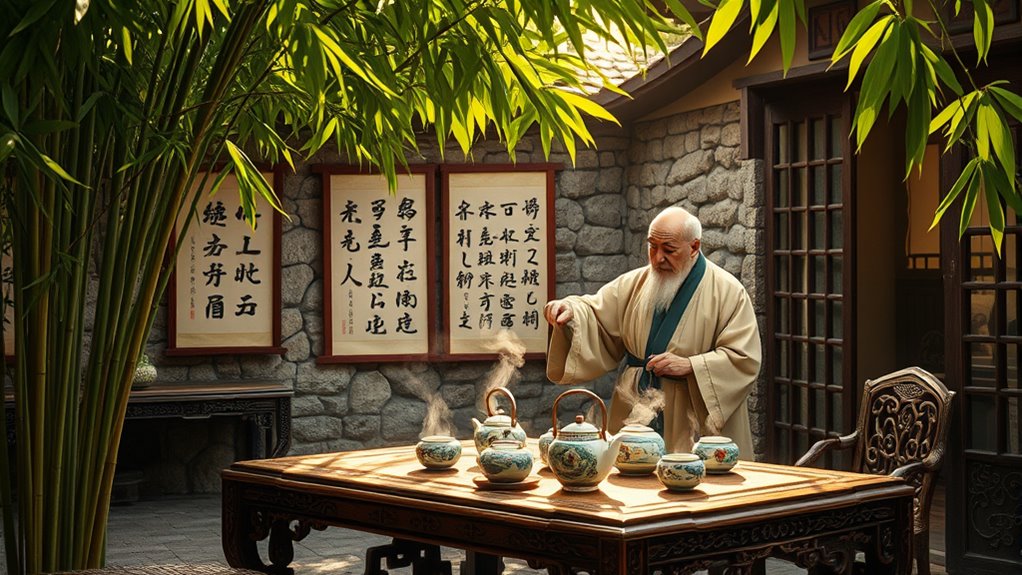
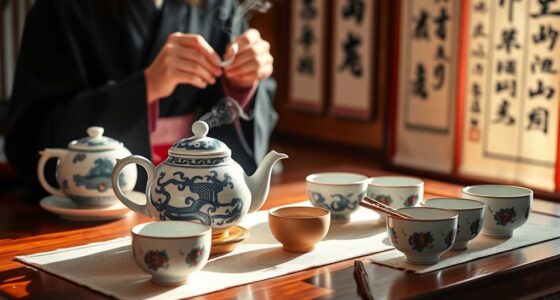
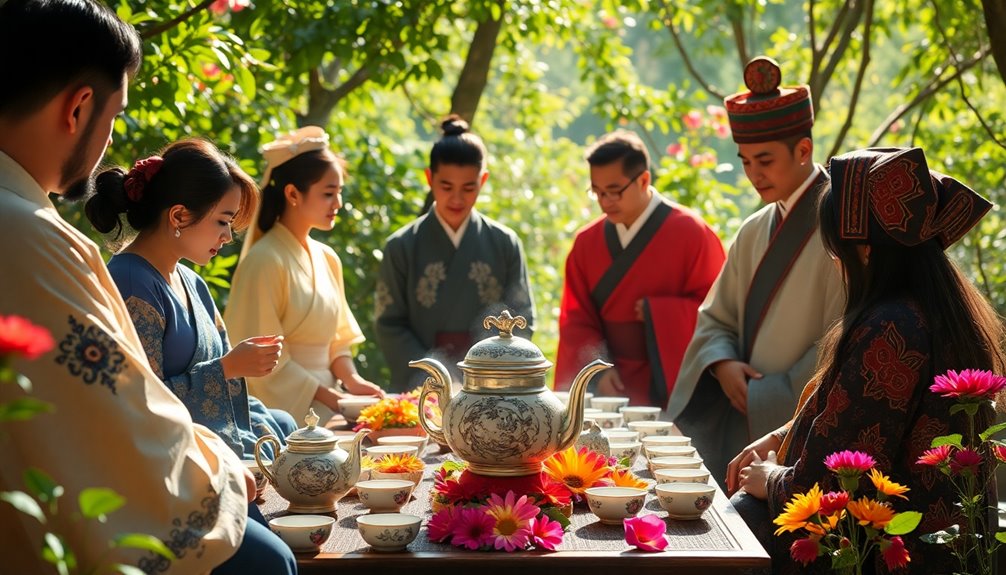
Tea culture has a rich history rooted in some of the world’s most iconic places and influential figures. One of the most fascinating aspects of this history is the origin of the tea ceremonies, which are more than just simple routines—they’re deeply rooted in tradition, philosophy, and artistry. The origins of tea ceremonies can be traced back centuries, with Japan’s Chanoyu and China’s Gongfu tea ceremony standing out as prime examples. These ceremonies emphasize mindfulness, harmony, and respect, transforming drinking tea into an art form. As you explore these traditions, you’ll notice how each movement, tool, and gesture carries symbolic meaning, reflecting centuries of cultural values. The Chinese Gongfu tea ceremony, for instance, is renowned for its meticulous steps and use of small teapots, which allow tea to develop complex flavors. Meanwhile, Japan’s tea ceremony, or Chanoyu, involves precise rituals that highlight simplicity and purity, often performed in serene tea rooms designed to foster reflection. These origins are preserved and celebrated in famous tea houses, which serve as cultural landmarks. In China, historic tea houses in cities like Beijing and Hangzhou have long been centers for social gathering and cultural exchange. These establishments often feature traditional architecture, antique teaware, and a peaceful ambiance that invites visitors to immerse themselves in the history of tea. Similarly, Japan’s traditional tea houses, particularly those in Kyoto, are revered for their authentic setting and meticulous adherence to ceremonial practices. Visiting these places offers you a glimpse into the centuries-old customs that have shaped tea culture worldwide. Throughout history, influential figures have also played pivotal roles in elevating tea’s significance. For example, Chinese monks and poets celebrated tea’s medicinal and spiritual qualities, embedding it in literature and philosophy. In Japan, tea masters like Sen no Rikyū revolutionized the way tea was prepared and appreciated, making it an art form that emphasizes harmony and simplicity. These figures and places have helped preserve the richness of tea traditions, passing them down through generations. Interestingly, the artistic expression found in tea ceremonies continues to inspire contemporary designers and artists, bridging traditional values with modern creativity. Whether you’re sipping tea in a historic tea house or participating in a traditional ceremony, understanding its origins deepens your appreciation and connection to this timeless cultural practice. So as you explore these iconic places and learn about the influential figures behind them, you gain a richer perspective on why tea continues to hold such a special place in cultures around the world.

Artcome 12Pcs Japanese Matcha Tea Set – Bowl, Bamboo Whisk, Holder, Brush and Screen – Handmade Ceremony Kit for Traditional Tea Ceremony
COMPELETE SET: Matcha bowl, matcha whisk, whisk holder, traditional scoop, tea spoon, tea cloth, bamboo holder, scoop holder,…
As an affiliate, we earn on qualifying purchases.
As an affiliate, we earn on qualifying purchases.
Frequently Asked Questions
How Did Tea Cultivation Spread Globally Historically?
You see, tea cultivation spread globally through trade routes and colonization, driven by the demand for tea in Europe and Asia. As tea farming developed in China, it was introduced to Japan, India, and Southeast Asia. European powers established tea plantations in colonies like India and Sri Lanka, fueling global trade. This expansion made tea accessible worldwide, transforming it into a popular beverage and a key part of international commerce.
What Are Lesser-Known Traditional Tea Ceremonies Worldwide?
Did you know that over 80 countries have unique traditional tea ceremonies? You might find yourself fascinated by the Japanese tea ritual, which emphasizes harmony and mindfulness, or the Moroccan tea ceremony, where pouring tea symbolizes hospitality and social bonding. These lesser-known practices hold deep cultural symbolism, turning simple tea drinking into an art form. Embrace these rituals to truly understand each culture’s unique way of celebrating tea’s significance.
Which Ancient Texts First Mention Tea and Its Significance?
You’ll find that the earliest historical references to tea appear in ancient manuscripts from China, dating back to the 3rd century CE. These texts, like the *Shennong Ben Cao Jing*, highlight tea’s medicinal importance. Later, Japanese and Chinese writings further emphasize tea’s cultural significance. These ancient manuscripts reveal how tea shifted from a medicinal herb to a social and spiritual symbol, shaping traditions that persist today.
How Have Modern Celebrities Influenced Tea Culture Trends?
Modern celebrities influence tea culture trends through celebrity endorsements and social media influence. They showcase unique tea blends, promote tea routines, and share their favorite brands, inspiring fans to embrace tea rituals. By posting engaging content and partnering with brands, they make tea more fashionable and accessible. Their popularity encourages new enthusiasts, shapes preferences, and keeps tea culture fresh, vibrant, and connected to contemporary lifestyles.
Are There Unique Regional Tea Blends With Cultural Symbolism?
You’ll find that regional blends often carry deep cultural symbolism, reflecting local history, beliefs, and customs. For example, Chinese jasmine tea symbolizes purity and harmony, while Indian masala chai embodies warmth and hospitality. By exploring these unique blends, you connect with regional identities and traditions, experiencing more than just flavor—they reveal stories and values passed through generations. Embracing these cultural symbols makes your tea journey richer and more meaningful.

LURRIER Porcelain Chinese Gongfu Tea Set,Portable Teapot Set with 360 Rotation Tea maker and Infuser,Portable All in One Gift Bag for Travel,Home,Gifting,Outdoor and Office (Floral Blue)
Patented Distinctive Design: Officially licensed product. Tired of "just brewing and pouring" your lovely tea in the same…
As an affiliate, we earn on qualifying purchases.
As an affiliate, we earn on qualifying purchases.
Conclusion
You might think that tea culture is just about drinking a warm beverage, but it’s so much more. It connects you to centuries of tradition, artistry, and community. Embracing these places and people reminds you that tea isn’t just a drink—it’s a shared experience that transcends borders. So, next time you sip your tea, remember you’re part of a rich, global story that invites you to slow down and truly appreciate life’s simple pleasures.

Tea Ceremony Six Gentlemen Set, Chinese Gongfu Tea Making Tools,Multifunctional Tea Ceremony Accessories Combination for Rack Clip Knife Needle Spoon (Black)
【Tea Ceremony Six Gentlemen Set】Six gentlemen tea set includes tea Rack, tea pen (cleaning), tea fork (prevent scalding),…
As an affiliate, we earn on qualifying purchases.
As an affiliate, we earn on qualifying purchases.

Portable Chinese Tea Set with Carrying Case, Navy Blue Ceramic, Gold Floral Design, Travel Teapot with Filter and 3 Tasting Cups
COMPLETE SET: Elegant navy blue ceramic tea set includes portable teapot with filter, 3 matching tasting cups, and…
As an affiliate, we earn on qualifying purchases.
As an affiliate, we earn on qualifying purchases.