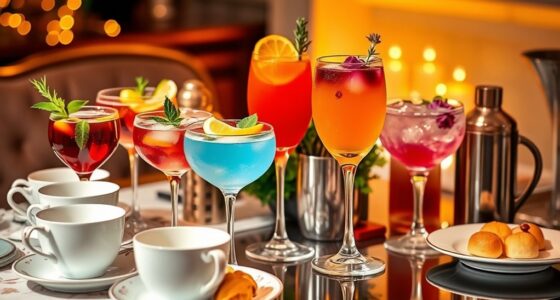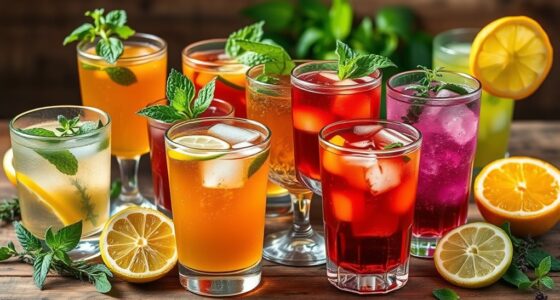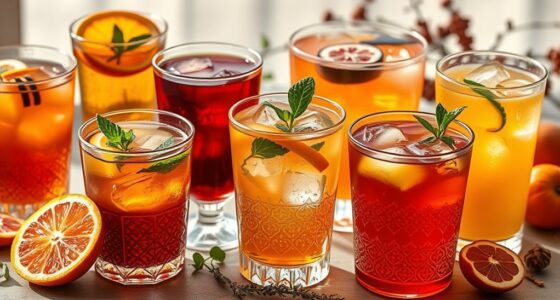
You might be surprised to learn that tea’s journey from a traditional cultural beverage to a key ingredient in cocktails and mocktails is quite fascinating. Over time, bartenders began experimenting with tea infusions, blending flavors and crafting innovative drinks that highlight tea’s versatility. Today, tea cocktails and mocktails combine heritage with creativity, offering sophisticated, layered experiences. If you want to discover more about how this evolution continues to shape modern beverages, there’s plenty more to explore.
Key Takeaways
- Tea has ancient roots as a medicinal and cultural beverage, dating back thousands of years in Asia.
- Traditional tea drinking evolved into social rituals, influencing mixed drinks in early European and Asian cultures.
- The modern concept of tea cocktails emerged in the 19th and 20th centuries with the rise of bartending innovations.
- Recent trends focus on tea-infused mocktails and cocktails, blending tradition with contemporary flavor experimentation.
- The evolution reflects a shift toward sophisticated, layered beverages that celebrate tea’s versatility and cultural heritage.

Tea has long been celebrated for its soothing qualities and rich cultural history, but its journey into the world of cocktails and mocktails is a relatively recent development. Today, you discover how bartenders and enthusiasts alike are transforming traditional tea into innovative beverages that combine flavor, artistry, and cultural heritage. The process begins with a careful tea infusion, where steeping high-quality leaves allows you to extract the nuanced flavors that serve as the foundation for your drink. Selecting the right tea—whether it’s a robust black, delicate green, fragrant white, or earthy oolong—sets the stage for your creation. The infusion process is essential because it determines the depth and character of the final beverage, influencing how it balances with other ingredients. Proper infusion techniques are crucial to unlocking the full potential of tea flavors, ensuring a balanced and flavorful drink.
Once you have your tea infusion ready, flavor pairing becomes your next focus. You want to harmonize the tea’s inherent notes with complementary flavors, enhancing both without overpowering. For example, a smoky lapsang souchong pairs beautifully with citrus or spicy elements, while a floral jasmine green works well with light fruits or herbal accents. This thoughtful pairing elevates your cocktail or mocktail from simple to sophisticated, allowing you to craft a layered experience with every sip. As you experiment, you learn to match the tea’s profile with ingredients like fresh herbs, fruits, spices, or even spirits, creating a harmonious blend that highlights the tea’s unique qualities.
In this evolving landscape, the art of flavor pairing is more than just mixing ingredients; it’s about understanding the story behind each tea and how it interacts with other components. You might choose a sweet, fruity syrup to accentuate a fruity white tea or add a touch of bitterness with tonic water to balance a robust black tea. The versatility of tea infusion makes it a perfect canvas for your creativity, whether you’re designing a revitalizing mocktail for a summer gathering or a sophisticated cocktail for an evening event.

Porthole Infuser,Cocktail Bottles Infuser – Bottle Infusers For Cocktails, Teas, Coffee, Dressings, Lemonade, Vinegars – Cocktail Infusers – Stainless Steel – Fine Filter
【Multifaceted Allure, Elevate Your Bartending Experience】 This multifunctional Porthole Infuser combines functionality, aesthetics, and convenience, making it an…
As an affiliate, we earn on qualifying purchases.
As an affiliate, we earn on qualifying purchases.
Frequently Asked Questions
What Are the Health Benefits of Tea-Based Mocktails?
Tea-based mocktails offer numerous health benefits, including antioxidant properties that help protect your cells from damage. They also support digestive health, making them a great choice after meals. When you choose tea mocktails, you’re hydrating your body while enjoying natural flavors. Plus, they often contain fewer calories than alcoholic drinks, helping you maintain a healthier lifestyle. Incorporate these invigorating drinks into your routine for a tasty health boost.
How Do Different Tea Types Influence Cocktail Flavors?
Different tea types influence cocktail flavors through their unique tea infusion qualities, which enhance and complement various ingredients. For instance, black tea adds a rich, robust flavor, perfect for bold cocktails, while green tea offers a light, grassy note that pairs well with citrus. Oolong and white teas provide nuanced, aromatic flavors, allowing you to experiment with flavor enhancement to craft balanced, distinctive drinks tailored to your taste.
Are There Traditional Tea Cocktails From Specific Cultures?
You’ll find traditional tea cocktails rooted in cultural traditions and ceremonial practices, like the Japanese matcha-based cocktails used in tea ceremonies. Imagine sipping a matcha-infused cocktail during a ritual that emphasizes mindfulness and harmony. These drinks reflect deep cultural values, blending history with celebration. Such cocktails honor their origins, offering a taste that connects you to centuries-old customs and the cultural significance behind each sip.
What Are Popular Modern Twists on Classic Tea Cocktails?
You’ll love modern twists on classic tea cocktails that focus on innovative infusion and flavor fusion. Think vibrant combinations like matcha with citrus or chai with smoky bourbon, creating new layers of taste. Bartenders experiment with herbs, spices, and unique spirits to reinvent traditional drinks. These creative approaches turn familiar favorites into exciting, contemporary beverages, perfect for elevating your cocktail experience with fresh, bold flavors.
How Can Tea Cocktails Be Customized for Dietary Restrictions?
You can customize tea cocktails for dietary restrictions by choosing tea ingredient substitutions, like herbal or decaffeinated teas, to suit sensitivities. Adjust the flavor profile by adding natural sweeteners like honey or agave instead of sugar, or incorporate fresh fruit juices for added flavor. You might also swap out alcohol for non-alcoholic options, ensuring the drink aligns with your dietary needs without sacrificing taste or complexity.

Tiesta Tea – Top 8 Favorites Sampler Set, Loose Leaf, Up to 80 Cups, High to No Caffeine, Hot & Iced, Tea Variety Pack with Green, Herbal, & Black, 8 Sample Pouches
DIVERSE TEA SELECTION: Dive into Tiesta Tea’s premium Loose Leaf Tea Set, featuring our most popular handcrafted blends….
As an affiliate, we earn on qualifying purchases.
As an affiliate, we earn on qualifying purchases.
Conclusion
So, after exploring tea’s journey from ancient ceremonies to modern bars, you might think it’s become too sophisticated for casual sipping. Ironically, as tea cocktails and mocktails gain popularity, they remind you that no matter how elaborate, all you really need is a simple brew to connect past and present. In the end, perhaps the most complex thing about tea is how effortlessly it can adapt—and how you, in turn, keep falling for its timeless charm.

Cocktail Shaker, KITESSENSU 24oz Drink Shaker with Bartender Strainer, Measuring Jigger, Bar Mixing Spoon, Cocktail Recipe Guide, Professional Drink Mixer Set for Beginners, Silver
Add Master Mixologist to Your Resume: Curated by KITESSENSU with the cocktail enthusiast in mind, this 3-piece cocktail…
As an affiliate, we earn on qualifying purchases.
As an affiliate, we earn on qualifying purchases.

wangsdjy 34oz Glass Water Bottle with capacity Mark & Stainless Steel Tea Strainer-Large Capacity for Hot/Cold Drinks,Coffee,Tea,and Water-Includes Protective Sleeve,Perfect for Home,Office (34oz)
High-Quality Material:Made of borosilicate glass, this water bottle is lead-free, and built to last. Designed to resist cracking…
As an affiliate, we earn on qualifying purchases.
As an affiliate, we earn on qualifying purchases.