
Tea ceremonies deeply influence both art and literature by embodying themes of harmony, mindfulness, and cultural pride. They inspire artists to depict delicate utensils and serene postures, while writers explore life’s fleeting nature through vivid imagery and allegories. This cultural practice shapes aesthetic principles like simplicity and natural beauty, resonating across different creative fields globally. If you explore further, you’ll discover how these profound influences continue to inspire contemporary works and artistic movements worldwide.
Key Takeaways
- Tea ceremonies inspire artistic motifs symbolizing harmony, respect, and transience in visual arts and sculpture.
- Literary works incorporate the ritual’s elegance to explore themes like mindfulness, impermanence, and societal harmony.
- Artistic principles from tea ceremonies, such as simplicity and natural materials, influence modern design and aesthetics.
- Visual art captures the physical and spiritual essence of the ritual, elevating it as a symbol of cultural identity.
- The cultural symbolism of tea ceremonies continues to inspire diverse artistic and literary expressions worldwide.

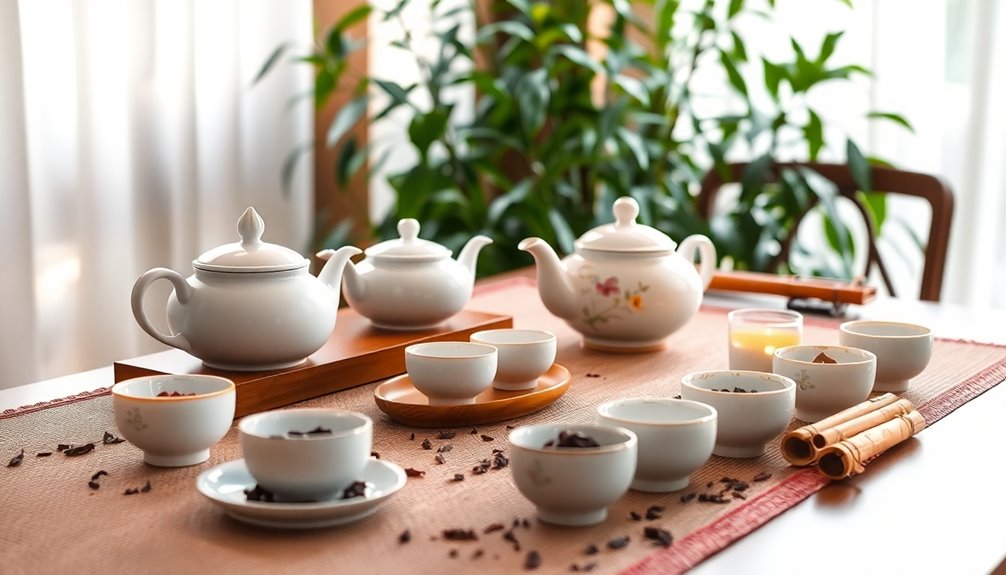
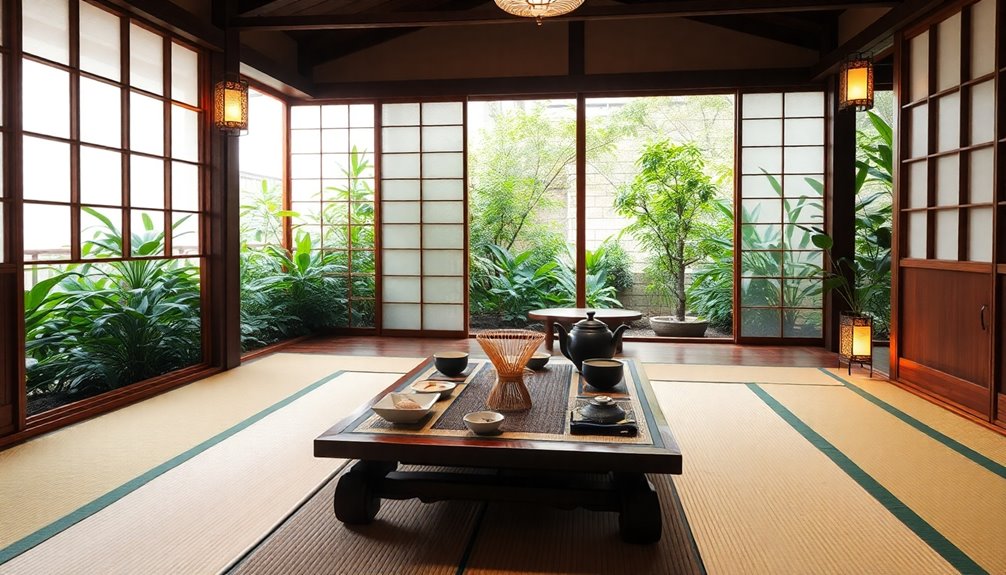
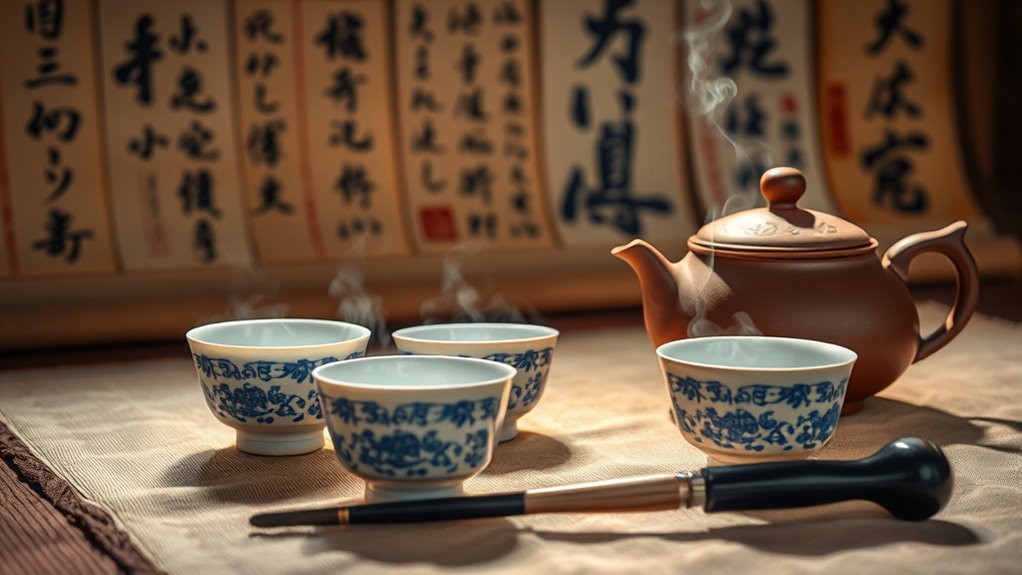
Tea ceremonies have long served as a profound source of inspiration in art and literature, shaping aesthetic expressions across cultures. When you observe a traditional tea ceremony, you’re witnessing more than just the act of preparing and drinking tea; you’re engaging with a rich tapestry of cultural symbolism that resonates deeply within artistic and literary works. Artists often incorporate motifs of the tea ceremony to embody themes of harmony, respect, and transience, making these moments powerful symbols within visual arts. Paintings and sculptures depict delicate teacups, intricate utensils, and the serene postures of participants, capturing not only the physical act but also the spiritual essence conveyed through each movement. These artistic representations serve as visual narratives that highlight the ceremony’s cultural significance, elevating it from a simple ritual to an emblem of philosophical ideals.
In literature, the influence of tea ceremonies manifests through vivid imagery and allegories rooted in their symbolism. Writers draw upon the quiet elegance and mindfulness of the ritual to explore themes of balance, humility, and impermanence. Poems and stories often depict characters engaged in tea ceremonies to symbolize moments of introspection or to underscore cultural values. You might find poets describing a single sip as a reflection of life’s fleeting beauty, or authors using the ceremony as a metaphor for societal harmony. The symbolism embedded within the ritual enriches literary works, allowing readers to connect with universal themes of connection and mindfulness through the lens of a seemingly simple act. Additionally, the appreciation for natural materials and simplicity in the tea ceremony influences artistic movements beyond their immediate cultural context.
Moreover, the aesthetic principles embodied in the tea ceremony influence artistic movements beyond their immediate cultural context. The appreciation for simplicity, asymmetry, and natural materials found in the ceremony inspires minimalist art and design worldwide. You may notice how these principles appear in contemporary art forms such as ceramics, calligraphy, and even modern architecture, where the elegance of restraint echoes the spirit of the ritual. The ceremonial act’s emphasis on mindfulness and harmony influences artists and writers to craft works that evoke serenity and balance, fostering a deeper understanding of cultural identity.
As you explore the impact of tea ceremonies, you’ll see that their cultural symbolism and artistic representations transcend mere tradition. They serve as enduring sources of inspiration, shaping creative expressions that continue to resonate across time and borders, inviting you into a world where art and literature celebrate the profound beauty of this ancient ritual.
Top picks for "impact ceremony literature"
Open Amazon search results for this keyword.
As an affiliate, we earn on qualifying purchases.
Frequently Asked Questions
How Did Tea Ceremonies Originate Historically Across Different Cultures?
You see, tea ceremonies originated from diverse cultural origins, each with unique customs. Historically, the development of these rituals reflects their cultural significance—like Japan’s Zen-influenced tea ceremony emphasizing mindfulness, or China’s Tang and Song dynasties shaping the formalized practices. Over time, these ceremonies evolved, blending tradition with artistry, and becoming central to social life. Their development highlights how different cultures valued tea as more than just a beverage—it became a symbol of harmony and respect.
What Are Some Lesser-Known Artistic Representations Inspired by Tea Rituals?
You’ll find that calligraphy artistry often captures the elegance of tea rituals, with intricate brush strokes illustrating serene scenes. Ceramic symbolism also plays a key role, as tea ware reflects cultural values and aesthetics. Lesser-known artistic representations include detailed carvings on tea utensils and paintings that depict tranquil tea gatherings, emphasizing the spiritual and social aspects. These subtle artworks deepen your appreciation for tea’s influence beyond tradition, inspiring modern interpretations and creative expression.
How Have Contemporary Artists Incorporated Traditional Tea Ceremony Elements?
Like a painter blending vibrant colors, contemporary artists fuse traditional tea ceremony elements into modern interpretations. You’ll see this in fusion art that combines ancient rituals with contemporary visuals, creating a dialogue between past and present. Artists incorporate tea-related motifs, rituals, and symbolism to explore cultural identity and mindfulness. This blend revitalizes the tradition, making it relevant and engaging for today’s audiences, encouraging a deeper appreciation of tea’s cultural significance.
In What Ways Has Tea Ceremony Literature Influenced Modern Storytelling?
You see how tea ceremony literature influences modern storytelling through its rich symbolism in tea and detailed tea ceremony narratives. These stories often emphasize mindfulness, harmony, and tradition, inspiring contemporary writers to weave similar themes into their work. By incorporating tea’s symbolism, modern narratives evoke a sense of calm and reflection, creating deeper connections with audiences who value cultural depth and spiritual insight rooted in traditional tea practices.
Are There Specific Literary Works That Directly Depict the Aesthetics of Tea Ceremonies?
You’ll find works like Sen no Rikyū’s writings and certain classical Japanese poetry that directly depict the aesthetics of tea ceremonies. These texts often use symbolic imagery and ceremonial poetry to capture the serene atmosphere, delicate rituals, and spiritual essence of the tea ritual. As you read, you’ll notice how these elements reflect the deeper philosophical values, making the ceremony’s beauty come alive through vivid, poetic descriptions.
Conclusion
So, as you sip your tea, remember that these ancient rituals secretly shaped the very art and literature you admire. Ironically, what started as a simple act of mindfulness became a profound cultural force, inspiring masterpieces and poetic verses. Next time you enjoy a cup, think about how a humble ceremony has quietly left its mark on creativity—proving that even the smallest traditions can wield unexpected influence. Cheers to the quiet power behind your favorite works.