You might know about Japan’s historic Urasenke and Urasenke schools, famous for shaping tea ceremony practices, or China’s renowned Longjing Village with its traditional tea houses. In Japan, Kyoto’s Nanzen-ji Temple hosts traditional ceremonies, while Chinese artist Lu Yu is celebrated as the “Tea Sage.” Renowned figures like Sen no Rikyu have profoundly influenced tea culture worldwide. Exploring these places and people helps you appreciate the deep artistry behind tea ceremonies—continue to uncover more insights.
Key Takeaways
- Uji in Japan is renowned for its historic tea houses and the influential Uji tea tradition.
- Sen no Rikyū, a legendary Japanese tea master, significantly shaped the Japanese tea ceremony.
- Kyoto, Japan, hosts many historic tea temples and ceremonial sites.
- The Chinese city of Hangzhou is famous for its Longjing tea and traditional tea culture.
- Okakura Kakuzō, a prominent figure in promoting Japanese tea culture internationally.
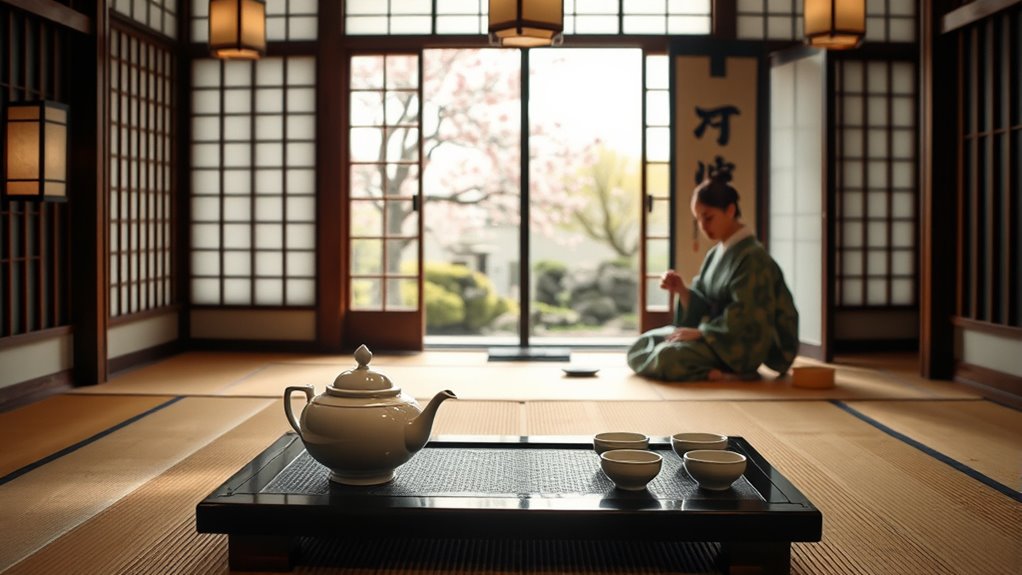
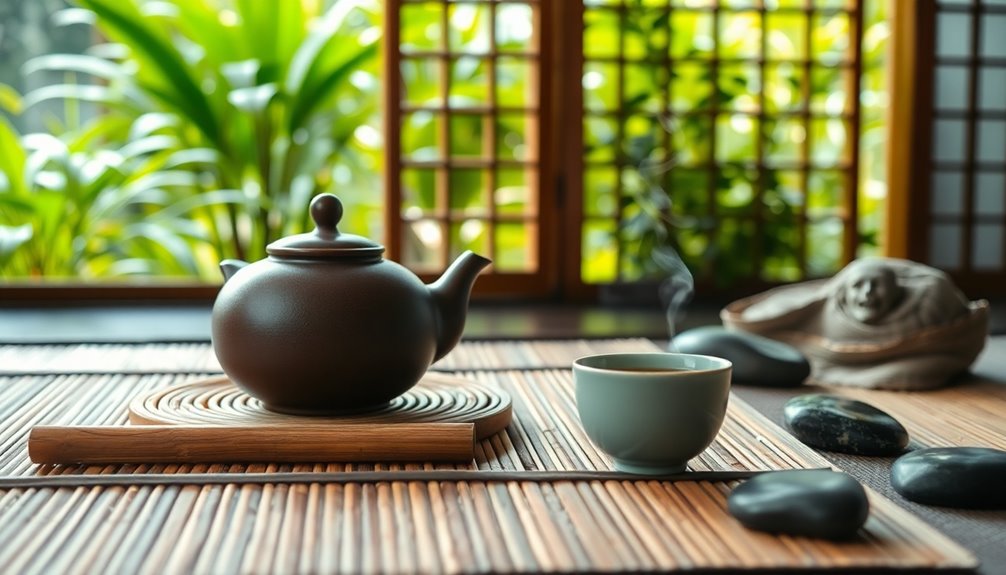
Tea ceremonies have long been more than just a method of preparing and drinking tea; they are cultural rituals that reflect history, artistry, and philosophy. When you participate in or observe a traditional tea ceremony, you’re stepping into a space carefully crafted to embody harmony and tranquility. The design of the tea house plays a pivotal role in this experience. Its architecture isn’t random; it’s engineered to evoke simplicity and natural beauty. From wooden beams and tatami mats to sliding paper doors, every element is chosen to create an environment that fosters mindfulness. The layout often emphasizes minimalism, with open spaces that invite you to slow down and focus on the moment. These spaces aren’t just functional—they’re designed to elevate the ceremony into an art form. As you enter a tea house, you might notice the thoughtful placement of a small garden or water feature outside, symbolizing harmony with nature and encouraging reflection even before the ceremony begins. The use of natural materials further enhances this connection to the environment.
Ceremonial attire adds another layer of significance to the ritual. When you see practitioners dressed in traditional garments, it’s more than just clothing—it’s a visual reminder of respect for the tradition. Kimono or yukata, often accompanied by specific accessories, help set the tone for the ceremony’s formality and spiritual depth. Wearing ceremonial attire isn’t just about appearance; it’s about embodying the spirit of humility, grace, and reverence that the ceremony demands. The carefully chosen colors and patterns often symbolize auspiciousness or seasonal themes, connecting the participants to the natural world and the cultural history behind the practice. When you see someone in full ceremonial attire, you understand the importance of honoring the ritual’s centuries-old customs. The attire, combined with the serene surroundings of the tea house, creates a harmonious atmosphere where you can appreciate not just the tea, but the cultural values it represents. The architecture of the tea house is intentionally designed to promote mindfulness and serenity, reinforcing the spiritual intent of the ceremony.
Together, the architecture and ceremonial attire serve as visual and spatial cues that deepen your appreciation of the ceremony’s artistry. They remind you that a tea ceremony isn’t merely about the beverage but about cultivating a mindful state and respecting tradition. Every element, from the design of the tea house to the clothing worn by participants, works in unison to create an experience that’s both aesthetic and spiritual. By immersing yourself in this environment and observing the adornments, you gain a deeper understanding of the cultural significance and enduring legacy of this revered practice.
Frequently Asked Questions
When Did Tea Ceremonies Originate Historically?
You might be surprised to learn that tea ceremonies originated during China’s Tang Dynasty around the 7th century, evolving through the Song Dynasty into a refined cultural practice. Their history origins highlight a focus on harmony and mindfulness, shaping cultural development across Asia. As you observe these ceremonies, you see centuries of tradition that emphasize aesthetics, respect, and tranquility, reflecting the deep roots and cultural significance behind this ancient practice.
How Do Tea Ceremonies Vary Across Cultures?
You’ll notice that tea ceremonies differ distinctly across cultures, with unique tea etiquette and ceremonial utensils shaping each tradition. In Japan, you focus on precise movements, elegant utensils, and mindful ritual. In China, you emphasize intricate brewing techniques and communal sharing. Meanwhile, in Britain, you enjoy a more relaxed, social teatime. Each culture crafts an enthralling ceremony, combining customs and utensils to create a meaningful, memorable experience.
What Symbolism Is Embedded in Traditional Tea Ceremonies?
In traditional tea ceremonies, you’ll find tea symbolism deeply embedded, representing purity, harmony, respect, and tranquility. These cultural meanings highlight the importance of mindfulness and reverence during the ritual. You can observe how every movement and utensil has significance, emphasizing connection and balance. This symbolism helps you appreciate the ceremony’s spiritual aspects, fostering a moment of calm and reflection that’s central to many cultures’ tea practices.
Are There Modern Adaptations of Traditional Tea Ceremonies?
Many believe modern tea practices are just a trend, but they actually show genuine innovation in tradition. You’ll find contemporary tea ceremonies blending old rituals with new elements like minimalist aesthetics, eco-friendly tools, and fusion flavors. These adaptations keep the essence alive while making the experience more accessible and relevant for today’s lifestyles. So, yes, there are real modern tea practices that honor tradition while embracing creative innovation.
How Are Tea Ceremonies Incorporated Into Contemporary Events?
You see tea ceremonies incorporated into contemporary events through innovative approaches that blend tradition with modern tea culture. Tea ceremony innovations include casual, themed, or fusion styles, making them accessible and appealing today. You might attend a sleek, minimalist tea gathering at a social event or a creative workshop. These adaptations help preserve the essence of tea ceremonies while embracing modern tastes, fostering a deeper appreciation of tea’s cultural significance.
Conclusion
As you explore these renowned places and meet the iconic figures behind tea ceremonies, you’ll see how tradition and artistry intertwine. These sites and people have shaped the rich history we cherish today. Don’t you wonder how a simple cup of tea can carry centuries of culture and meaning? By understanding their stories, you gain a deeper appreciation for this timeless ritual. So, next time you sip tea, remember the centuries of history that make it truly special.