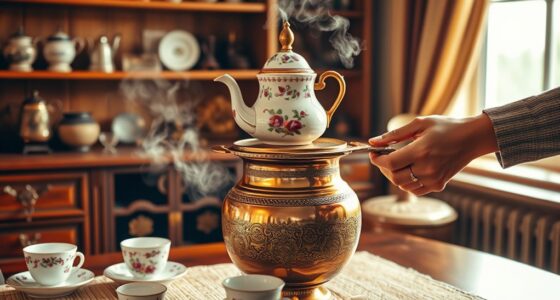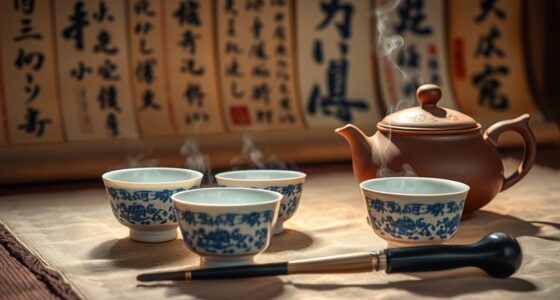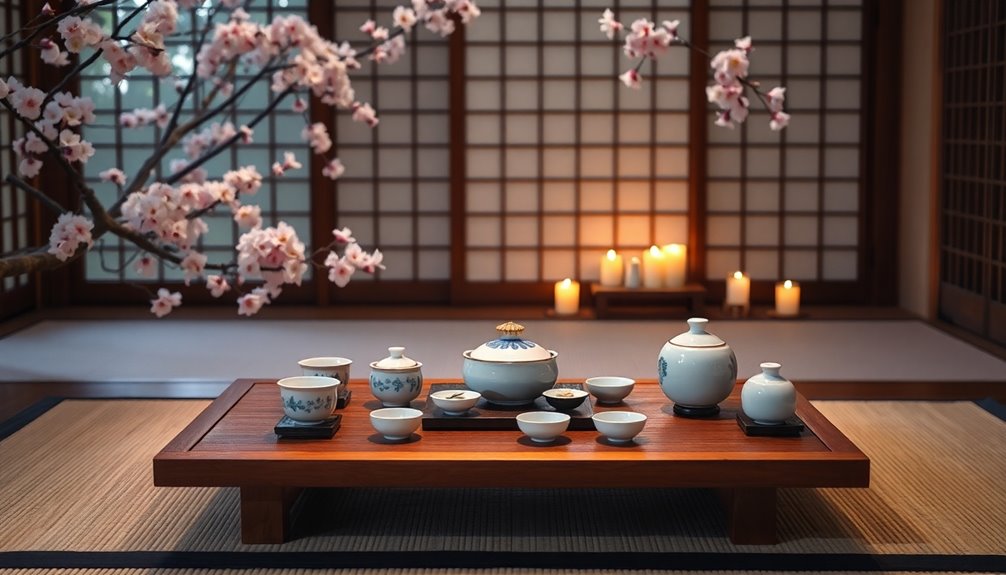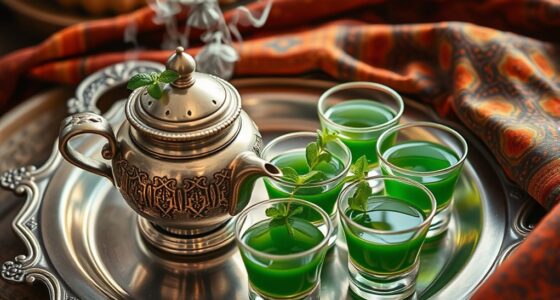
In tea ceremonies, every gesture and action reflects respect, purity, and cultural values. You handle utensils carefully, bow to show humility, and clean teapots as symbols of cleansing and reverence. Your movements and setup create harmony and mindfulness, embodying centuries-old traditions. Participating with intentionality deepens your connection to the ceremony’s meaning. If you explore further, you’ll discover how these symbolic gestures foster spiritual reflection and strengthen bonds within the cultural practice.
Key Takeaways
- Tea etiquette guides respectful actions such as utensil handling, pouring, and bowing, reflecting humility and reverence.
- Gestures like bowing and utensil cleaning symbolize respect, purity, and cultural values.
- The arrangement and movement of utensils embody harmony, balance, and energy flow within the ceremony.
- Ritual actions connect participants to centuries-old traditions, emphasizing mindfulness and spiritual reflection.
- Participating with care and reverence deepens cultural appreciation and nurtures peace and mindfulness.

Tea ceremonies are rich traditions that embody cultural etiquette and deep symbolism, offering more than just a way to enjoy tea. When you participate in a tea ceremony, you’re engaging in a carefully crafted ritual that emphasizes respect, harmony, and mindfulness. Central to this experience is the adherence to tea etiquette, which guides your actions and interactions. These rules aren’t just formalities; they serve as symbolic gestures that convey reverence for the process and the people involved. For example, the way you handle the teapot, the gentle pouring, and the respectful bow are all deliberate actions that reflect humility and appreciation. Each movement is intentional, reinforcing the ceremony’s deeper meaning and fostering a sense of connection.
Understanding the importance of symbolic gestures is essential when you immerse yourself in a tea ceremony. These gestures often symbolize broader concepts like purity, respect, and unity. For instance, the precise way you hold the tea cup signifies mindfulness and attentiveness, while the act of cleaning the utensils before use symbolizes purification. When you bow to the host or other participants, it expresses gratitude and humility, emphasizing the communal aspect of the ritual. These gestures transcend mere protocol; they serve as visual expressions of cultural values that deepen your appreciation of the tradition. By paying attention to these details, you not only show your respect but also become a part of an ongoing cultural dialogue. Additionally, the harmonious arrangement of the utensils and the deliberate pacing of each step are designed to promote a sense of tranquility and focus, embodying the core principles of mindfulness and respect.
Gestures like bowing and utensil cleaning symbolize respect, purity, and cultural values in a tea ceremony.
The setting and your behavior during the ceremony also carry symbolic weight. The choice of utensils, the arrangement of the space, and even the timing of each step are thoughtfully designed to create harmony and balance. For example, the way you place your utensils or how you gracefully lift the teacup can symbolize the flow of energy and the interconnectedness of all elements involved. These subtle cues foster a sense of mindfulness, encouraging you to be present in the moment. As you follow the ritual, you’re participating in a centuries-old tradition that values harmony, respect, and spiritual reflection. By embracing the etiquette and gestures, you not only honor the cultural significance but also deepen your personal experience with tea as a symbol of peace and mindfulness. Recognizing the symbolism in gestures enhances your understanding and appreciation of the cultural depth behind each act.
In essence, engaging in a tea ceremony is about more than just drinking tea; it’s about embodying a set of values through each deliberate act. The etiquette and gestures serve as a language of respect and symbolism, connecting you to a rich cultural history. When you approach the ritual with mindfulness and reverence, you participate in a meaningful act that nurtures both the spirit and the senses.
Frequently Asked Questions
How Do Different Cultures Interpret the Symbolism of Tea Utensils?
Different cultures interpret the symbolism of tea utensils uniquely; for example, in Japan, a tea whisk represents harmony and precision, while in China, a teapot symbolizes hospitality and tradition. You see that cultural interpretations influence how you value and use these utensils, emphasizing respect, mindfulness, and connection. Understanding tea utensil symbolism helps you appreciate diverse traditions, enriching your experience and deepening your respect for the cultural significance behind each utensil.
Are There Specific Dress Codes for Participating in Formal Tea Ceremonies?
When you join a formal tea ceremony, you’ll find that dress code and attire etiquette set the tone—think elegant, modest attire that complements the serene atmosphere. You’re expected to wear respectful, clean clothing, often traditional or semi-formal, avoiding bright colors or casual wear. Picture yourself in refined attire, blending seamlessly into the tranquil setting, showing reverence for the ritual and honoring the cultural significance behind each carefully chosen garment.
What Are Common Mistakes to Avoid During a Traditional Tea Ceremony?
To avoid common mistakes during a traditional tea ceremony, you should maintain proper posture and move gracefully. Avoid rushing or interrupting the host, and always show respectful silence when others are speaking or the tea is being served. Refrain from making loud noises or unnecessary gestures that disrupt the calm atmosphere. Being attentive, respectful, and mindful of these etiquette rules helps you fully appreciate the ceremony’s beauty and significance.
How Has Modern Culture Influenced Traditional Tea Ceremony Practices?
Modern culture has profoundly influenced traditional tea ceremonies through tea commercialization and digital influence. You might notice more branded tea products and casual adaptations, which can sometimes overlook the ceremony’s deep symbolism. Digital platforms also spread these practices globally, encouraging informal versions. While this makes tea culture more accessible, it’s essential to remember and respect the ceremony’s roots, maintaining its authenticity amid these modern changes.
Are There Regional Variations Within Countries Regarding Tea Etiquette?
Like a tapestry woven with diverse threads, regional customs shape tea etiquette within countries. You’ll find that local traditions greatly influence how you prepare, serve, and enjoy tea. For example, in Japan, precise movements honor respect, while in China, communal sharing emphasizes harmony. These variations reflect unique cultural identities, so you should observe and adapt to regional nuances to truly appreciate each area’s special tea customs.
Conclusion
As you partake in tea ceremonies, remember that understanding the etiquette and symbolism deepens your appreciation. Embrace the traditions with an open heart, and let yourself be swept away by the rich cultural tapestry. When you honor these customs, you truly get to the heart of the experience. It’s a chance to connect beyond words, proving that sometimes, the smallest gestures speak the loudest. In the end, it’s about savoring moments that truly matter.