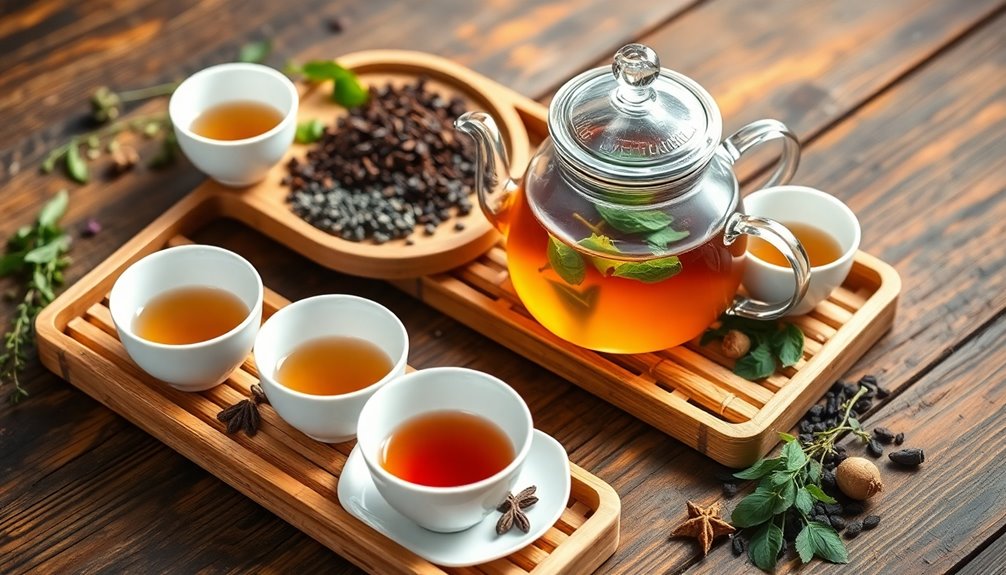
To master tea brewing, start by selecting high-quality, fresh whole leaves suited to your desired flavor. Control the water temperature depending on the tea type—green teas need around 170-180°F, while black teas benefit from boiling water. Use a thermometer or temperature-controlled kettle for accuracy. Proper techniques like cooling boiling water slightly for delicate teas and avoiding over-extraction help you reveal rich aroma and taste. Keep exploring to discover more tips for perfecting your brew.
Key Takeaways
- Select high-quality, whole tea leaves suited to each tea type for optimal flavor.
- Use appropriate water temperatures: green teas require 170°F–180°F, black teas boiling, and others moderate temps.
- Allow boiling water to cool slightly before brewing delicate teas to prevent bitterness.
- Use temperature-controlled kettles or thermometers for precise water temperature management.
- Handle tea leaves carefully to preserve essential oils and delicate nuances during brewing.
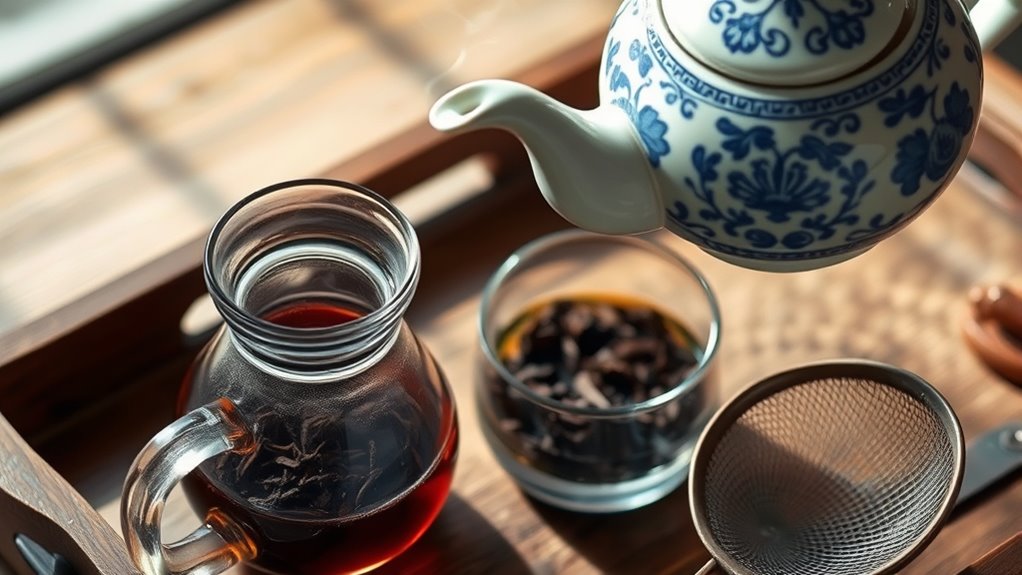
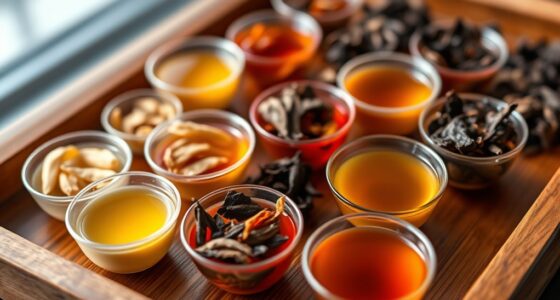
Brewing the perfect cup of tea starts with understanding the right techniques. One of the most essential steps is selecting the right tea leaves. Your choice of tea leaf selection influences the flavor, aroma, and overall experience. Whether you prefer delicate green teas, robust black teas, or fragrant herbal infusions, choosing high-quality, fresh leaves is fundamental. Look for whole leaves rather than broken or dust-like particles, as they retain more flavor and aroma. When you pick your tea leaves, consider their origin and processing method, which can greatly impact the taste profile. Once you’ve selected your leaves, handling them with care guarantees you preserve their essential oils and delicate nuances.
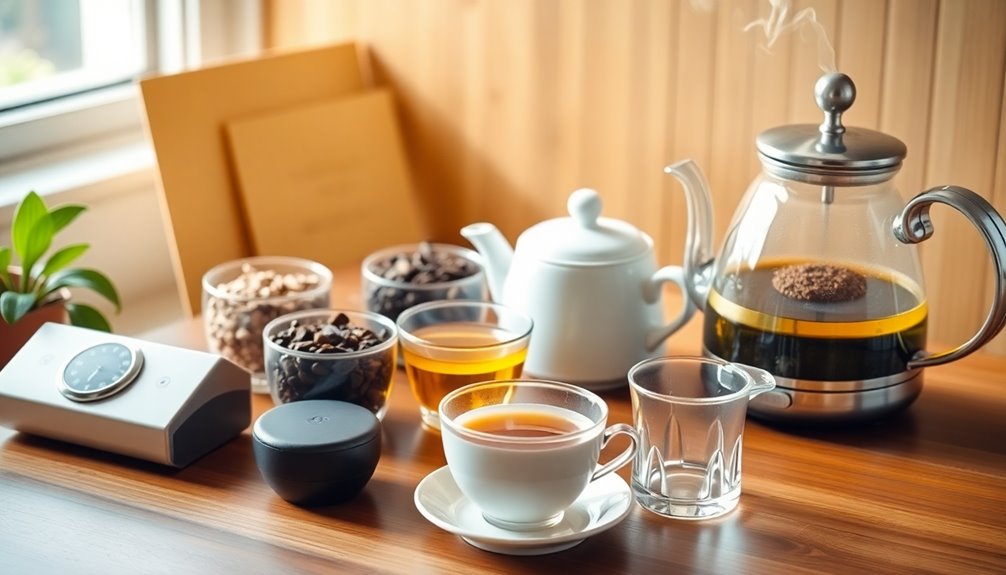
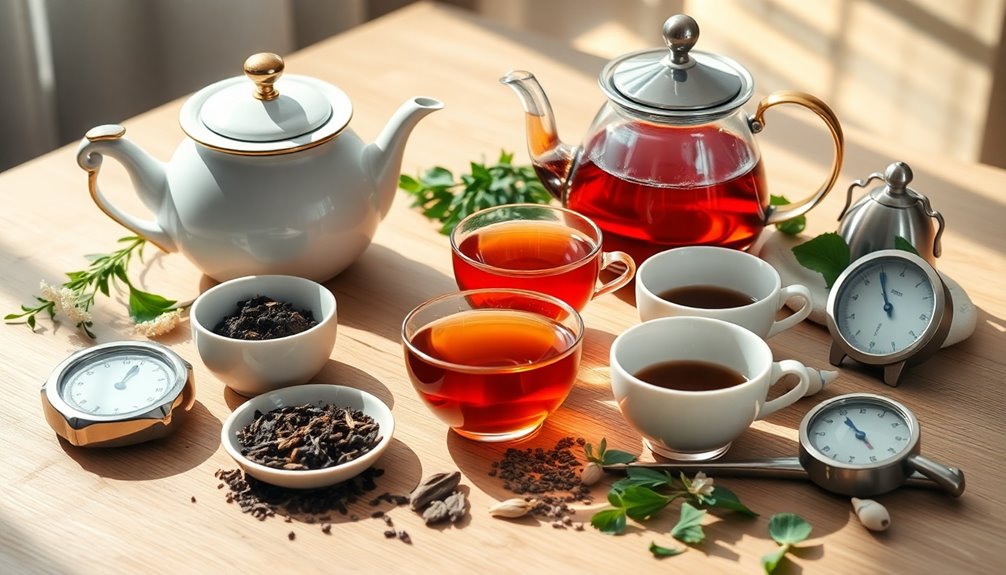
Another critical aspect of proper tea brewing is water temperature control. Different types of tea require specific water temperatures to reveal their best qualities. For example, green teas generally need lower temperatures around 170°F to 180°F (77°C to 82°C) to prevent bitterness and preserve their fresh, grassy notes. Black teas, on the other hand, benefit from higher temperatures, typically boiling water at 212°F (100°C), to fully extract their bold flavors. Oolong and white teas fall somewhere in between, with moderate temperatures that bring out their unique characteristics without overpowering them. Controlling water temperature isn’t just about the right heat; it’s about timing and precision. Using a thermometer or kettle with temperature control helps you hit the mark accurately, guaranteeing your tea isn’t over- or under-extracted.
It’s tempting to pour boiling water directly over the leaves without consideration, but doing so can lead to over-extraction and bitterness, especially with delicate teas. Allowing your water to cool slightly after boiling, or using a kettle with temperature settings, helps optimize the brewing process. Remember, the water temperature interacts directly with the tea leaves, influencing how the flavors are released. Too hot, and you risk burning the leaves or extracting undesirable bitter compounds; too cool, and you may not extract enough flavor, resulting in a weak, insipid brew. Understanding water temperature control is essential for extracting the optimal flavor from your tea leaves and enhancing your overall tea experience.
Investing time in selecting quality tea leaves and mastering water temperature control pays off with a richer, more nuanced cup of tea. These foundational techniques guarantee that each sip reflects the true essence of your chosen tea. By paying attention to these details, you’re not just brewing tea—you’re elevating your entire tea-drinking experience, making every cup a moment to savor.
Frequently Asked Questions
How Does Water Quality Affect Tea Flavor?
Water quality greatly impacts your tea’s flavor because mineral content influences extraction; too many minerals can make it bitter or dull, while pure water enhances delicate notes. Water temperature also matters—using the right temperature guarantees ideal flavor release. If your water is too hard or too soft, it can alter the taste, so use filtered or spring water and adjust the temperature accordingly for the best brew.
Can Different Teapots Influence Brewing Results?
Yes, different teapots influence your brewing results. The material, like clay, porcelain, or glass, affects heat retention and flavor infusion. Clay teapots, for example, develop a seasoned coating that enhances taste, while porcelain offers cleaner, more neutral flavors. Your pouring techniques also matter—gentle, steady pours help extract ideal flavor without bitterness. Experimenting with teapot material and your pouring style lets you tailor your tea experience to perfection.
What’s the Best Way to Store Loose Tea Leaves?
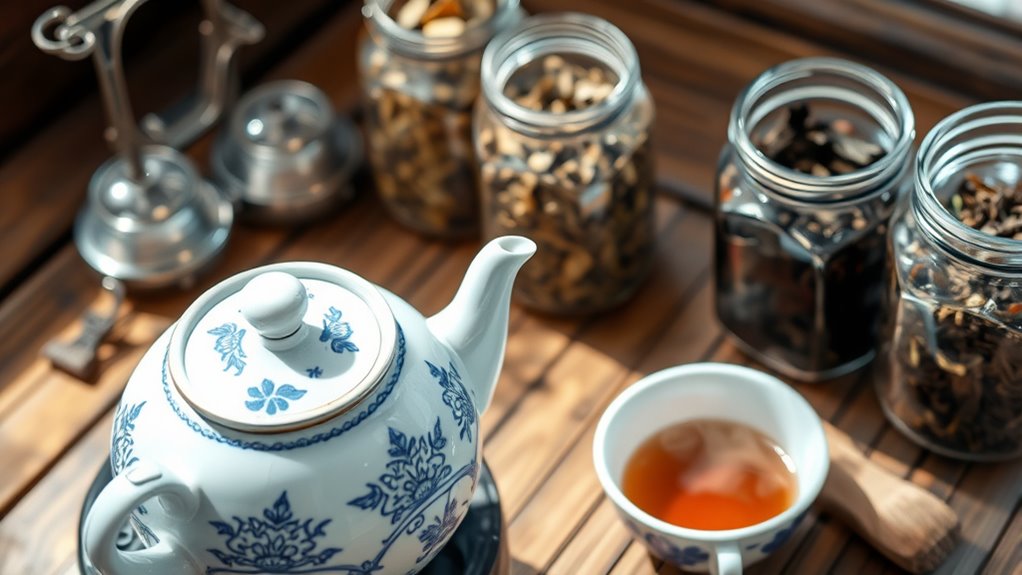
To keep your loose tea leaves fresh, store them in an airtight container, like a metal tin or glass jar, away from light, heat, and moisture. Proper storage preserves tea leaf freshness and flavor. Avoid clear plastic bags or containers that let light in. You’ll enjoy better taste and aroma with these storage container options, ensuring your tea stays fresh and flavorful for longer periods.
How Do Altitude and Climate Impact Tea Brewing?
Imagine you’re in the 1800s, but let’s talk today. Altitude influence and climate effects play essential roles in tea brewing; higher altitudes typically produce teas with more delicate flavors, requiring careful steeping, while warmer, humid climates can make leaves brew faster and more robust. You’ll need to adjust your steeping time and temperature accordingly, as these environmental factors directly impact how your tea develops its aroma and taste.
Are There Specific Techniques for Brewing Herbal Teas?
Yes, you should use herbal infusion techniques for brewing herbal teas. Steep your herbs in hot water—just below boiling—around 5 to 10 minutes to maximize flavor extraction. Use a loose leaf or infuser basket to allow herbs to expand fully, enhancing flavor extraction methods. Cover the cup while steeping to keep heat steady, and experiment with steeping times to find your perfect flavor profile.
Conclusion
Now that you know the key tea brewing techniques, you’re ready to master your perfect cup. Remember, brewing tea is both an art and a science—like tuning a vintage radio, it’s all about patience and precision. Whether you prefer a delicate green or a bold black, experiment and enjoy each sip. So, go ahead, channel your inner tea connoisseur, and make every brew a legendary story in the making. Cheers to your tea journey!