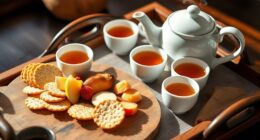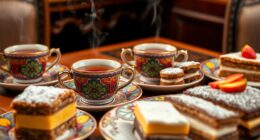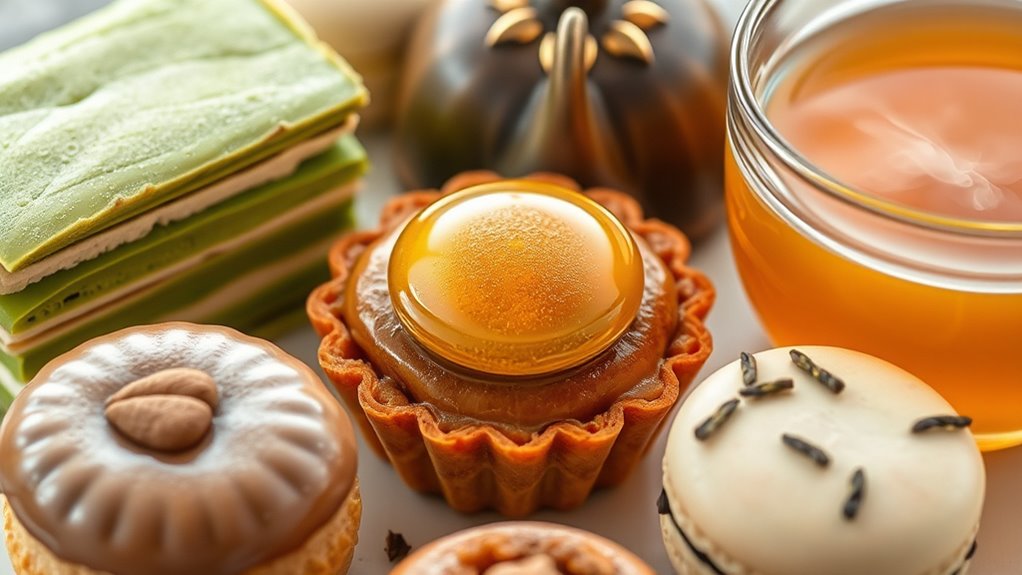

Around the world, tea inspires creative twists on baked goods, blending tradition with innovation. From Japanese matcha mochi to British Earl Grey scones, each culture infuses their flavors into familiar treats. Indian chai-spiced cookies and Middle Eastern baklava showcase regional spices and ingredients, while French pastries elevate black tea into éclairs. These unique desserts highlight how tea connects diverse culinary traditions. Keep exploring to discover more about these global tea-infused delights and how they blend heritage with modern taste.
Key Takeaways
- Chefs worldwide incorporate regional teas and spices, such as matcha, jasmine, chai, and bergamot, to create culturally inspired desserts.
- Fusion innovations combine traditional tea flavors with local ingredients, producing unique treats like matcha-topped tarts or saffron-infused mooncakes.
- Tea-infused baked goods from different regions highlight cultural heritage, such as Earl Grey scones in the UK or Middle Eastern baklava with green tea.
- Spices like cardamom, ginger, and cinnamon enhance tea-based desserts, reflecting local spice traditions and flavor profiles.
- Global desserts serve as edible bridges, celebrating diverse tea cultures through innovative twists on classic baked treats.

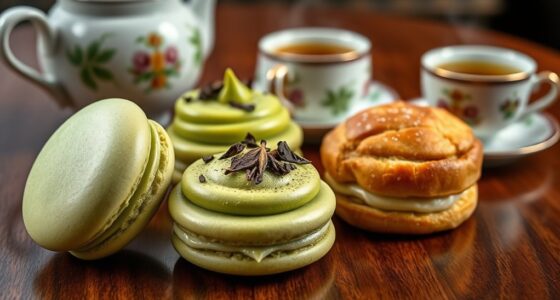
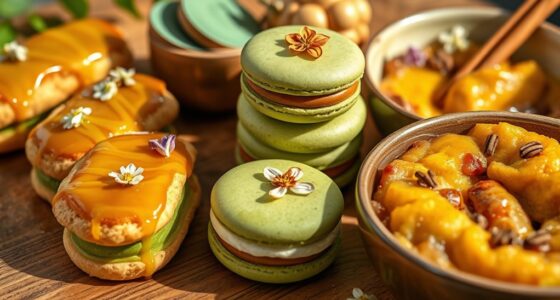
Tea has long been a versatile ingredient that transcends cultural boundaries, inspiring a wide array of desserts and baked goods around the world. When you explore tea-infused pastries, you discover how different regions incorporate local ingredients and flavors, creating unique twists on classic treats. In Japan, for example, matcha-infused sweets like mochi and matcha-flavored cakes highlight the region’s love for green tea, blending earthy notes with sweet, chewy textures. Meanwhile, in China, jasmine tea lends its floral aroma to delicate mooncakes and steamed buns, emphasizing regional flavor profiles rooted in tradition. These pastries showcase how tea not only enhances taste but also connects desserts to cultural heritage.
Tea infuses desserts worldwide, blending regional flavors and cultural heritage into delightful baked treats.
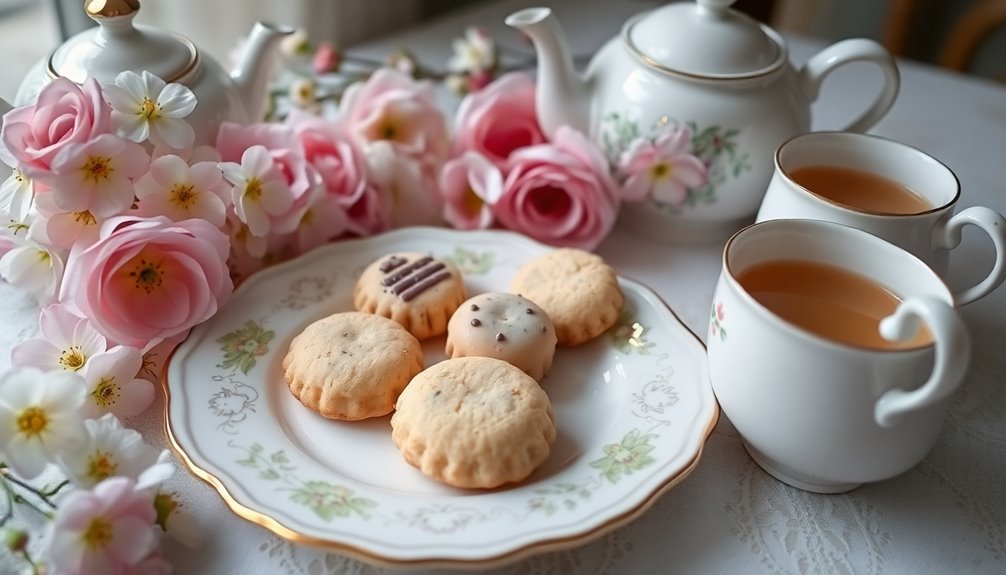
Venturing into Europe, you find that tea is often used to add depth to baked goods like scones, cookies, and chiffon cakes. In the United Kingdom, Earl Grey-infused scones are a popular afternoon tea staple, offering a citrusy twist thanks to bergamot oil. Across France, chefs infuse pastries with black tea in mille-feuille or éclairs, subtly imparting a sophisticated flavor that elevates the dessert. These regional variations demonstrate how tea-infused pastries can be adapted to local palates, creating a fusion of ingredients that celebrates regional flavor profiles. Additionally, understanding the halal status of ingredients used in tea-based desserts can help ensure they meet dietary guidelines for Muslim consumers.
In India, chai-infused baked goods are a vibrant example of how local spices and tea come together in desserts. You might try chai-spiced cookies or bread, where cinnamon, cardamom, and ginger complement the rich, malty flavor of strong black tea. These treats reflect the bold and aromatic profile of Indian chai, making the baked good a sensory journey into the country’s spice heritage. Similarly, in the Middle East, black and green teas are infused into baklava and other pastry fillings, adding complexity and depth to familiar flavors.
Across the globe, innovative bakers and home cooks alike are experimenting with tea to craft desserts that honor regional flavor profiles while offering new sensory experiences. Whether it’s a matcha tart in Japan, a jasmine tea-infused cake in China, or a chai-spiced cookie in India, tea infusions bring a nuanced depth that transforms ordinary baked goods into extraordinary treats. By understanding how regional ingredients and tea varieties influence flavor, you can appreciate the cultural significance behind each pastry. Ultimately, tea-infused pastries serve as edible bridges, connecting traditions and tastes from around the world into delightful, memorable desserts.
Frequently Asked Questions
What Are the Health Benefits of Tea-Infused Desserts?
Tea-infused desserts offer notable health benefits, thanks to their antioxidant properties that help fight free radicals and support your immune system. They can also aid digestion, making your meals more comfortable and reducing bloating. When you enjoy these treats, you’re not only indulging in delicious flavors but also boosting your overall well-being. So, incorporating tea into desserts can be a tasty way to enjoy some added health perks.
How Do Different Teas Influence Flavor Profiles in Baked Goods?
You notice how green tea adds a grassy freshness, while black tea offers bold, malty notes. Different teas influence flavor profiles in baked goods by balancing tea acidity and sweetness, creating a complex flavor harmony. For example, oolong provides a floral, slightly smoky taste that pairs beautifully with subtle sweetness. Each tea’s unique profile transforms your baked treats, making them richer and more layered with distinctive flavor nuances.
What Are Traditional Tea-Based Desserts in Specific Cultures?
You’ll find traditional tea-based desserts deeply rooted in culture, like matcha-flavored mochi in Japan, which is often served during tea ceremonies highlighting its cultural significance. In Morocco, mint tea is paired with sweets like gazelle horns, symbolizing hospitality. In China, mooncakes often contain tea-infused fillings during the Mid-Autumn Festival, reflecting the cultural importance of tea in celebrations and daily life.
Can Tea-Based Desserts Be Adapted for Dietary Restrictions?
Yes, you can adapt tea-based desserts for dietary restrictions. You might use vegan substitutions like plant-based milks and egg replacements to make them vegan-friendly. For gluten-free options, swap traditional flours with almond, rice, or gluten-free blends. These adjustments allow you to enjoy delicious tea-inspired treats while accommodating your dietary needs without sacrificing flavor or texture.
What Are Innovative Presentation Ideas for Tea-Infused Treats?
Did you know that 65% of diners find visually appealing food more satisfying? To create innovative presentations for tea-infused treats, you can incorporate tea art as a focal point, such as delicate latte art or intricate tea leaves designs. Enhance the visual impact with edible garnishes like edible flowers, citrus zest, or matcha dust, making your treats both beautiful and memorable, delighting taste buds and eyes alike.
Conclusion
As you explore these global tea-based desserts, you’re invited to embrace the rich, comforting flavors that span cultures. From delicate matcha treats to bold chai-infused baked goods, each bite tells a story. Why not bring these international twists into your own kitchen and create your own sweet journey? Imagine the aroma filling your home, blending tradition with innovation—ready to sip, savor, and bake your way around the world?