Tea and its philosophies deeply influence art and literature by symbolizing themes like mindfulness, harmony, and reflection. They invite you to explore moments of serenity, balance, and introspection, shaping creative works across cultures. Through rituals and symbolism, tea enriches stories, paintings, and poetry, encouraging a deeper understanding of self and society. If you continue, you’ll discover how these ideas continue to inspire timeless expressions of human thought and beauty.
Key Takeaways
- Tea symbolizes harmony and mindfulness, inspiring artistic motifs that explore themes of contemplation and life’s transient nature.
- Philosophical rituals of tea embody principles like simplicity and presence, influencing visual arts and literary narratives.
- Craftsmanship in tea preparation reflects deliberate, mindful actions that emphasize beauty, discipline, and philosophical ideals.
- Western interpretations linked tea to rationality and social dialogue, shaping themes of civility and enlightenment in art and literature.
- Overall, tea and philosophy foster creative expression by encouraging reflection on self, society, and existential truths through various art forms.
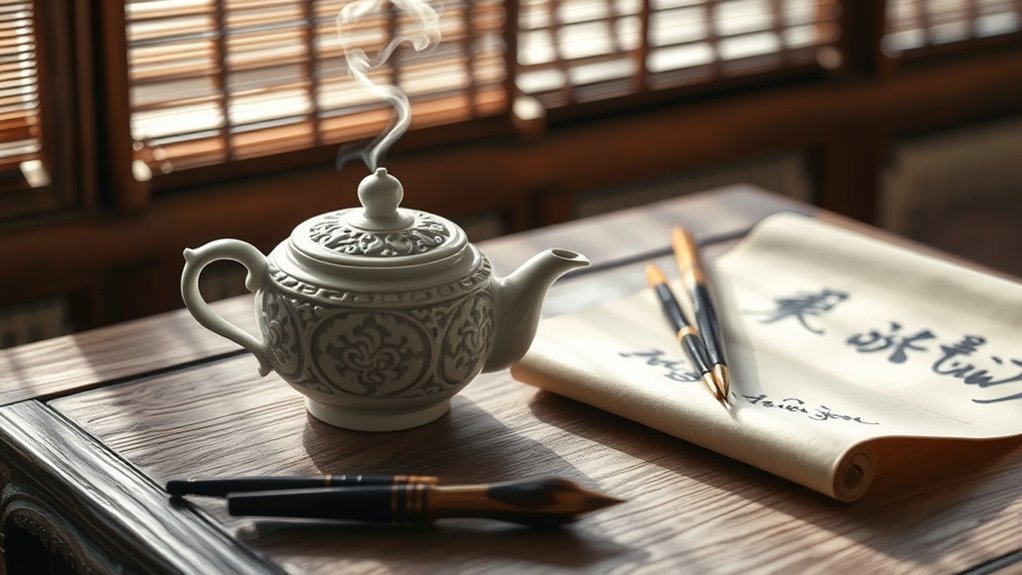
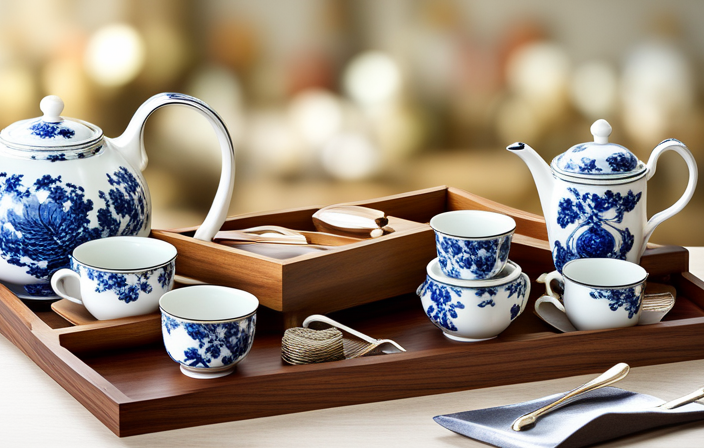
Have you ever wondered how a simple cup of tea and profound philosophical ideas have shaped the world of art and literature? The connection runs deeper than you might think. Tea symbolism has played a significant role in expressing cultural values, spiritual ideas, and social philosophies throughout history. In many cultures, especially in East Asia, tea isn’t just a beverage—it’s a symbol of harmony, tranquility, and mindfulness. Artists and writers have often used tea as a motif to explore themes of contemplation, balance, and the fleeting nature of life. When you see tea depicted in paintings or literature, it often signifies a moment of pause, reflection, and inner peace. This symbolism invites viewers and readers to consider their own relationship with patience and serenity, making art and literature richer with layered meanings.
Beyond symbolism, tea’s influence extends into the domain of philosophy itself. The ritual of preparing and drinking tea embodies philosophical ideas about simplicity, mindfulness, and the pursuit of harmony with nature. Philosophers, especially those influenced by Zen Buddhism and Taoism, have emphasized the importance of living in the present moment—an idea vividly reflected in tea ceremonies. These ceremonies serve as physical expressions of philosophical principles, encouraging participants to focus on the present and find beauty in ordinary acts. As a result, many writers and artists have drawn inspiration from these practices, incorporating themes of introspection and spiritual awakening into their work. Additionally, the high-quality craftsmanship involved in traditional tea preparation underscores the importance of attention to detail and deliberate action, reinforcing philosophical ideals.
The philosophical influence of tea isn’t limited to Eastern traditions. In the West, the rise of tea culture during the Enlightenment and beyond often symbolized a shift toward rationality, civility, and intellectual discourse. Tea rooms became spaces where ideas were exchanged, and social norms challenged or reinforced through conversation. Artists and writers captured this social aspect, depicting tea as a catalyst for dialogue and enlightenment. The philosophical underpinnings of tea—its promotion of patience, moderation, and reflection—have permeated countless works of art and literature, inspiring creators to explore human consciousness and societal values.
In essence, tea and its associated philosophies have left an indelible mark on creative expression. Whether through the symbolism embedded in visual arts or the themes woven into stories and poems, they encourage a deeper understanding of ourselves and the world. The simple act of tea-drinking transforms into a philosophical journey, inspiring artists and writers to explore the profound truths of life, balance, and harmony. As you engage with art and literature influenced by tea and philosophy, you participate in a timeless dialogue that continues to shape cultural understanding and human introspection.
Frequently Asked Questions
How Did Tea Influence the Development of Specific Artistic Movements?
Tea influenced artistic movements by inspiring tea aesthetics and symbolic imagery. You can see this in Impressionism, where tea scenes evoke tranquility, and in Japanese Ukiyo-e, emphasizing serenity and fleeting moments. Artists used tea as a symbol of refinement and mindfulness, shaping their works’ themes and styles. This cultural significance encouraged artists to explore new visual vocabularies, blending everyday objects with deeper philosophical ideas, enriching the art world.
What Philosophers Directly Inspired Particular Literary Works Involving Tea?
You’ll find Zen Buddhism and existentialism deeply influence literary works about tea. Writers like D.T. Suzuki, inspired by Zen, craft stories that echo tranquility and enlightenment through tea rituals. Meanwhile, existentialist thinkers like Sartre shape narratives highlighting individual choice and authenticity over a simple cup. These philosophies act as the ink and brush, transforming tea into a symbol of inner journeys, awakening your senses and mind with every sip.
Are There Notable Artists Known for Depicting Tea in Their Art?
You’ll find that artists like Katsushika Hokusai and Paul Cézanne are known for their artistic interpretations of tea, capturing its symbolism and cultural significance. Their works often depict tea as more than a beverage—it’s a symbol of tranquility, tradition, and social bonding. By exploring these pieces, you see how tea becomes a powerful motif, enriching art with deeper cultural and philosophical meanings.
How Has Tea Culture Been Represented in Different Literary Genres Globally?
Tea culture is a global literary treasure trove, shaping narratives across genres. You see tea symbolism woven into poetry, novels, and essays, representing hospitality, serenity, or rebellion. Cultural narratives highlight tea’s role in societal rituals, identity, and history. From Japanese haikus to British novels, you witness how tea’s poetic essence stirs emotions and reveals profound truths about human connections, making it an enduring symbol that’s as essential as life itself.
Can Philosophical Ideas About Tea Be Traced in Modern Art Forms?
Yes, you can trace philosophical ideas about tea in modern art forms through symbolic rituals and aesthetic philosophies. Artists often incorporate tea’s meditative and ritualistic qualities to explore themes of mindfulness and transience. You’ll see these influences in contemporary installations, performances, and visual arts that emphasize simplicity, balance, and the transient beauty of moments, reflecting deeper philosophical concepts rooted in traditional tea practices.
Conclusion
So, next time you sip your tea and ponder life’s mysteries, remember how this simple act has shaped art and literature in profound ways. Ironically, it’s often the quiet moments of reflection—triggered by a humble cup—that inspire some of the greatest creative works. Perhaps, in the end, it’s not just the tea or philosophy itself, but your awareness of their influence that transforms everyday routines into timeless expressions of human thought and artistry.