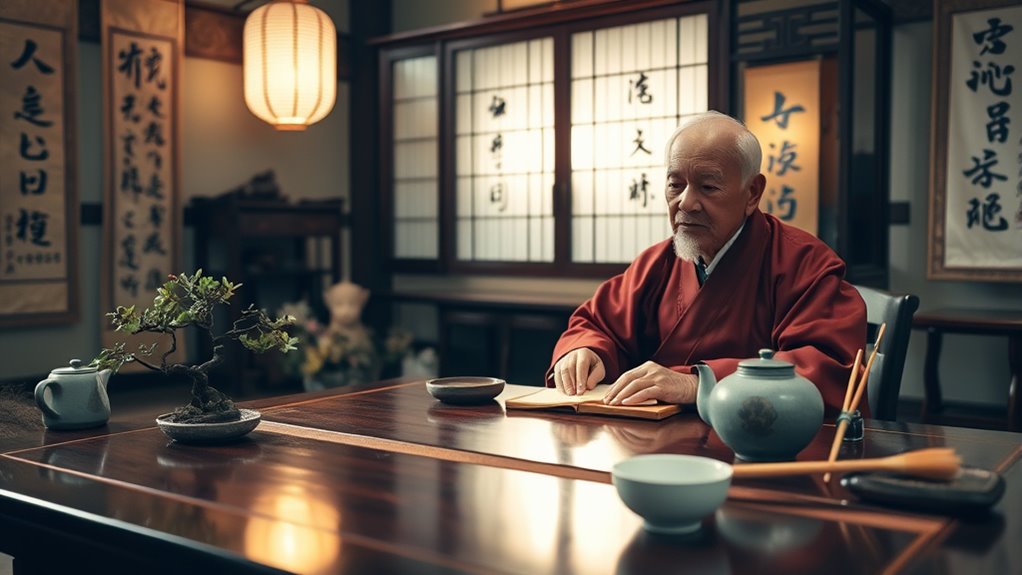

In tea ceremonies, you’ll find that etiquette and symbolism embody core values like harmony, mindfulness, and impermanence. Each gesture, object, and setting reflect philosophical principles rooted in cultures such as Japan and China. You’ll notice that ritual steps symbolize concepts like purity and tranquility, serving as metaphors for life’s cycles. Exploring these customs reveals how they promote balance and interconnectedness—if you continue, you’ll discover how these deeply rooted traditions carry profound life lessons.
Key Takeaways
- Tea ceremonies embody cultural values like respect, harmony, and mindfulness through specific rituals and aesthetic arrangements.
- Handling tea utensils with care and precision reflects humility and attentiveness, symbolizing philosophical principles.
- Elements such as the choice of tea and space design reinforce core values like purity, tranquility, and impermanence.
- Philosophical concepts like ‘wabi-sabi’ and Taoist symbolism influence the rituals, emphasizing beauty in imperfection and natural flow.
- Ritual gestures serve as metaphors for life lessons, promoting reflection on interconnectedness, balance, and the cyclical nature of life.
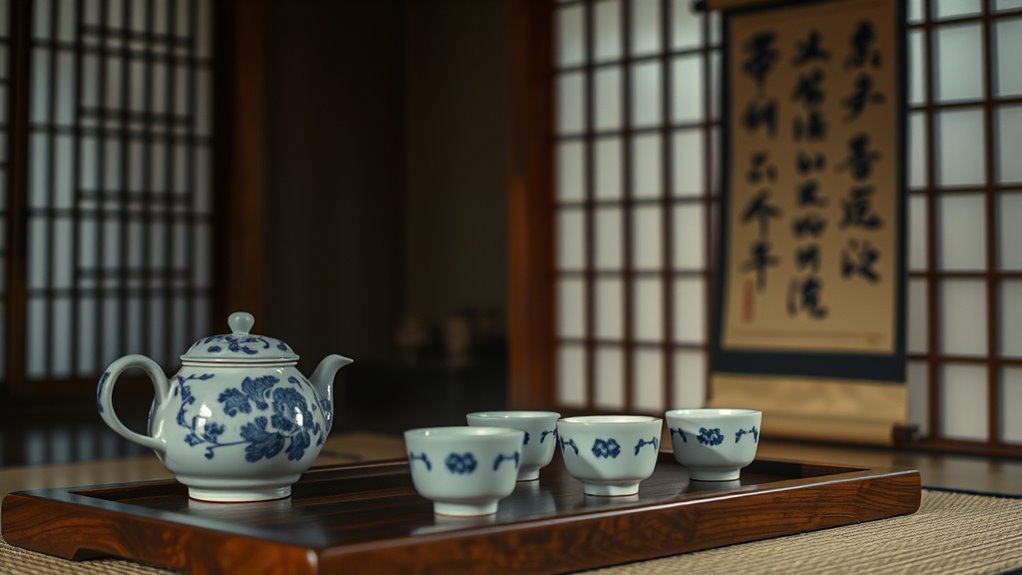
Tea has long been more than just a beverage; it’s a vessel of cultural meaning and philosophical insight that varies across societies. When you participate in a traditional tea ceremony, you’re engaging with centuries of customs designed to cultivate respect, harmony, and mindfulness. These rituals aren’t mere formalities; they embody deep philosophical principles expressed through specific movements, gestures, and objects. For example, the precise way you handle the tea utensils reflects humility and attentiveness, emphasizing the importance of being present in the moment. The arrangement of the tea space, the quietness of the environment, and even the choice of tea itself are all deliberate elements that reinforce the ceremony’s core values. Each step in the process acts as a metaphorical symbol, representing concepts like purity, tranquility, and the transient nature of life. You might notice how the act of whisking the tea becomes a symbolic gesture of harmony, connecting the practitioner’s spirit with the natural flow of the universe. Additionally, the importance of color accuracy in the presentation of the tea and its surroundings highlights the aesthetic harmony that enhances the overall experience.
In many cultures, these tea ceremony customs serve as more than social routines—they are philosophical acts. For instance, in Japanese tea ceremonies, the concept of ‘wabi-sabi’ guides the aesthetic and mindset, emphasizing beauty in imperfection and the fleeting nature of existence. When you observe or participate in this practice, you’re invited to reflect on the impermanence of all things and to find serenity in the present moment. Similarly, Chinese tea rituals often incorporate Taoist symbols, such as the flowing water or the yin-yang balance, which remind you of the interconnectedness of all elements in life. These symbols aren’t just decorative; they serve as philosophical metaphors that deepen your understanding of harmony, balance, and the cyclical nature of existence. The tea itself becomes a living symbol, embodying the essence of patience, humility, and mindfulness.
Top picks for "cultural etiquette symbolism"
Open Amazon search results for this keyword.
As an affiliate, we earn on qualifying purchases.
Frequently Asked Questions
How Do Different Cultures Interpret Tea Ceremony Gestures?
You’ll find that different cultures interpret tea ceremony gestures uniquely, reflecting their cultural variations. For example, in Japan, slow, precise movements show respect and harmony, while in China, gestures emphasize humility and reverence. In Korea, gestures often express communal bonding. Understanding these gesture interpretations helps you appreciate each culture’s values and traditions, allowing you to engage respectfully and authentically during tea ceremonies across diverse cultural contexts.
What Are Common Misconceptions About Tea Symbolism Worldwide?
Did you know that over 60% of people misinterpret tea symbolism worldwide? Many believe that all tea ceremonies symbolize peace or harmony, but this is a cultural oversimplification. Misinterpreted symbolism leads to misunderstandings, ignoring nuanced meanings in different traditions. You might think that a simple tea gesture holds the same significance everywhere, but each culture’s symbolism is deeply rooted in unique history and values, often misunderstood or overlooked.
How Has Tea Influenced Philosophical Thought Across Civilizations?
You see, tea has profoundly influenced philosophical thought across civilizations by serving as a spiritual metaphor for harmony, mindfulness, and balance. Through cultural exchange, tea fosters understanding and shared values, inspiring philosophical ideas that emphasize inner peace and interconnectedness. As you explore different traditions, you’ll notice how tea acts as a bridge, encouraging reflection and unity, shaping diverse perspectives on life and spirituality worldwide.
Are There Specific Etiquette Rules Unique to Ceremonial Tea Practices?
Yes, there are specific tea etiquette rules unique to ceremonial customs. You should follow precise tea etiquette, such as bowing, handling utensils properly, and maintaining a respectful demeanor. In many traditions, ceremonial customs emphasize mindfulness, harmony, and respect. These rules guide your actions during the ritual, ensuring the experience remains spiritual and respectful. By adhering to these customs, you honor the cultural significance and deepen your appreciation of the ceremony.
How Do Modern Interpretations of Tea Symbolism Vary Globally?
Modern tea symbolism varies globally, blending tradition with innovation. While some cultures emphasize mindfulness and harmony, others focus on health benefits highlighted in tea marketing campaigns. You might notice new brewing techniques transforming how tea is appreciated, creating fresh meanings. This juxtaposition of ancient symbolism with modern marketing and brewing methods shapes diverse interpretations, making tea both a cultural artifact and a contemporary experience worldwide.
Conclusion
As you sip the delicate brew, remember that tea is more than a drink—it’s a silent language of respect and tradition. Its symbols dance like shadows in the moonlight, whispering stories of philosophy and culture. Embrace these subtle gestures, letting them guide your journey through timeless rituals. In each cup, find a harmony that bridges hearts and histories, turning simple moments into a symphony of understanding and connection.