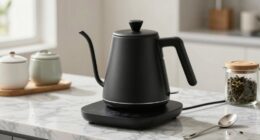
The history of tea and meditation reveals deep traditions rooted in mindfulness, rituals, and spiritual reflection that have shaped many cultures worldwide. Tea symbolizes presence, calm, and appreciation, often used in ceremonies to cultivate awareness and harmony. Meditation practices focus on cultivating inner peace, often complemented by tea rituals that enhance mindfulness. If you explore further, you’ll discover how these ancient customs continue to inspire modern practices of calm and clarity.
Key Takeaways
- Tea and meditation have deep cultural roots emphasizing mindfulness, reflection, and harmony across various traditions, notably in East Asia.
- Tea ceremonies, like Japanese chanoyu and Chinese gongfu, serve as rituals that promote presence, tranquility, and spiritual connection.
- Both practices focus on cultivating awareness, inner peace, and emotional calmness through deliberate, sensory-rich routines.
- Historically, tea and meditation are intertwined in philosophies such as Zen Buddhism, where tea ceremonies exemplify moving meditation.
- These practices symbolize more than physical rituals; they embody values of patience, gratitude, and mindfulness central to personal well-being.
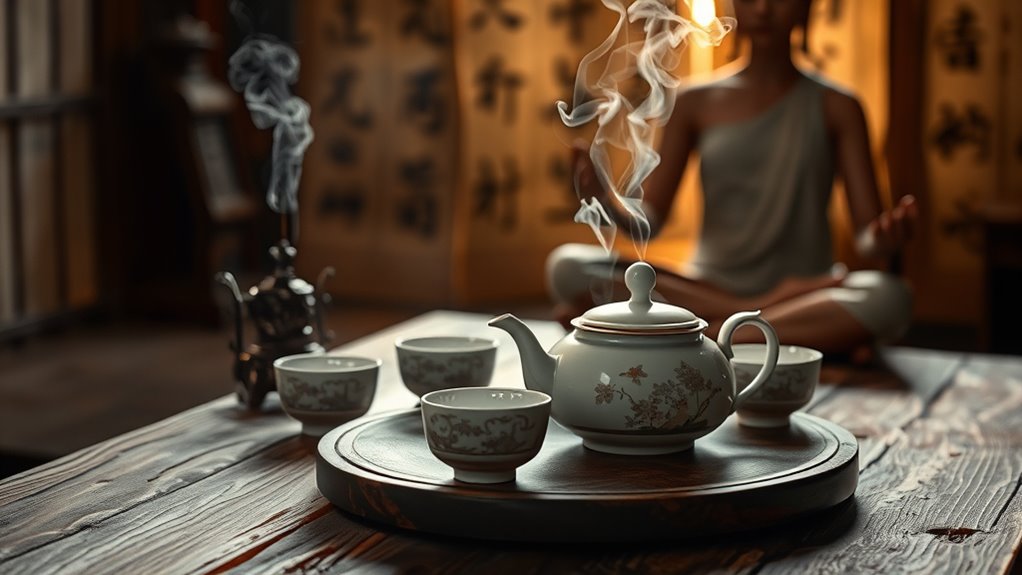
Tea and meditation both have deep roots that intertwine across cultures and centuries, symbolizing more than just a beverage or a practice—they represent a pathway to mindfulness and reflection. When you engage in tea ceremonies, you’re participating in a tradition that emphasizes presence, appreciation, and tranquility. These ceremonies are more than simple routines; they are intentional mindfulness practices that encourage you to slow down and focus on each moment. Whether it’s the Japanese chanoyu, Chinese gongfu, or other regional variations, tea ceremonies serve as a ritualistic way to cultivate awareness, harmony, and respect. As you prepare and sip your tea, you become fully immersed in the sensory experience—the aroma, temperature, and taste—helping you center your thoughts and quiet mental chatter. This deliberate act transforms a daily habit into an act of mindfulness, fostering a state of calm that can carry over into your everyday life.
Throughout history, tea has been linked with meditation practices because both focus on cultivating presence and inner peace. In many cultures, the act of brewing and drinking tea aligns with meditation’s emphasis on breath and awareness. For example, in Zen Buddhism, the tea ceremony is seen as a form of moving meditation, where each step—measuring tea leaves, boiling water, pouring—becomes a mindful act. The repetitive, deliberate motions help you stay grounded, suppressing distraction and encouraging a deep connection with the present moment. In this way, tea ceremonies are more than just social rituals; they are mindfulness practices that promote mental clarity and emotional calmness. When you approach tea with intention, you’re adopting a meditative mindset that can reduce stress and increase your sense of balance.
Furthermore, integrating tea into your routine can serve as a gentle reminder to pause and reflect amid a busy day. The simplicity of preparing a cup of tea offers an accessible form of meditation, requiring no special equipment or setting. By consciously engaging your senses during the process, you train your mind to stay focused and present. Over time, this practice can deepen your overall mindfulness, making it easier to stay centered in other aspects of life. The shared experience of tea ceremonies also fosters community and connection, reinforcing the meditative act through shared intention and presence. Whether alone or with others, practicing mindfulness through tea helps you cultivate patience, gratitude, and awareness—values that are central to both tea traditions and meditation practices.

Artcome 12Pcs Japanese Matcha Tea Set – Bowl, Bamboo Whisk, Holder, Brush and Screen – Handmade Ceremony Kit for Traditional Tea Ceremony
COMPELETE SET: Matcha bowl, matcha whisk, whisk holder, traditional scoop, tea spoon, tea cloth, bamboo holder, scoop holder,…
As an affiliate, we earn on qualifying purchases.
As an affiliate, we earn on qualifying purchases.
Frequently Asked Questions
How Did Tea Originally Become Associated With Meditation Practices?
Tea originally became associated with meditation practices because its origins trace back to ancient China, where monks used it to stay alert during long periods of meditation. The calming effects of tea, combined with its stimulating properties, made it ideal for meditative focus. Over time, this connection grew, and tea became an integral part of meditation history, especially in Zen Buddhism, enhancing mindfulness and concentration during spiritual practice.
Are There Specific Types of Tea Favored for Meditation Sessions?
You’re probably wondering if certain teas make meditation more magical. The answer’s a resounding yes! In a tea ceremony, herbal infusions like chamomile, lavender, and green tea reign supreme, transforming your practice into a serene escape. These teas are favored for their calming, soothing properties, helping your mind relax and deepen your focus. So, choose your herbal infusion and let it elevate your meditation to a whole new level.
How Has the Cultural Significance of Tea Evolved Over Centuries?
You see that the cultural significance of tea has evolved through centuries, especially in traditions like tea ceremonies that symbolize respect and mindfulness. These ceremonies help preserve cultural heritage, fostering community and spiritual connection. Over time, tea’s role has expanded beyond ritual to include social and personal wellness practices. By participating in these ceremonies, you contribute to cultural preservation and deepen your appreciation of tea’s historical importance.
Do Different Meditation Traditions Prefer Certain Tea Rituals?
Yes, different meditation traditions often prefer specific tea rituals, emphasizing tea symbolism to enhance mindfulness. For example, Zen Buddhism values simple, deliberate rituals that promote calm and focus, while Chinese tea ceremonies highlight harmony and presence. Ritual variations reflect each tradition’s values, helping practitioners deepen their meditation experience. You can incorporate these rituals into your practice, allowing the act of preparing and drinking tea to become a mindful, meditative act.
What Scientific Benefits Are Linked to Drinking Tea During Meditation?
Drinking tea during meditation offers several scientific benefits. Studies show that tea’s antioxidant properties help reduce inflammation and oxidative stress, boosting your overall health. Additionally, compounds like L-theanine promote cognitive enhancement by increasing alpha brain waves, which improve focus and relaxation. In fact, 70% of tea drinkers report feeling more alert and calm after their sessions. So, incorporating tea into your meditation can deepen your mindfulness and support mental clarity.

I-MART 4 Pcs Japanese Tea Cup Set, Chinese Style Ceramic Kung Fu Cups for Matcha, 5 oz Small Asian Tea Set, Traditional White Porcelain Cup Gift for Home or Office
Premium Ceramic Craftsmanship – Made from fine ceramic, each tea cup offers smooth texture, heat retention, and lasting…
As an affiliate, we earn on qualifying purchases.
As an affiliate, we earn on qualifying purchases.
Conclusion
As you embrace tea and meditation, you step into a timeless dance of calm and clarity. Like two gentle rivers merging into one peaceful stream, they invite you to find harmony amid life’s chaos. Remember, by savoring each sip and breath, you connect to centuries of tradition that whisper wisdom through every moment. So, let these practices be your guiding stars, illuminating your path with serenity and mindful joy—your journey to inner peace begins now.

Retrospec Sedona Zafu Meditation Cushion with Buckwheat Hull Fill – Adjustable Yoga & Pilates Equipment Support – 17in Crescent Cotton Cover
NATURAL COMFORT & SUPPORT: Filled with sustainable buckwheat hulls, this meditation cushion elevates your practice by aligning your…
As an affiliate, we earn on qualifying purchases.
As an affiliate, we earn on qualifying purchases.

Chinese Gongfu Wooden Tea Ceremony Utensil Tools Set, 6PCS Kungfu Tea Set Asian Gongfu Teaware Kit for Traditional Brewing
FINE WORKSHIP: The 6-piece Chinese tea ceremony set has an elegant and generous appearance. The wooden tea ceremony…
As an affiliate, we earn on qualifying purchases.
As an affiliate, we earn on qualifying purchases.