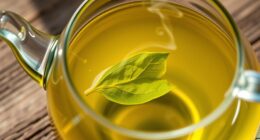
You’ll find that Taiwanese tea plays a essential role in local traditions, representing respect, craftsmanship, and community connection. Through tea ceremonies, people emphasize harmony, mindfulness, and social bonding, often showcasing centuries-old rituals. The careful harvesting methods reflect reverence for nature and quality, making each cup a symbol of patience and skill. If you want to explore how these practices preserve Taiwan’s cultural identity, there’s more to uncover beyond the surface.
Key Takeaways
- Taiwanese tea ceremonies embody harmony, respect, and mindfulness, reflecting core cultural values and social etiquette.
- The meticulous harvesting and processing of tea symbolize reverence for nature and traditional craftsmanship.
- Tea drinking fosters community bonding and preserves cultural heritage through shared rituals.
- The seasonal and skillful harvest emphasizes patience and reverence, linking tea to Taiwan’s natural cycles.
- Tea culture signifies Taiwan’s identity, showcasing craftsmanship, history, and the ongoing dialogue between nature and tradition.

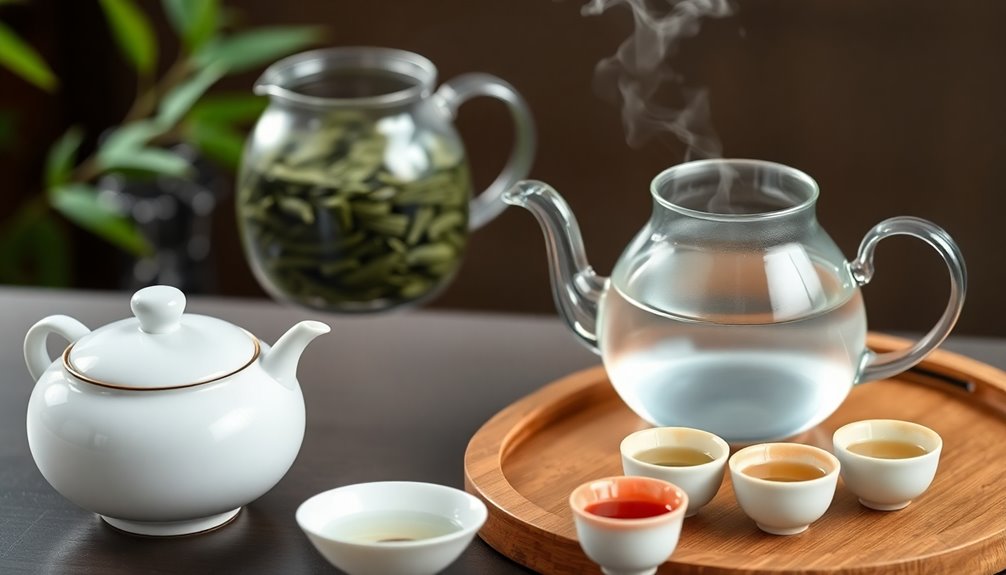
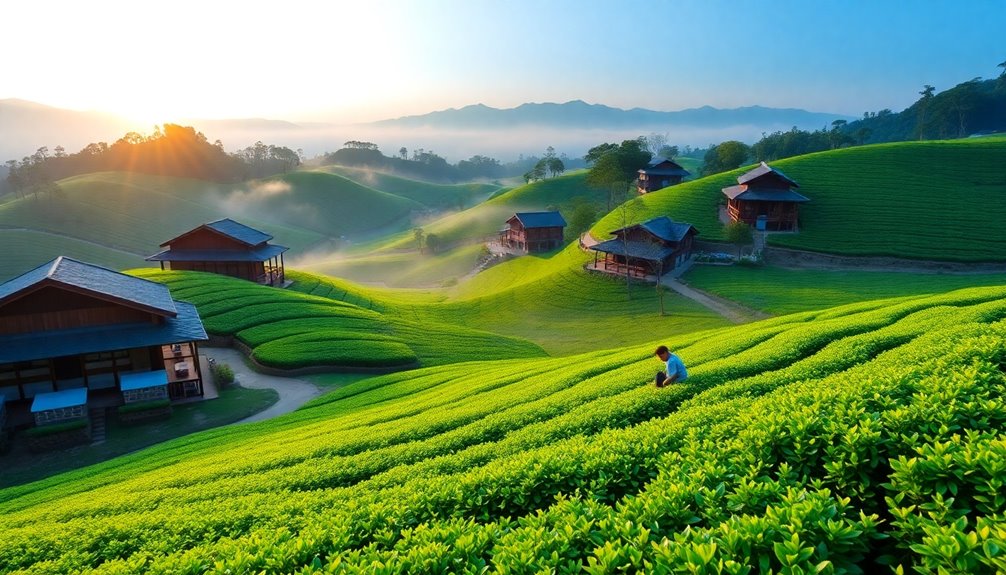
Taiwanese tea traditions are an integral part of the island’s cultural identity, blending centuries-old practices with modern appreciation. When you participate in a tea ceremony, you’re engaging in a ritual that goes beyond simply drinking tea; it’s a celebration of history, artistry, and community. The tea ceremony is a highly refined process that emphasizes harmony, respect, and mindfulness. Every step, from selecting the tea leaves to the way you pour the hot water, is deliberate and meaningful. The host carefully prepares each brew, paying close attention to the temperature, steeping time, and presentation. This meticulous process allows you to savor the aroma, flavor, and texture of the tea, connecting you deeply to Taiwanese heritage. The ceremony isn’t just about the tea itself but about sharing a moment of tranquility and respect with others, reinforcing social bonds and cultural values. Additionally, the quality of Taiwanese tea is heavily influenced by the traditional methods of tea harvesting, which are maintained with great care and precision. Understanding tea harvesting is vital to appreciating Taiwanese tea’s rich tradition. You’ll find that the timing of the harvest plays an essential role in the quality and flavor of the tea. Typically, tea leaves are picked during specific seasons, with the first harvest, known as “bai cha,” being the most prized. During this period, skilled pickers carefully select only the young, tender leaves and buds, often by hand, to guarantee the highest quality. This labor-intensive process preserves the delicate flavors and fragrance unique to Taiwanese teas, especially varieties like oolong and high-mountain teas. As you witness tea harvesting, you’ll realize it’s more than just collecting leaves; it’s an act of reverence for nature’s cycle and the artistry involved in producing excellent tea. The timing and technique of harvesting directly influence the taste and aroma, making each cup a reflection of the season’s bounty. Both the tea ceremony and tea harvesting reveal Taiwan’s deep-rooted respect for tradition and craftsmanship. They symbolize an ongoing dialogue between nature, history, and the people who dedicate themselves to perfecting their craft. When you partake in these practices, you’re not only enjoying a beverage but also immersing yourself in a cultural narrative that has been cultivated over generations. These traditions serve as a reminder of Taiwan’s rich heritage, emphasizing the importance of patience, skill, and reverence for the natural world. Through these timeless practices, Taiwanese tea continues to hold a special place in the hearts of locals and visitors alike, embodying the island’s unique cultural spirit.
Frequently Asked Questions
How Did Taiwanese Tea Cultivation Originate Historically?
You should know that Taiwanese tea cultivation began during the Qing Dynasty when Chinese immigrants introduced tea farming, building on indigenous influences. The history of tea cultivation in Taiwan evolved as settlers cultivated local oolong and green teas, blending traditional Chinese techniques with indigenous knowledge. Over time, this rich history shaped Taiwan’s reputation for high-quality teas, making it a essential part of the island’s cultural and agricultural heritage.
What Are Unique Regional Tea Varieties in Taiwan?
Imagine walking through lush hills where mist drapes over vibrant green leaves. You’ll discover unique regional tea varieties like Alishan’s fragrant high-mountain oolongs, Sun Moon Lake’s rich black teas, and Jinxuan’s sweet green teas. These local teas embody regional customs, each with distinct flavors and brewing traditions. You can taste the essence of Taiwan’s diverse landscape in every sip, connecting you deeply to its rich tea heritage.
How Is Taiwanese Tea Used in Traditional Festivals?
During traditional festivals, you’ll find Taiwanese tea playing a essential role in festival rituals and tea ceremonies. You might participate in a tea ceremony to honor ancestors, where carefully brewed tea symbolizes respect and harmony. Tea is also shared during celebrations to foster community bonds and good fortune. These rituals highlight Taiwan’s deep-rooted cultural appreciation for tea, making it an integral part of festive traditions.
What Are Modern Influences on Taiwanese Tea Culture?
You’ll notice that over 70% of young Taiwanese adults share tea experiences on social media, showing modern influences shaping tea culture. Tea tourism has grown, with visitors enthusiastic to explore lush plantations and traditional tea houses. Social media influences how you discover new flavors and brewing techniques, blending tradition with innovation. These trends make Taiwanese tea more global, vibrant, and accessible, connecting you to its rich heritage in fresh, exciting ways.
How Do Taiwanese Tea Customs Differ From Other Asian Countries?
You’ll notice Taiwanese tea customs emphasize intricate tea etiquette and ceremonial practices that differ from other Asian countries. In Taiwan, you often participate in precise brewing techniques and respectful gestures that highlight harmony and mindfulness. Unlike Japan’s formal tea ceremonies or China’s grand rituals, Taiwanese tea culture balances tradition with a relaxed, welcoming atmosphere, making each tea experience both meaningful and enjoyable.
Conclusion
You can see how Taiwanese tea isn’t just a beverage—it’s a crucial part of local traditions. With over 1,000 years of history, tea culture shapes community gatherings and rituals. In fact, Taiwan produces about 150,000 tons of tea annually, highlighting its significance to the economy and culture alike. So, next time you sip Taiwanese tea, remember you’re part of a rich heritage that continues to thrive and connect people across generations.