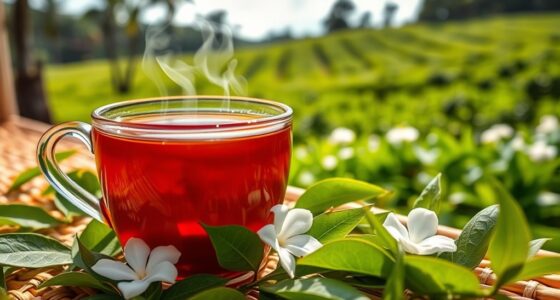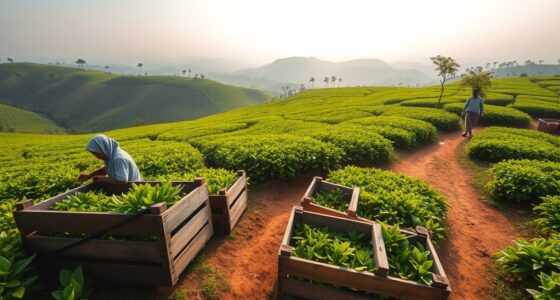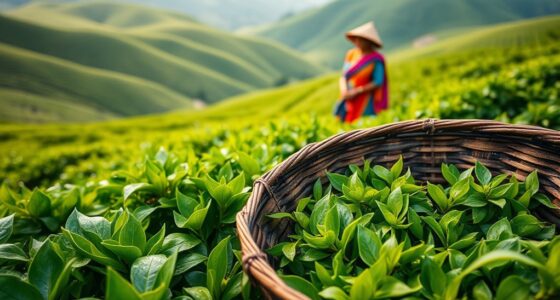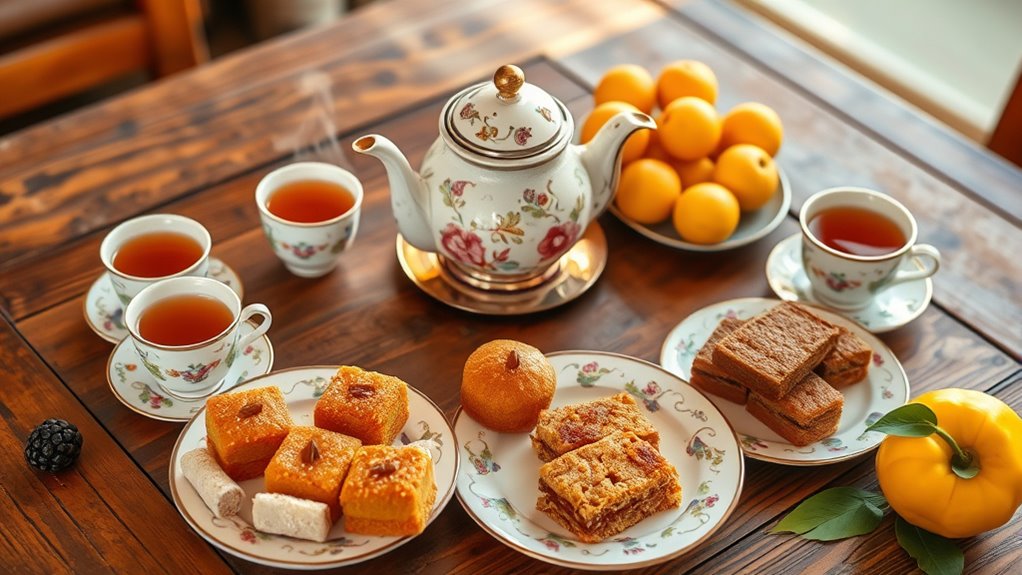
Pairing Sri Lankan tea with food and desserts lets you enjoy a richer flavor experience. Bright, brisk Ceylon teas go well with spicy dishes like curries, while mellow, full-bodied varieties balance hearty foods. Light teas complement delicate pastries, and floral or citrus notes match fragrant desserts such as coconut or pandan treats. Traditional snacks like jaggery enhance the floral aroma, deepening your appreciation. Keep exploring to discover more exciting combinations that celebrate Sri Lanka’s tea culture.
Key Takeaways
- Match robust, full-bodied Ceylon teas with spicy or savory dishes to balance flavors effectively.
- Pair light, floral teas with delicate pastries or fruit for a harmonious taste experience.
- Complement sweet treats like coconut desserts and jaggery with subtle, aromatic teas to enhance flavor notes.
- Use traditional Sri Lankan snacks to deepen appreciation of tea’s natural aromas and cultural significance.
- Experiment with flavor combinations to discover new layers and elevate the overall sensory enjoyment.
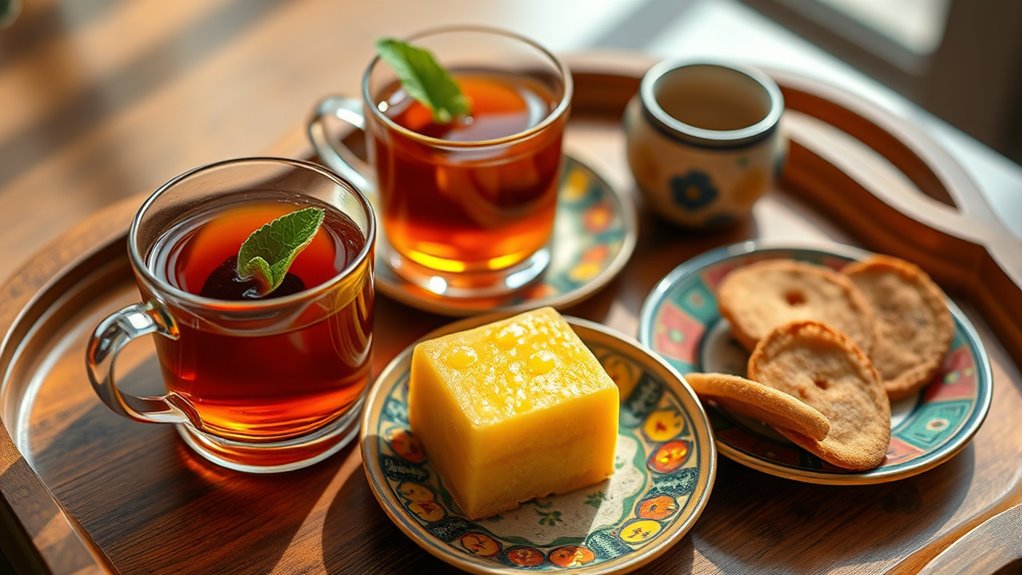
Sri Lankan tea pairing offers a delightful way to enhance your tasting experience by matching the rich flavors of the island’s teas with complementary foods. The vibrant tea culture in Sri Lanka is rooted in centuries of tradition, with each region producing distinct tea flavor profiles that reflect the island’s diverse climate and terrain. Whether you prefer the bright, brisk notes of Ceylon tea or the more mellow, full-bodied varieties, understanding these flavor profiles allows you to create perfect pairings that elevate your tea-drinking experience. The country’s cultural tea traditions emphasize harmony between tea and food, encouraging you to explore combinations that highlight the nuanced flavors of each brew.
Discover how Sri Lankan tea culture pairs diverse flavors with complementary foods for a richer tasting experience.
When you consider the tea flavor profiles, it’s essential to match the tea’s characteristics with foods that enhance or balance those flavors. For example, a robust, full-bodied Ceylon tea pairs beautifully with spicy, savory dishes like curries or savory snacks, as the tea’s strength cuts through the richness and adds a revitalizing contrast. Conversely, lighter teas, such as high-grown teas with floral or citrus notes, complement delicate pastries, fresh fruit, or mildly sweet desserts. These pairings are rooted in a deep understanding of how different teas can interact with various ingredients, creating a balanced taste experience that’s both satisfying and invigorating.
Sri Lankan cultural tea traditions also influence how you should approach pairing foods. In local customs, tea is often served alongside sweet treats like jaggery, coconut-based desserts, or traditional Sri Lankan snacks, which bring out the subtle sweetness and aroma of the teas. When you indulge in these pairings, you participate in a centuries-old practice that celebrates harmony and respect for the tea’s natural qualities. Recognizing these traditions helps you appreciate the cultural significance behind each pairing, transforming a simple tea session into a meaningful experience.
Additionally, understanding the cost factors involved in home security systems can help you make more informed choices suited to your needs and budget. As you experiment with different pairings, keep in mind that the goal is to find a balance where neither the tea nor the food overpowers the other. A well-chosen pairing enhances the overall flavor profile, revealing new layers of taste you might not notice when tasting each separately. For example, a cup of lightly brewed white tea with floral notes pairs beautifully with soft, fragrant desserts like pandan or coconut cakes, creating a subtle interplay of aromas. With a bit of experimentation, you’ll discover how the diverse tea flavor profiles of Sri Lanka can complement a wide array of foods and desserts, deepening your appreciation for this rich cultural tradition.
Frequently Asked Questions
What Makes Sri Lankan Tea Unique Compared to Other Teas?
You’ll notice that Sri Lankan tea stands out because of its unique flavor profile, which is shaped by its ideal tea cultivation conditions. The high-altitude regions and rich volcanic soil give the tea a bright, brisk, and aromatic taste. Unlike other teas, Sri Lankan varieties often have a perfect balance of boldness and subtlety, making them truly distinctive. This combination of climate and terrain creates teas that are vibrant and full of character.
How Does Tea Flavor Influence Food Pairing Choices?
Your tea flavor greatly influences your food pairing choices by enhancing aroma and ensuring flavor balance. A rich, robust tea boosts savory dishes’ depth, while a delicate, floral tea elevates light desserts. When you match the tea’s aroma with your food, you create a harmonious experience. By considering these aspects, you can select pairings that complement and intensify each other, making every sip and bite more enjoyable.
Are There Traditional Sri Lankan Dishes Best Paired With Tea?
You’ll find that traditional Sri Lankan dishes like hoppers, string hoppers, and spicy curries are best paired with tea during tea ceremonies. The rich spice blends in these dishes complement the bold, aromatic flavors of Ceylon tea, enhancing the experience. When you serve these, you’re embracing authentic flavors, creating a harmonious balance that highlights the cultural significance of Sri Lankan tea and its perfect pairing with local cuisine.
Can Tea Pairing Enhance the Dessert Experience?
Like a delicate dance, tea pairing can elevate your dessert experience, turning each bite into a harmonious symphony. When you consider the tea aroma and flavor balance, you allow the intricate notes of your tea to complement the sweetness, enhancing every nuance. This connection deepens your appreciation, making each dessert more memorable, as if the flavors are whispering secrets only you can hear, enriching your moment of indulgence.
What Are the Best Brewing Methods for Optimal Pairing?
You should use proper brewing techniques to optimize flavor extraction, ensuring the tea’s aroma and taste are at their best. For black teas, steep in near-boiling water for 3-5 minutes, while green teas need slightly cooler water around 175°F for 2-3 minutes. Adjust steeping time based on your preference, but avoid over-extraction, which can make the tea bitter. This approach guarantees a perfect balance for pairing with your favorite foods and desserts.
Conclusion
As you sip your Sri Lankan tea, let each warm cup be a bridge connecting you to lush plantations and vibrant flavors. Just as a well-paired dessert completes a perfect story, your experience becomes a tapestry of warmth and tradition. Remember, every sip is a gentle reminder of the island’s lush beauty—an enduring symbol of harmony between nature’s bounty and your moment of serenity. Embrace it, and let the journey linger long after the last drop.