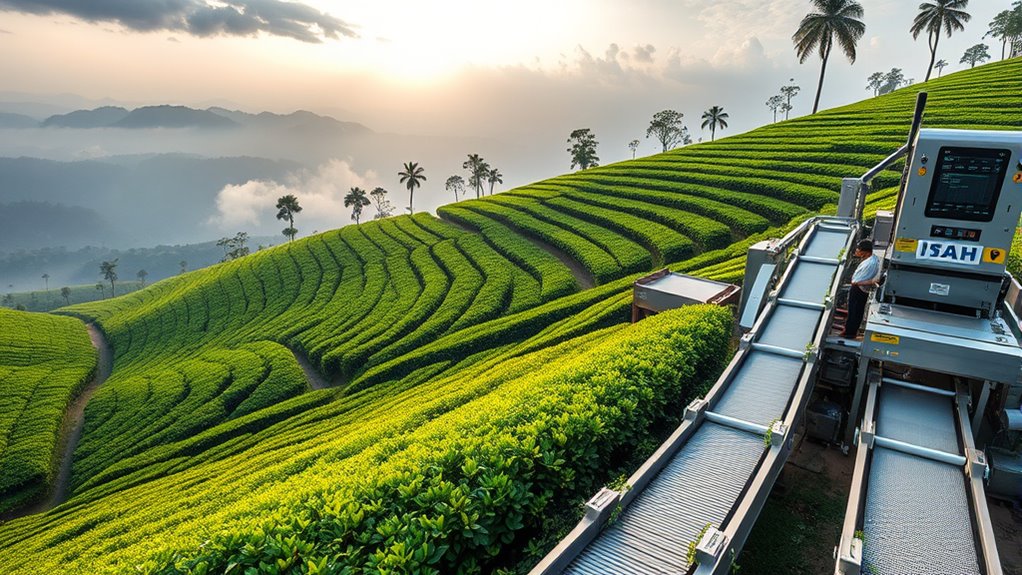
Modern innovations in Sri Lankan tea production include automated machinery that speeds up harvesting and guarantees consistent leaf quality. Electronic grading systems analyze key quality attributes like size and color, maintaining high standards. These advances boost efficiency, reduce waste, and support sustainable practices. They also help Sri Lanka meet global demand with top-quality teas, enhancing its reputation. Keep exploring to discover how these techniques continue to evolve and shape the future of Sri Lankan tea.
Key Takeaways
- Automated machinery improves plucking efficiency, consistency, and reduces labor costs in tea harvesting.
- Electronic grading systems ensure uniform quality by analyzing size, color, and leaf integrity rapidly.
- Technology enhances traditional craftsmanship, supporting the production of high-quality, specialty teas.
- Sustainable practices are promoted through increased efficiency and reduced environmental impact.
- Modern innovations boost Sri Lanka’s global competitiveness by meeting rising demand with premium, consistent tea products.
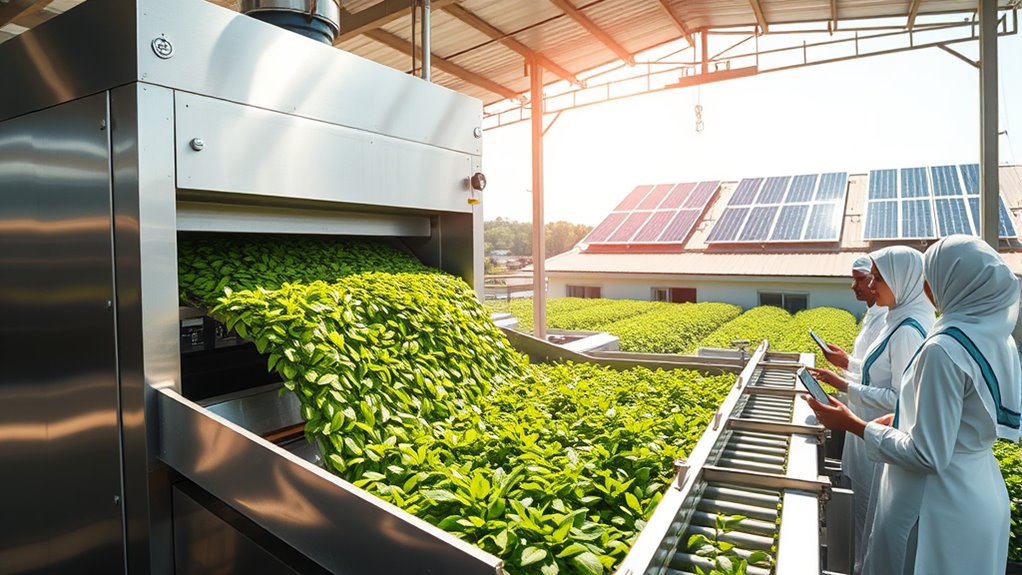
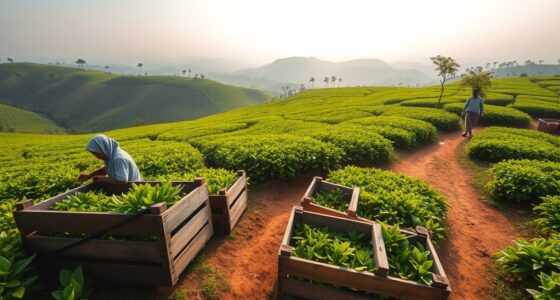
Sri Lanka has long been renowned for its high-quality tea, but recent innovations are transforming its industry. You’ll find that modern techniques like automated plucking and electronic grading are revolutionizing how tea is produced and processed, guaranteeing better quality and efficiency. Automated plucking replaces traditional hand-picking with machinery that can carefully harvest tea leaves at a much faster rate. This technology allows plantations to optimize their harvest schedules, reduce labor costs, and maintain consistent leaf quality. As a result, you benefit from fresher, more uniform tea leaves, which directly influences the flavor and aroma of your favorite brews. Automated plucking also helps in reducing labor shortages and minimizing human error, leading to a more reliable supply chain. When combined with electronic grading, the entire process becomes even more precise. Electronic grading systems analyze tea leaves using sensors and algorithms that assess quality attributes such as size, color, and leaf integrity. This technology guarantees that only the best leaves make it into your tea, elevating the overall standard of what’s available on the market. With electronic grading, producers can sort large quantities of tea quickly and accurately, eliminating inconsistencies that might occur with manual sorting. This results in a more uniform product and helps maintain Sri Lanka’s reputation for premium tea. You’ll notice that with these innovations, the traditional craftsmanship is enhanced rather than replaced, as technology works alongside expert growers to improve quality control. The integration of automated plucking and electronic grading also supports sustainable practices. By reducing waste and increasing efficiency, these methods lessen the environmental impact of tea production. For you, this means enjoying tea that’s not only delicious but also ethically produced. Moreover, these advancements enable Sri Lankan producers to meet rising global demand while maintaining high standards. You’re likely to see a broader range of specialty teas that benefit from the meticulous selection and harvesting processes these technologies facilitate. Overall, these innovations are making Sri Lankan tea more competitive in the global market and ensuring that you continue to experience the rich flavors that have made Sri Lanka a tea legend. As the industry adopts these cutting-edge methods, you can look forward to enjoying even more consistent, high-quality teas that reflect the country’s rich heritage and commitment to excellence.
Frequently Asked Questions
How Does Climate Change Impact Sri Lankan Tea Quality?
Climate change affects Sri Lankan tea quality by causing unpredictable weather patterns, which challenge your ability to maintain consistent growth and flavor. You need to focus on climate adaptation strategies to protect your crops. Building environmental resilience helps your tea plants withstand extreme conditions, ensuring sustained quality. By embracing these practices, you can better preserve the unique taste and aroma of your tea despite the changing climate.
What Are the Future Trends in Sri Lankan Tea Export Markets?
Imagine a rising sun over Sri Lanka’s tea plantations—signaling new beginnings. You’ll see future markets embracing digital marketing to reach global consumers more effectively. Premium branding will become essential, emphasizing quality and tradition to stand out. These trends will help you tap into niche markets, boost exports, and strengthen Sri Lanka’s reputation as a top tea producer. Innovation and storytelling will be your best tools in this evolving landscape.
Are There Any Health Benefits Linked to Modernized Sri Lankan Tea?
Yes, modernized Sri Lankan tea offers health benefits like herbal antioxidants that boost your immune system and fight free radicals. Many producers now aim for organic certifications, ensuring your tea is free from harmful chemicals. Drinking these teas can help improve your digestion, reduce stress, and enhance overall well-being. By choosing modern Sri Lankan teas, you’re getting a healthier, more natural beverage that supports your wellness goals.
How Do Local Farmers Adopt New Tea Processing Technologies?
Like a river flowing steadily, local farmers embrace new tea processing technologies through hands-on training and government support. You’ll find them adopting mechanization to boost efficiency and improve quality control. They often collaborate with tech providers, attend workshops, and gradually integrate innovations into their routines. This proactive approach helps them stay competitive, ensuring their tea meets international standards while preserving the tradition that makes Sri Lankan tea unique.
What Sustainable Practices Are Integrated Into Modern Sri Lankan Tea Production?
You’ll find that sustainable practices in modern Sri Lankan tea production include organic farming, reducing chemical use, and improving soil health. Water conservation is also key; farmers implement drip irrigation and rainwater harvesting to minimize water waste. These methods help protect the environment, guarantee product quality, and support long-term industry viability, allowing you to enjoy high-quality tea while contributing to ecological preservation.
Conclusion
As you embrace these modern innovations, you’re gently guiding Sri Lanka’s cherished tea tradition into a brighter, more sustainable future. Every new technique and improvement softly whispers promises of continued excellence and resilience, ensuring the legacy remains vibrant for generations to come. By supporting these advancements, you help nurture a timeless craft, allowing its rich aroma and story to flourish quietly yet powerfully in the hearts of all who cherish this treasured tradition.