Sri Lankan tea offers many health benefits thanks to its unique harvesting process and rich antioxidants. When you enjoy a cup, you’re benefiting from high levels of catechins and polyphenols that combat free radicals and support your immune system. It can help lower bad cholesterol, promote healthy blood flow, and boost energy naturally. Its diverse flavors also cater to your wellness needs, making every sip a step toward better health—discover more to unveil its full potential.
Key Takeaways
- Freshly harvested Sri Lankan tea contains high levels of antioxidants like catechins and polyphenols, promoting overall health.
- The selective harvesting process preserves the tea’s natural compounds, enhancing its potential to combat free radicals.
- Regular consumption supports cardiovascular health by lowering bad cholesterol and improving blood flow.
- The natural caffeine in tea provides a gentle energy boost, improving alertness and focus without jitters.
- The tea’s compounds help strengthen the immune system and reduce oxidative stress, contributing to overall wellness.
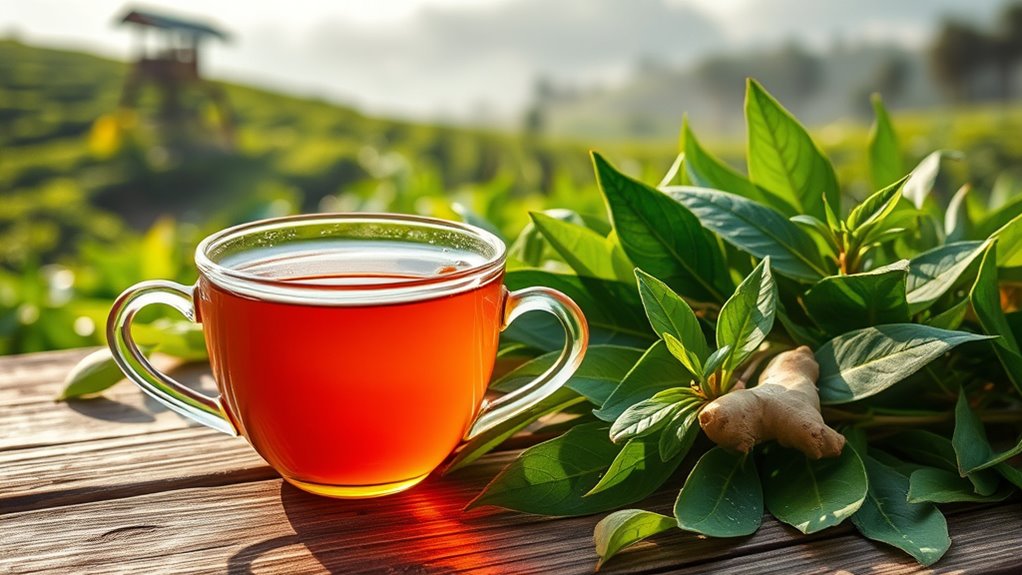
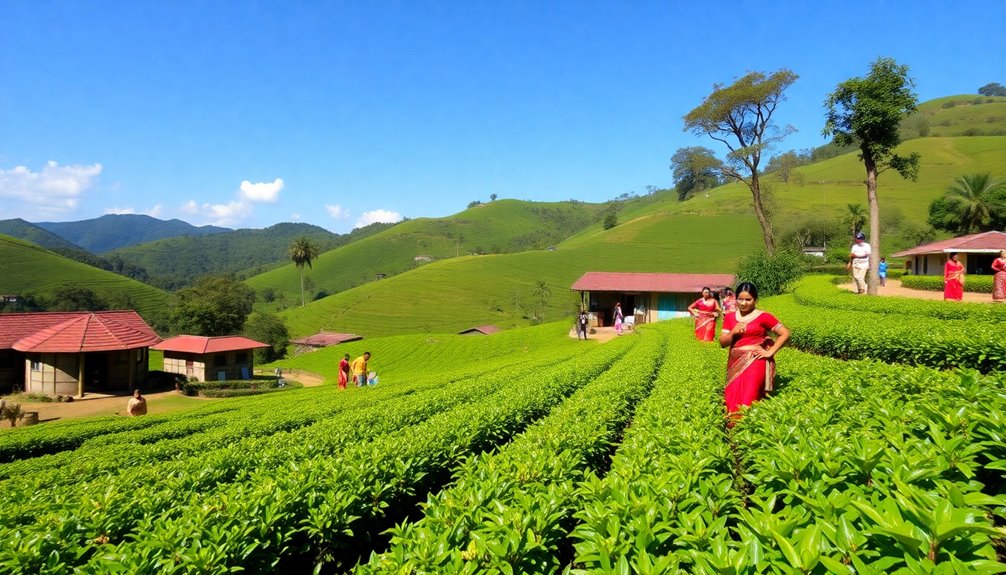
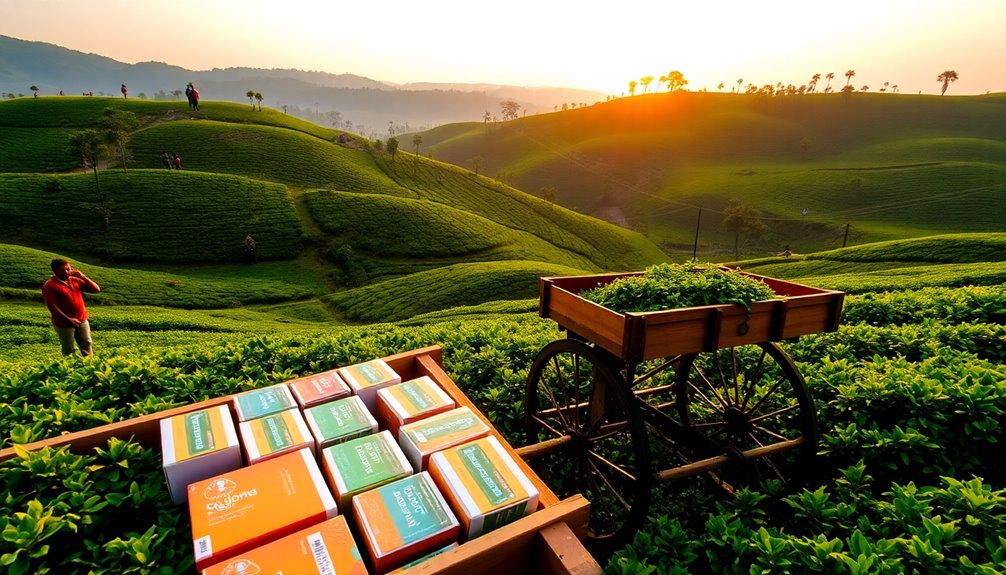
Have you ever wondered why Sri Lankan tea is celebrated worldwide? The secret lies not just in its rich history but also in the meticulous process of tea harvesting and the unique tea flavor profiles that set it apart. When you explore how this tea is harvested, you’ll notice the care and precision involved. Skilled workers pluck only the tender top leaves and buds, ensuring that each batch maintains the highest quality. This selective harvesting process allows the tea to develop its distinctive flavors, which are often described as bright, brisk, and full-bodied. These complex flavor profiles are a direct result of the specific altitude, climate, and soil conditions in Sri Lanka’s diverse tea-growing regions. As a result, each cup you enjoy carries a rich tapestry of tastes that have been carefully cultivated over generations.
Knowing how tea harvesting influences flavor helps you appreciate the health benefits tied to Sri Lankan tea. Because only the freshest leaves are picked, the tea retains more antioxidants, which are renowned for their health-promoting properties. These antioxidants, particularly catechins and polyphenols, help combat free radicals in your body, reducing oxidative stress and supporting overall health. The unique flavor profiles stemming from different regions also mean you can choose teas that suit your health needs. For instance, a robust Ceylon tea from the highlands offers a bold taste and higher levels of antioxidants, while a lighter, more delicate variety from the low-grown regions provides a gentler experience with still notable health benefits. Additionally, the careful processing methods used in Sri Lanka help preserve the natural compounds that provide these health advantages.
Freshly harvested Sri Lankan tea delivers more antioxidants and tailored health benefits.
Consuming Sri Lankan tea regularly can contribute to improved cardiovascular health, thanks to its high antioxidant content. It may help lower bad cholesterol levels and support healthy blood flow. Additionally, the natural compounds found in this tea can boost your immune system, making it easier for your body to fight off illnesses. The caffeine in Sri Lankan tea provides a gentle energy boost without the jitters often associated with coffee, helping you stay alert and focused throughout your day. Plus, the calming effect of the tea’s natural compounds can help reduce stress and promote relaxation, making it a perfect beverage for unwinding after a busy day.
In essence, the combination of expert tea harvesting and the diverse tea flavor profiles crafted across Sri Lanka’s regions creates a beverage that’s not only enjoyable but also packed with health benefits. The care put into each step of the process ensures that every sip delivers maximum flavor and health-promoting properties. So, when you choose Sri Lankan tea, you’re embracing a tradition of quality and wellness that has been perfected over centuries. Understanding tea harvesting techniques further highlights the importance of quality in producing a healthful beverage.

Mevlana – Pure Ceylon Loose Leaf Tea | Premium Black Tea Leaves | Rich & Smooth Sri Lankan Blend | Naturally Fresh | Perfect for Tea Lovers & Iced or Hot | OP 1 Grade | 1lb 454g
Luxurious Hand-Picked Tea: Each tea leaf is carefully hand-picked from high-altitude Sri Lankan tea gardens to ensure premium…
As an affiliate, we earn on qualifying purchases.
As an affiliate, we earn on qualifying purchases.
Frequently Asked Questions
Does Sri Lankan Tea Contain Any Allergens?
Sri Lankan tea generally doesn’t contain common allergenic proteins, but some individuals might experience cross-reactivity issues with other teas or plants. If you’re allergic to certain pollens or foods, it’s wise to check for potential cross reactivity. While most people tolerate Sri Lankan tea well, always read labels carefully and consult an allergist if you have known sensitivities, especially if you notice reactions after drinking it.
How Does Sri Lankan Tea Compare to Other Teas Nutritionally?
You’ll find Sri Lankan tea offers comparable nutritional benefits to other teas. It’s rich in antioxidants, which help fight free radicals, and has moderate caffeine levels that boost alertness without overstimulating you. While the antioxidant content is high, it varies slightly depending on the type and processing. Overall, Sri Lankan tea stands out for its quality and natural properties, making it a healthy choice alongside other popular teas like Chinese or Indian varieties.
Can Sri Lankan Tea Help With Specific Health Conditions?
Imagine yourself in a Victorian parlor, sipping tea that could help with heart health. Sri Lankan tea is rich in antioxidants, which may lower cholesterol and improve cardiovascular health. If you’re aiming to manage blood pressure or reduce inflammation, this tea could be a helpful addition to your routine. Its natural compounds support your heart, making it a beneficial choice for specific health conditions.
What Is the Best Way to Brew Sri Lankan Tea for Health Benefits?
To maximize health benefits, use proper brewing techniques and ideal steeping times. Bring fresh water to a rolling boil, then pour over high-quality Sri Lankan tea leaves. Steep for 3-5 minutes to extract antioxidants and other nutrients without bitterness. Avoid over-steeping, which can reduce health benefits. Using these methods guarantees you get the most out of your tea, promoting better health with every cup.
Are There Any Side Effects of Drinking Sri Lankan Tea Regularly?
Drinking Sri Lankan tea regularly can have side effects, especially if you’re sensitive to caffeine, causing insomnia or increased heart rate. Additionally, pesticide residues might pose health risks if the tea isn’t properly certified organic. To minimize these effects, limit your intake and choose teas from reputable sources. Always watch for signs of caffeine sensitivity and consider organic options to reduce exposure to pesticides.

SRILUXE – Premium Quality Ceylon Organic Green Tea Bags | Sri Lankan Luxury Tea | Exquisite Taste & Aroma | Freshly Harvested 100% Natural Tea | Detox Tea High in Antioxidants (50 Tea Bags)
✔️SRILUXE – PREMIUM QUALITY ORGANIC CEYLON GREEN TEA BAGS – Our Teas are 100% Ceylon non mixed like…
As an affiliate, we earn on qualifying purchases.
As an affiliate, we earn on qualifying purchases.
Conclusion
As you enjoy Sri Lankan tea, you’re giving your health a gentle boost, much like a warm hug on a chilly day. The antioxidants, polyphenols, and other nutrients work together to improve your heart health, boost your immunity, and even help you relax. So, sip mindfully and embrace the rich benefits, knowing each cup is like a small act of self-care. Your body will thank you, just like a garden blooms with proper care.
SRILUXE – Premium Quality Ceylon Organic Green Tea Bags | Sri Lankan Luxury Tea | Exquisite Taste & Aroma | Freshly Harvested 100% Natural Tea | Detox Tea High in Antioxidants (50 Tea Bags)
✔️SRILUXE – PREMIUM QUALITY ORGANIC CEYLON GREEN TEA BAGS – Our Teas are 100% Ceylon non mixed like…
As an affiliate, we earn on qualifying purchases.
As an affiliate, we earn on qualifying purchases.

Organic Yerba Mate Tea Bags – Natural Energy Tea With Ashwagandha & Ginkgo Biloba – Organic Unsmoked Yerba Mate Tea for a Natural Sustained Energy Boost – Coffee Alternative, Naturally Occurring Caffeine
CLEAN, SUSTAINED ENERGY WITHOUT THE CRASH Fuel your mornings with this organic yerba mate tea, a steady, all-day…
As an affiliate, we earn on qualifying purchases.
As an affiliate, we earn on qualifying purchases.