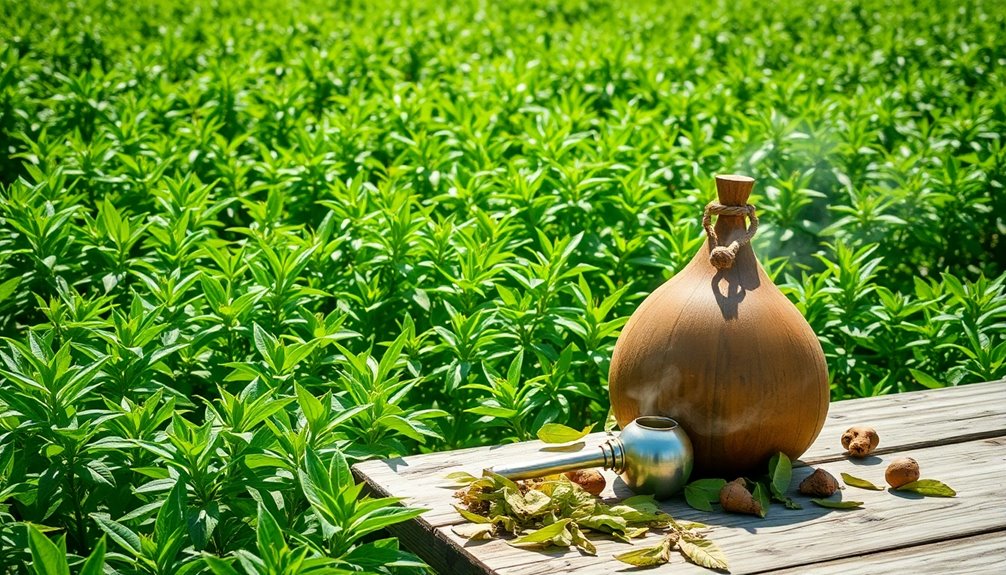
In South America, tea producers are embracing modern innovations such as precision agriculture tools, drone monitoring, and soil sensors to boost crop quality and efficiency. They also adopt sustainable practices like organic farming and water conservation, appealing to eco-conscious consumers. Innovative processing techniques, including artisanal blending and cold brewing, help create unique products that stand out globally. To discover how these advancements are shaping the future of South American tea, explore more about their cutting-edge approaches.
Key Takeaways
- Adoption of precision agriculture tools like drones and soil sensors for optimized cultivation practices.
- Use of mechanized harvesting techniques to improve efficiency and reduce labor costs.
- Experimentation with innovative brewing methods such as cold brewing and custom blending.
- Implementation of sustainable farming practices including organic cultivation and water conservation.
- Integration of AI and supply chain security technologies to ensure product authenticity and traceability.

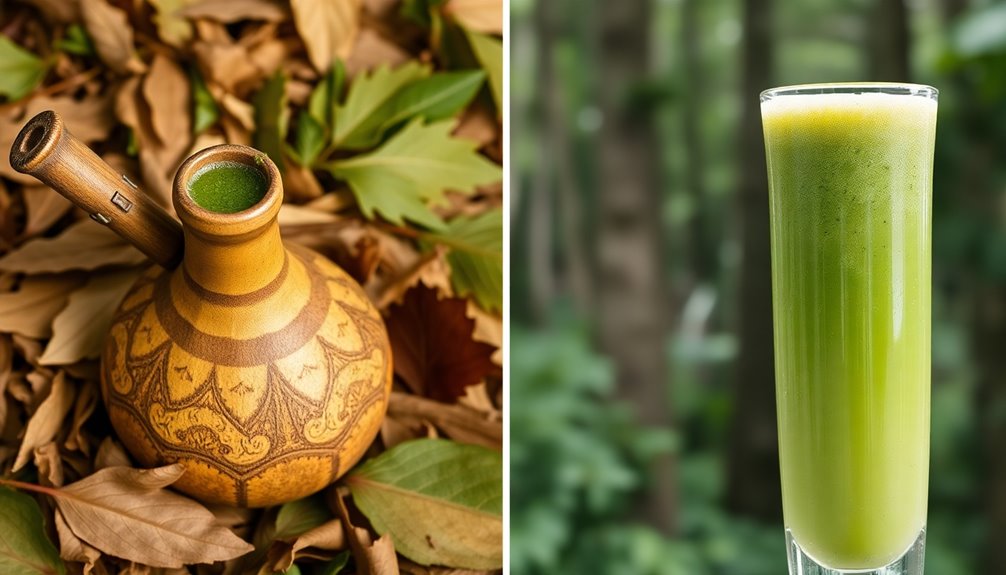
Have you ever wondered how South America has become a notable player in the global tea industry? It’s a combination of innovative farming practices and a deep understanding of tea plant varieties that’s helped the region stand out. Many farmers are now exploring different tea plant varieties to diversify their crops, which allows for a richer range of flavors and qualities. These varieties are carefully selected based on the local climate and soil conditions, ensuring that each plant thrives and produces high-quality leaves. This focus on diversity not only boosts the region’s competitiveness but also helps meet the varying preferences of tea drinkers worldwide. Sustainable farming practices are at the core of South America’s modern approach to tea production. Farmers are increasingly adopting eco-friendly methods, such as organic cultivation, integrated pest management, and water conservation techniques. These practices reduce environmental impact and promote healthier ecosystems, making the industry more resilient in the face of climate change. By prioritizing sustainability, growers are also able to appeal to a growing market of environmentally conscious consumers who want their tea to be both delicious and ethically produced. Technology plays a significant role in transforming how tea is cultivated and processed. Precision agriculture tools, like drone monitoring and soil sensors, help farmers optimize resource use and monitor crop health in real time. This means fewer inputs like water and fertilizers are wasted, which not only cuts costs but also minimizes ecological harm. Additionally, advancements in harvesting techniques, such as mechanization, increase efficiency without compromising the quality of the leaves. These innovations streamline the production process, enabling farmers to meet increasing demand while maintaining high standards. Moreover, integrating AI security technologies in monitoring systems can further enhance the safety and integrity of the supply chain, ensuring authentic and high-quality tea products. In the preparation phase, modern South American tea producers are experimenting with new techniques to enhance flavor and aroma. From cold brewing to innovative blending, they’re expanding the ways consumers can enjoy tea. Many are also incorporating traditional methods with a modern twist, like artisanal leaf processing, to create unique products that highlight regional characteristics. This fusion of tradition and innovation helps differentiate South American teas in a crowded marketplace. Ultimately, the combination of diverse tea plant varieties, sustainable farming practices, and technological advancements continues to shape South America’s reputation as a dynamic and forward-thinking tea producer. If you’re a tea enthusiast or someone interested in sustainable agriculture, it’s exciting to see how these innovations contribute to a richer, more responsible tea industry. South America’s approach ensures that quality, environmental health, and innovation go hand in hand, making it a compelling destination for the future of tea.
Frequently Asked Questions
What Are the Most Popular South American Tea Varieties?
You’ll find that herbal infusions like yerba mate are among the most popular South American tea varieties. Flavored blends, combining traditional herbs with fruits and spices, are also widely enjoyed. These teas offer vibrant flavors and energizing properties, making them favorites across the region. Whether you prefer the earthy taste of yerba mate or a sweet, aromatic blend, South American teas provide diverse options for tea lovers seeking unique, flavorful experiences.
How Do Climate Changes Affect Tea Cultivation in South America?
Climate changes challenge your tea cultivation by disrupting growing conditions, risking crop resilience and forcing climate adaptation. Rising temperatures, unpredictable rainfall, and extreme weather events can reduce yields and quality. To stay resilient, you need to adopt sustainable practices, diversify crops, and implement water management strategies. By focusing on climate adaptation and strengthening crop resilience, you can protect your tea farms and ensure a steady supply despite environmental uncertainties.
Are There Traditional South American Tea Brewing Techniques?
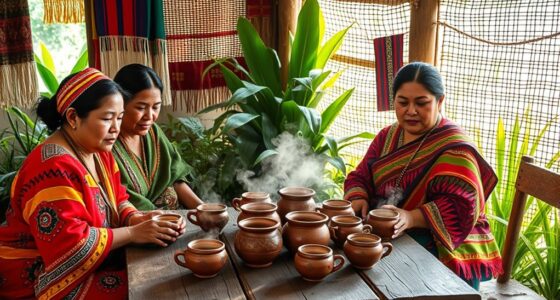
Yes, there are traditional South American tea brewing techniques rooted in indigenous brewing and cultural rituals. You might notice that communities often prepare herbal infusions using local plants, following specific steps passed down through generations. These rituals emphasize mindfulness and respect for nature, often involving unique methods like boiling herbs in clay pots or sharing tea communally. Embracing these techniques helps preserve cultural heritage and connects you deeply to local traditions.
What Sustainable Practices Are Used in South American Tea Farms?
Think of South American tea farms as stewards of a delicate garden. They embrace sustainable practices like organic cultivation, nurturing plants without harmful chemicals, and water conservation, ensuring resources stay pure and plentiful. By respecting nature’s balance, they protect the environment for future harvests. You can witness their commitment in each leaf, where sustainability isn’t just a practice but a promise to preserve the land and its rich heritage.
How Has Technology Improved Tea Harvesting in South America?
You see that technology has transformed tea harvesting in South America through mechanized harvesting, making the process faster and more efficient. Drones now monitor crop health and identify ripe leaves, reducing labor costs and increasing precision. This combination allows you to harvest tea at ideal times, ensuring better quality and sustainability. Overall, these innovations streamline operations and help you produce high-quality tea more sustainably.
Conclusion
As you sip your freshly brewed South American tea, imagine lush green plantations stretching endlessly under a bright blue sky, workers carefully handpicking the tender leaves. Modern innovations blend tradition with technology, ensuring each cup brims with rich flavor and vibrant aroma. Feel the warmth of the steaming brew in your hands, a demonstration to a region thriving with ingenuity. South American tea invites you to savor not just a drink, but a journey of tradition, innovation, and natural beauty.