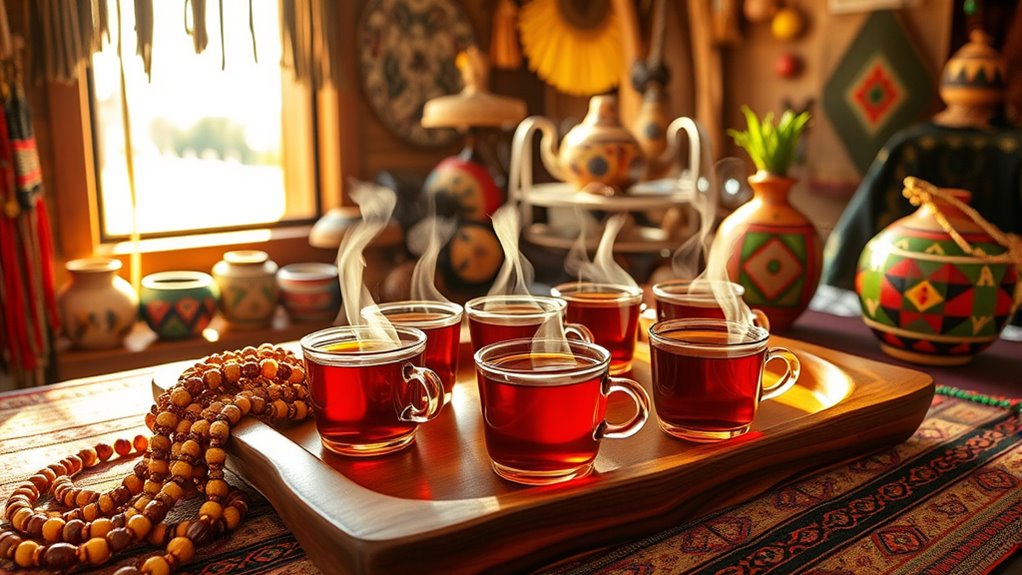
Rooibos tea holds deep cultural importance in South African traditions, symbolizing hospitality, respect, and community. When you share a cup, you’re participating in rituals that foster social bonds, honor elders, and celebrate special occasions. Serving it with care and respect reflects local customs and values, creating a sense of unity and cultural pride. Exploring these meaningful practices further reveals how this tea nourishes both body and community bonds in South Africa.
Key Takeaways
- Rooibos tea symbolizes hospitality, community, and respect in South African cultural practices.
- Serving rooibos during gatherings fosters social bonds and reinforces cultural identity.
- Rituals involving rooibos, such as pouring with care, mark significant life events and honor traditions.
- Elders use rooibos ceremonies to pass down stories, connecting generations through shared practices.
- Sharing rooibos reflects South African pride and embodies core values of unity and cultural continuity.
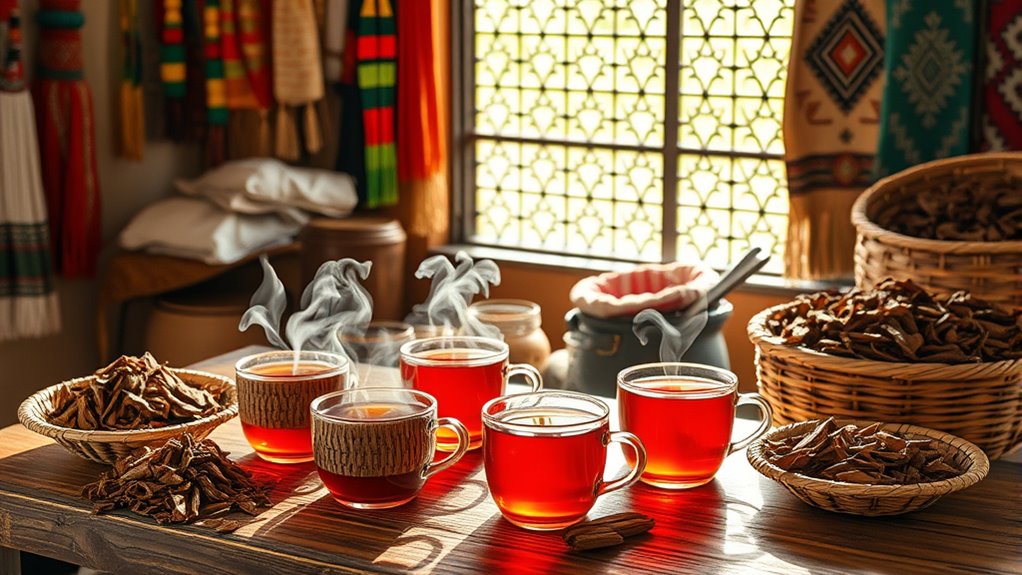
Rooibos tea holds a special place in South African culture, symbolizing hospitality, tradition, and community. It’s more than just a beverage; it’s a symbol of connection and respect, often integral to various cultural practices. One of the most prominent ways this tea manifests its cultural importance is through rooibos ceremonies. During these gatherings, the preparation and serving of rooibos aren’t just routine steps—they are meaningful acts that foster social bonds. The act of pouring rooibos into small cups, often accompanied by stories or songs, creates a warm environment where people come together to celebrate, share news, or simply enjoy each other’s company. These ceremonies can take place during festivals, family reunions, or community events, reinforcing the idea that rooibos is woven into the fabric of communal life.
Traditional rituals surrounding rooibos often carry deeper symbolic meanings. In many South African communities, serving rooibos to guests is seen as a gesture of respect and goodwill. The ritual of offering the tea is a sign that you value the person’s presence and honor their visit. It’s customary to prepare the tea with care, sometimes adding herbs or spices, which reflects local flavors and customs. These rituals can also mark significant life events—weddings, rites of passage, or harvest celebrations—where rooibos becomes a central feature to honor tradition. The process of brewing and sharing rooibos is often accompanied by specific gestures, such as pouring with both hands or passing the cup with a particular gesture of respect, emphasizing the cultural importance of manners and hospitality.
Furthermore, traditional rituals involving rooibos often serve as a link to ancestors and history. In some communities, elders lead the ceremonies, passing down stories and customs associated with rooibos, ensuring that these traditions are preserved. The tea, *consequently*, becomes a vessel of cultural memory, connecting generations through shared practices. Over time, these rituals have evolved but remain rooted in the core values of community, respect, and cultural identity. Whether in rural villages or urban settings, the act of sharing rooibos continues to be a meaningful gesture that encapsulates the spirit of South African hospitality and tradition. As you take part in or observe these ceremonies, you gain insight into how deeply intertwined rooibos is with the cultural soul of the region, transcending mere tradition to become a symbol of unity and cultural pride.

TATSUMI Country Roses Bone China Tea Cup and Saucer Set, 3 Pieces, Vintage Style, For Women and Tea Parties(QH,1 Set)
good quality: Bone China with smooth surface, can see through the cup.
As an affiliate, we earn on qualifying purchases.
As an affiliate, we earn on qualifying purchases.
Frequently Asked Questions
How Did Rooibos Tea Become a Symbol of South African Identity?
You see, rooibos tea became a symbol of South African identity through its historical roots in the region and its cultural symbolism. As it gained popularity, it represented local resilience and tradition, especially during times of change. When you drink rooibos, you’re embracing a deep cultural heritage that connects you to the land and history. Its unique flavor and story make it a proud emblem of South Africa’s rich cultural landscape.
Are There Specific Rituals Associated With Serving Rooibos Tea?
You might think serving rooibos tea is just pouring a drink, but in South Africa, it’s a full-blown ritual! During tea ceremonies, you follow special serving customs, like pouring the tea with respect and sharing it with loved ones. These rituals create a warm, welcoming atmosphere, making every sip feel like a cherished tradition. It’s more than tea; it’s a heartfelt gesture that binds communities together.
What Role Does Rooibos Tea Play in South African Festivals?
You’ll find rooibos tea playing a central role in South African festivals, often featured in tea ceremonies that highlight its importance. During festival traditions, serving rooibos symbolizes hospitality and community bonding, bringing people together to celebrate heritage. Its warm, comforting nature makes it a preferred beverage, enriching the festive atmosphere and reinforcing cultural identity through shared rituals and enjoyment.
How Has Rooibos Tea Influenced Local Art and Folklore?
You might not realize it, but rooibos tea deeply influences local art and folklore, fueling tea symbolism that resonates in stories and paintings. Its rich hue and calming qualities inspire artists, while tales of healing and tradition embed itself in folklore. As you explore these artistic expressions, you’ll uncover how rooibos isn’t just a drink but a symbol that stirs creative inspiration and cultural identity in every brushstroke and narrative.
Are There Traditional Stories Explaining the Origins of Rooibos Tea?
You’ll find that traditional stories explain the mythical origins of rooibos tea through ancestral tales. These stories often recount how indigenous people discovered the plant’s healing powers or its divine connection to their ancestors. You might hear that a wise elder or spirit guided them to the plant, emphasizing its sacred role. These narratives preserve the cultural heritage, deepening your appreciation for rooibos beyond just its taste.
Traditional South African tea ceremony accessories
As an affiliate, we earn on qualifying purchases.
As an affiliate, we earn on qualifying purchases.
Conclusion
As you sip rooibos tea, you become part of a centuries-old tapestry woven with tradition and warmth. Its rich aroma whispers stories of the land and its people, like a gentle lullaby echoing through time. This humble elixir isn’t just a drink; it’s a bridge connecting generations, a sacred dance of culture and community. Embrace its essence, and let it carry you on a timeless journey through the heart of local traditions.

Numi Organic Rooibos Chai Tea, 18 Herbal Bags, Microplastic Free, Rich Flavor with Cinnamon, Allspice & Ginger, Caffeine Free
Rooibos chai tea: naturally sweet and spicy with earthy red rooibos at its core; infused with warming cinnamon,…
As an affiliate, we earn on qualifying purchases.
As an affiliate, we earn on qualifying purchases.

DUJUST Porcelain Serving Tray with Handles, Luxury British Style Coffee Table Tray with Golden Rim, Beautiful Tea Tray Decor for Living Room, Easy to Use & Clean
【Luxury British Style Serving Tray in Golden Rim】DUJUST serving tray features a special wave design and a luxury…
As an affiliate, we earn on qualifying purchases.
As an affiliate, we earn on qualifying purchases.