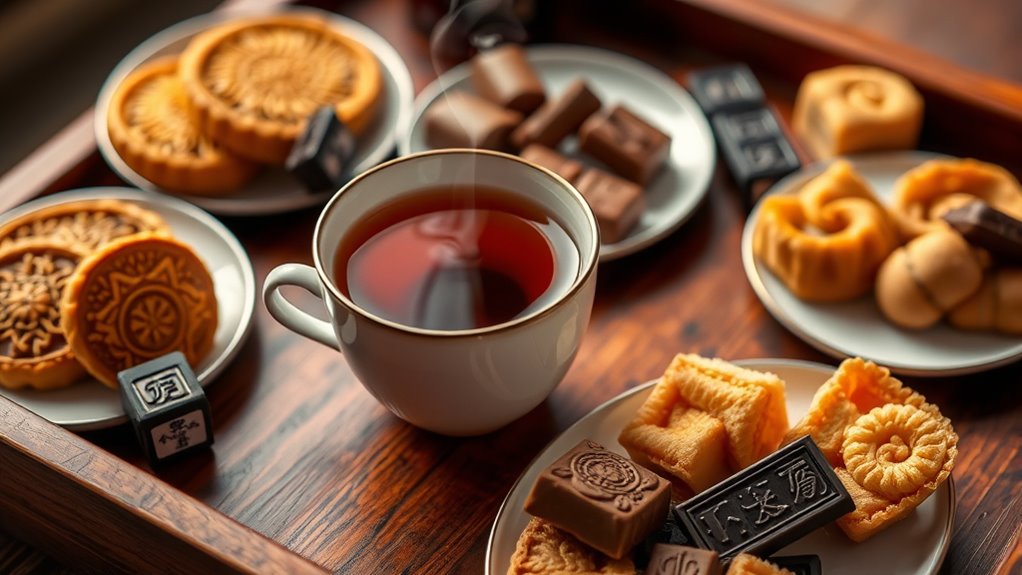

To perfectly pair Pu-Erh tea with food and desserts, focus on its earthy, robust flavor profile. It pairs well with hearty dishes like roasted meats, stews, and aged cheeses, while its tannins cut through rich, greasy foods for a cleansing effect. For desserts, dark chocolate, caramel, and fruit tarts enhance its earthy notes. Balancing flavor intensity is key—explore more tips to elevate your pairing experience and enjoy the full versatility of Pu-Erh.
Key Takeaways
- Match robust, earthy Pu-Erh with hearty dishes like roasted meats, stews, and aged cheeses to enhance flavor harmony.
- Pair dark chocolate and caramel desserts with Pu-Erh to complement its deep, earthy notes and balance sweetness.
- Use longer steeping times at around 200°F to bring out full flavor, ideal for pairing with rich and savory foods.
- Opt for subtler Pu-Erh varieties with light dishes like omelets or delicate pastries to avoid overpowering flavors.
- Balance the tea’s tannins and earthy profile with greasy or fried foods, which help cleanse the palate.
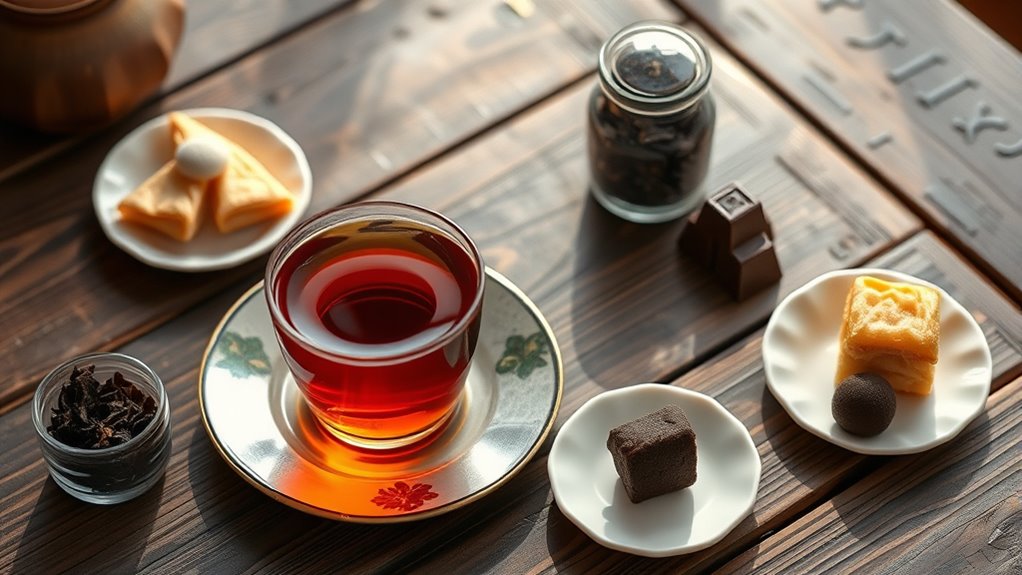
Pairing Pu-Erh tea can elevate your tasting experience by complementing a variety of flavors and dishes. Its rich, earthy notes make it a versatile companion for many foods, especially when you pay attention to proper tea storage and brewing techniques. Storing your Pu-Erh correctly is vital; keep it in a cool, dry place away from strong odors, as its aroma can absorb surrounding scents. Well-stored tea maintains its depth and complexity, enhancing your pairing opportunities. When brewing Pu-Erh, use a slightly longer steeping time than other teas—typically 3 to 5 minutes—at a temperature around 200°F (93°C). This approach reveals its full flavor potential, balancing bitterness and smoothness, which makes it ideal for pairing with diverse dishes.
The earthy, robust profile of Pu-Erh pairs beautifully with hearty, savory foods. Think roasted meats, aged cheeses, and rich stews. The tea’s natural tannins cut through fat, cleansing your palate after each sip and bite. For breakfast or brunch, try pairing it with a savory omelet or a breakfast sandwich. The tea’s deep flavors complement the richness without overpowering delicate ingredients. When it comes to desserts, Pu-Erh’s earthy qualities can contrast beautifully with sweet, creamy treats. Dark chocolate, caramel-based desserts, and even certain fruit tarts work well. The tea’s complexity enhances the sweetness and adds an earthy dimension to the dessert experience. Additionally, the fermentation process of Pu-Erh enhances its ability to complement aged and fermented foods, creating a harmonious pairing.
If you’re serving fried or greasy foods, Pu-Erh can serve as a palate cleanser. Its tannic structure helps to break down oils and fats, making each bite feel less heavy. For a more refined pairing, consider serving Pu-Erh with dim sum or savory pastries, where its earthy notes provide a grounding contrast. Remember, the key to successful pairings is to match the intensity of the tea with the food. Lighter Pu-Erh varieties work best with subtler dishes, while more robust brews stand up to bolder flavors.
Frequently Asked Questions
Can Pu-Erh Tea Be Paired With Spicy Foods?
Yes, Pu-Erh tea pairs well with spicy foods. Its earthy, robust flavor enhances spicy pairings by balancing heat and adding depth to your meal. The tea’s natural ability to cut through spice helps mellow strong flavors, making each bite more enjoyable. When you combine Pu-Erh with spicy dishes, you’ll experience flavor enhancement, creating a harmonious contrast that elevates both the tea and your dining experience.
What Are the Ideal Serving Temperatures for Pu-Erh?
Imagine a gentle sunrise, warm and inviting—that’s the ideal Pu-Erh serving temperature. You should brew it around 95°C (203°F), ensuring your tea storage keeps it fresh and flavorful. Use proper brewing techniques to release its rich, earthy notes. Serve it slightly cooler than boiling, around 85°C (185°F), to savor the depth without bitterness. This balance enhances the tea’s complexity and creates a harmonious, comforting experience.
How Does Aging Affect Pu-Erh’s Flavor Profile?
Aging brings out unique nuances in Pu-Erh, markedly impacting its flavor profile. As it matures, you’ll notice smoother, richer, and more complex taste notes, with subtle earthy and woody undertones. The aging process enhances flavor development, allowing the tea to evolve from astringent and sharp to mellow and nuanced. Your experience deepens as you explore different aging stages, discovering new layers of aroma and taste with each year of proper storage.
Is Pu-Erh Suitable for Those With Caffeine Sensitivities?
Imagine you’re in a medieval marketplace, but today, Pu-Erh tea might not be your best brew if you’re caffeine sensitive. If you have health considerations or caffeine sensitivity, this tea could over-stimulate you due to its natural caffeine content. While some find it energizing, others may experience jitters. Always listen to your body and consult your healthcare provider before adding Pu-Erh to your daily routine.
Can Pu-Erh Complement Savory Dishes Effectively?
Yes, pu-erh can complement savory dishes effectively. Its earthy, mellow flavor enhances savory pairings, bringing out depth and richness in your meal. You’ll notice how it balances spicy, salty, or umami flavors, making it a versatile choice for various cuisines. Using pu-erh for flavor enhancement creates a harmonious dining experience, allowing the savory notes to shine while adding a unique, robust twist to your dishes.
Conclusion
Think of pairing Pu-Erh tea with food and desserts as opening a hidden treasure chest. Each sip reveals new flavors, enriching your experience like discovering precious gems. When you find the perfect match, it’s as if your taste buds dance in harmony, turning every bite into a symphony. So, explore boldly and let Pu-Erh be your trusted guide on this flavorful journey, transforming simple moments into unforgettable memories.