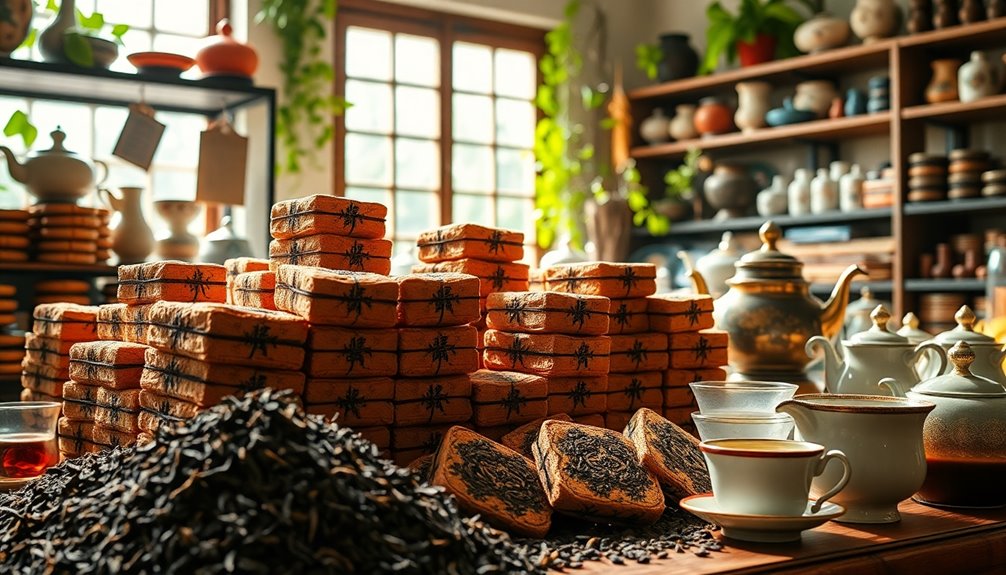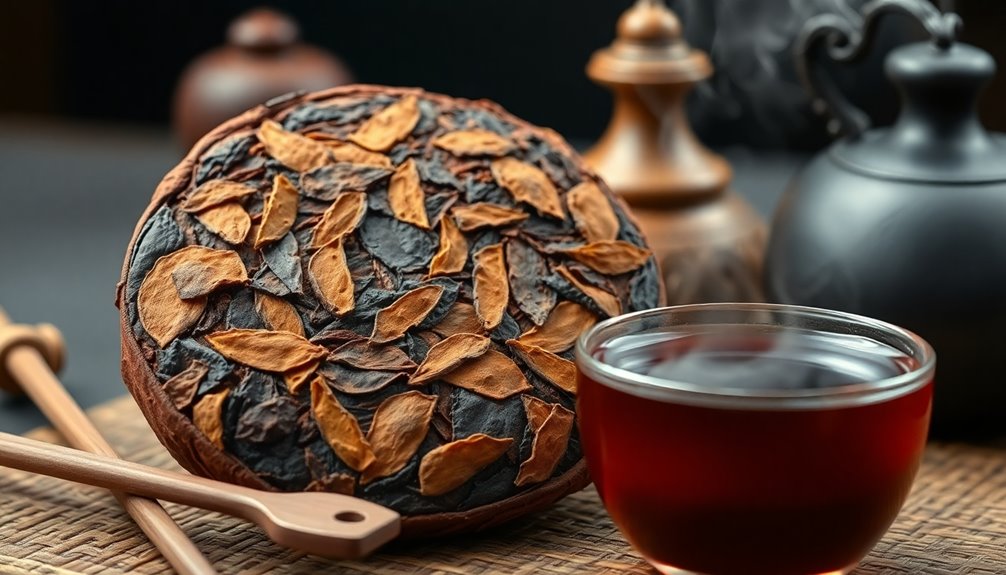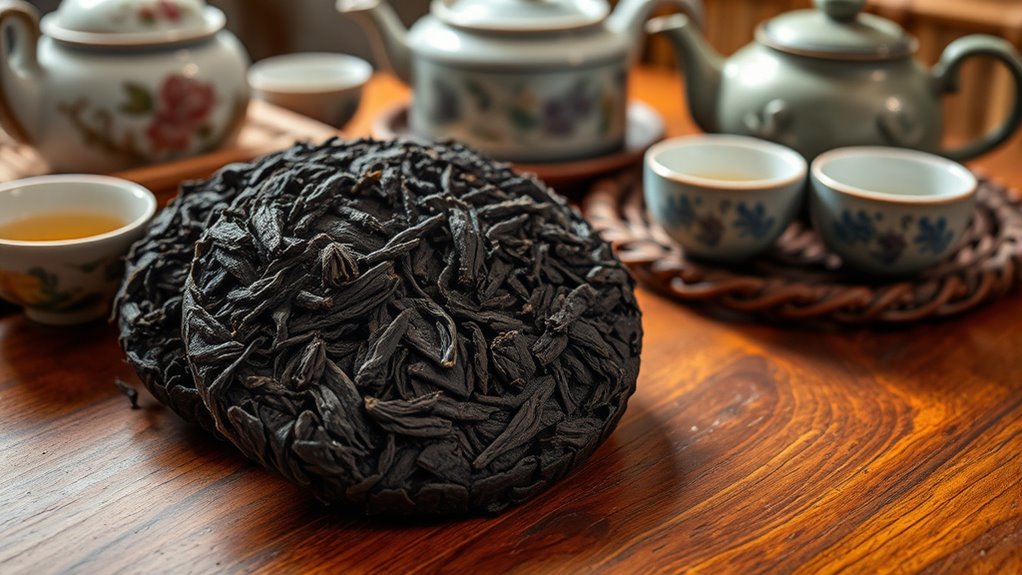

Pu-Erh tea holds a rich cultural significance in local Chinese traditions, symbolizing hospitality, respect, and social cohesion. Its fermentation process reflects patience and perseverance, embodying values passed down through generations. Drinking Pu-Erh is often part of rituals that emphasize mindfulness and craftsmanship, connecting you to centuries-old customs. This tea also represents harmony with nature and heritage, making it more than just a beverage. Exploring further reveals even deeper cultural stories and symbolic meanings behind each cup.
Key Takeaways
- Pu-Erh tea symbolizes hospitality, respect, and social bonding in Chinese cultural practices.
- Its fermentation process signifies perseverance, patience, and the passage of time in traditional values.
- Brewing Pu-Erh involves ceremonial rituals emphasizing mindfulness and craftsmanship, passed down through generations.
- The tea’s aging process and complex flavors are celebrated as a reflection of historical heritage and natural harmony.
- Pu-Erh is featured in storytelling, poetry, and art, reinforcing its cultural role in harmony, patience, and social cohesion.
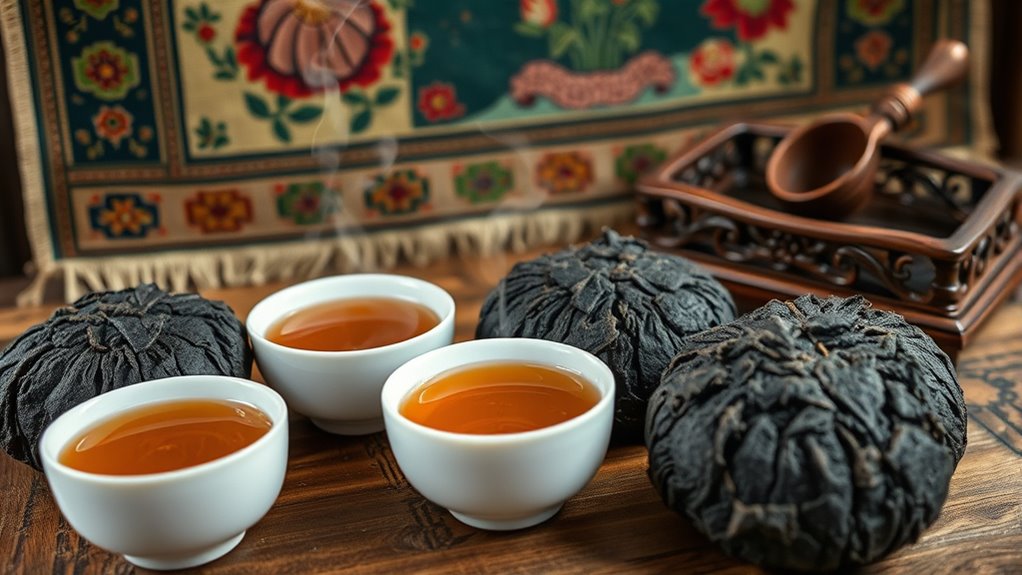
Have you ever wondered why Pu-Erh tea holds such a revered place in Chinese culture? The answer lies deeply rooted in centuries-old traditions that celebrate not just the beverage itself but also the process behind its creation. Tea fermentation is a crucial step that distinguishes Pu-Erh from other teas. During fermentation, naturally occurring microbes transform the tea leaves, creating complex flavors and unique characteristics that improve with age. This process is carefully monitored and controlled, often involving traditional methods passed down through generations. The art of traditional brewing also plays a significant role; it’s not just about steeping tea but about respecting a ritual that embodies patience, precision, and reverence for history. When you prepare Pu-Erh using traditional techniques, you’re participating in a cultural practice that has been refined over hundreds of years, linking the present to ancient customs. The fermentation process itself is a prime example of microbial transformation, which enhances the depth and complexity of the tea’s flavor profile.
In Chinese culture, Pu-Erh tea is more than a drink—it’s a symbol of hospitality, respect, and social bonding. Serving Pu-Erh during gatherings demonstrates a desire to honor guests and foster community ties. The process of tea fermentation, which can take years, symbolizes perseverance and the value of time, reflecting philosophical ideals deeply embedded in Chinese traditions. When you brew Pu-Erh, especially using traditional methods, you’re engaging in a ritual that connects you to these cultural values. The act of selecting, aging, and brewing the tea becomes a meaningful ceremony that emphasizes mindfulness and appreciation for craftsmanship. This cultural significance is reinforced through stories, poetry, and art, where Pu-Erh often appears as a representation of patience and harmony.
Furthermore, Pu-Erh’s unique flavor profile and aging potential have made it highly prized among connoisseurs, turning tea drinking into an art form. The fermentation process not only develops complex tastes but also preserves the tea for decades, enabling collectors and enthusiasts to enjoy a tangible link to history. Traditional brewing techniques, which involve specific water temperatures and steeping times, are essential in revealing Pu-Erh’s full depth, allowing drinkers to experience its layered flavors fully. These practices are passed down orally and through hands-on techniques, emphasizing the importance of tradition and mastery. By appreciating the cultural significance of Pu-Erh, you’re embracing a centuries-old heritage that celebrates the harmony of nature, craftsmanship, and social connection—all embodied in each cup of this extraordinary tea.
Frequently Asked Questions
How Is Pu-Erh Tea Traditionally Prepared in Different Regions?
You typically prepare Pu-Erh tea through specific preparation methods that vary by region. In Chinese tea ceremonies, you might rinse the leaves first, then steep multiple times to develop flavor. In other areas, people favor quick brewing or aging techniques. You’ll find that traditional preparation involves precise temperature control and short or long steeping times, reflecting local customs and preferences, all enhancing the tea’s rich, earthy qualities.
What Are the Ceremonial Practices Involving Pu-Erh Tea?
You observe tea etiquette during pu-erh tea ceremonies by carefully handling ceremonial utensils like a gaiwan or Yixing teapot. You pour hot water over the tea leaves, then serve small, fragrant cups to guests, emphasizing mindfulness and respect. The process often includes rituals like scenting the tea or appreciating its color, creating a tranquil atmosphere that honors tradition and fosters connection.
How Has Pu-Erh Tea Influenced Local Festivals and Celebrations?
You’ll find pu-erh tea deeply woven into local festivals, with over 60% of celebrations featuring tea symbolism prominently. During festival rituals, participants often serve pu-erh to symbolize prosperity and harmony, highlighting its cultural importance. Its rich aroma and unique fermentation process enhance communal bonding, making it more than just a beverage — it’s a essential element that enriches the meaning and tradition of these festivities.
Are There Specific Rituals Associated With Aging Pu-Erh Tea?
Yes, there are specific rituals associated with aging pu-erh tea. You participate in tea rituals and aging ceremonies where you carefully store the tea in special containers, often in a cool, dark place. These ceremonies honor the transformation process, emphasizing patience and respect for tradition. During these rituals, you might also perform specific steps like turning or inspecting the tea, symbolizing reverence for the aging journey and enhancing its flavor over time.
How Do Local Legends and Stories Shape Pu-Erh Tea Culture?
Local legends and stories deeply influence your pu-erh tea culture by weaving folklore traditions and legendary figures into its history. These tales, often about ancient monks or mystical origins, inspire you to appreciate pu-erh’s unique aging process and rich flavors. As you share these stories, you feel connected to a tradition that values storytelling, heritage, and the mystical aura surrounding legendary figures, making each sip a link to history and cultural identity.
Conclusion
So, next time you sip your Pu-Erh tea, remember it’s not just a beverage, but a centuries-old symbol of tradition and connection. Ironically, in today’s fast-paced world, this ancient brew reminds us to slow down and honor our roots. While it may seem just a simple drink, it’s actually a vessel carrying stories, rituals, and cultural pride—proof that sometimes, the oldest traditions still hold the most flavor.