You’ll find that matcha tea is more than just a drink in Japan; it symbolizes tradition, mindfulness, and harmony. It plays a essential role in the tea ceremony, where every movement reflects respect, purity, and serenity. The rituals involve precise actions in a tranquil setting, promoting discipline and reflection. These practices embody cultural values that honor simplicity and natural beauty. Exploring further reveals how matcha continues to inspire modern practices rooted in Japanese heritage.
Key Takeaways
- Matcha symbolizes tradition, harmony, and mindfulness in Japanese culture beyond just being a beverage.
- It is central to the tea ceremony, emphasizing respect, purity, and tranquility.
- The ceremony’s ritual elements and traditional settings reflect cultural values of balance and reverence.
- Actions like whisking and warming the tea foster mindfulness and deliberate reflection.
- The practice promotes community, personal reflection, and a deep connection to Japanese cultural identity.

Matcha tea holds a deep cultural significance in Japan, where it’s more than just a beverage—it’s a symbol of tradition, harmony, and mindfulness. When you participate in the tea ceremony, you’re engaging in a practice that has been refined over centuries, emphasizing respect, purity, and tranquility. The process of tea preparation isn’t rushed; instead, it’s a deliberate act that encourages you to focus on each step, from selecting the powdered green tea to whisking it to creamy perfection. Every movement is purposeful, embodying a sense of mindfulness that helps you center yourself in the present moment.
Participating in the tea ceremony fosters mindfulness, respect, and tranquility through deliberate, purposeful actions.
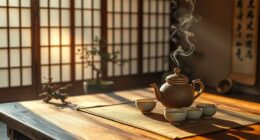
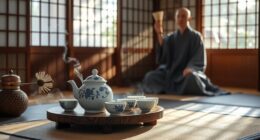
Ceremonial rituals surrounding matcha are deeply rooted in Japanese culture and serve as a reflection of social harmony. These rituals often take place in a traditional tea room, where every element—from the tea utensils to the layout—follows precise rules designed to foster a sense of calm and respect. As you enter, you’re expected to bow, showing humility and appreciation for the host and the tradition itself. The host meticulously prepares the tea, demonstrating grace and attentiveness, turning the act into an art form. This ritual isn’t just about drinking tea; it’s about creating a shared experience that emphasizes community, respect, and mindfulness.
During the ritual, you’ll notice the careful handling of tools like the chasen (bamboo whisk) and chawan (tea bowl), which symbolize harmony and balance. The tea preparation process involves specific movements—warming the bowl, whisking the powder with hot water, and achieving a frothy surface—that are performed with precision and care. These actions serve as a meditative practice, helping you slow down and appreciate the moment. The ceremony’s structured nature fosters a sense of discipline and reverence, reinforcing the cultural values that have been passed down through generations. Additionally, the aesthetic principles embedded in the tea ceremony highlight the importance of simplicity and natural beauty in Japanese culture.
Participating in these ceremonial rituals allows you to experience a deeper connection to Japanese traditions. It’s not merely about drinking matcha but about embodying a philosophy of mindfulness and respect for nature, tradition, and others. The ritual creates a space where you can reflect, find tranquility, and appreciate the beauty of simplicity. By understanding the significance of tea preparation and the ceremonial rituals, you gain insight into a tradition that elevates a simple act into a meaningful expression of cultural identity—one that continues to inspire mindfulness and harmony today.
Top picks for "cultural significance matcha"
Open Amazon search results for this keyword.
As an affiliate, we earn on qualifying purchases.
Frequently Asked Questions
How Is Matcha Tea Traditionally Prepared?
You prepare matcha tea by first sifting the powdered tea into a bowl, then adding hot water. Using a traditional whisk, you briskly whisk the tea in a zigzag motion until it becomes frothy. During a tea ceremony, this process emphasizes mindfulness and respect. The traditional whisking technique guarantees a smooth, even mixture, enhancing the tea’s flavor and aroma, making each sip a calming, ritualistic experience.
What Are the Health Benefits of Drinking Matcha?
When you drink matcha, you gain antioxidant properties that help protect your cells from damage and boost your immune system. It also enhances mental clarity, so you stay focused and alert throughout the day. Unlike other teas, matcha provides a slow, steady energy boost without the jitters. Regular consumption can improve your overall health, support weight management, and promote relaxation, making it a powerful addition to your wellness routine.
Are There Specific Rituals Associated With Serving Matcha?
Yes, there are specific rituals associated with serving matcha, especially during the traditional tea ceremony. You’ll follow serving etiquette that emphasizes respect, harmony, and mindfulness. The ceremony involves carefully preparing the matcha, using a whisk and bowl, and presenting it with grace. This ritual fosters a sense of calm and appreciation, making each serving a meaningful experience that honors the cultural heritage and emphasizes the importance of mindfulness in every step.
How Does Matcha Influence Modern Japanese Ceremonies?
Matcha influences modern Japanese ceremonies by blending traditional ceremonial etiquette with contemporary adaptations. You’ll notice that while the core rituals remain, they often incorporate modern aesthetics and relaxed approaches, making the experience more accessible. This fusion allows you to appreciate the cultural depth of matcha while embracing current trends, ensuring that the ceremonial significance endures and evolves, keeping the practice relevant and meaningful in today’s society.
What Varieties of Matcha Are Most Prized Historically?
Imagine you’re in a 15th-century tea house, sipping on the most prized matcha. Historically, ceremonial grade matcha is the most esteemed, prized for its vibrant color and refined flavor, used in traditional tea ceremonies. Culinary grade matcha, though less delicate, is valued for cooking and lattes. You’d choose ceremonial matcha for special occasions, appreciating its rich history and cultural significance, while culinary grade suits everyday treats.
Conclusion
As you embrace the rich tradition of matcha tea, you begin to see how it gently nurtures connection and harmony within communities. Its subtle presence in rituals softly reminds us of the importance of mindfulness and shared heritage. When you partake in this ancient practice, you’re subtly invited to honor centuries of culture, fostering unity and understanding. In this way, matcha becomes more than just a drink—it’s a delicate bridge linking past and present.