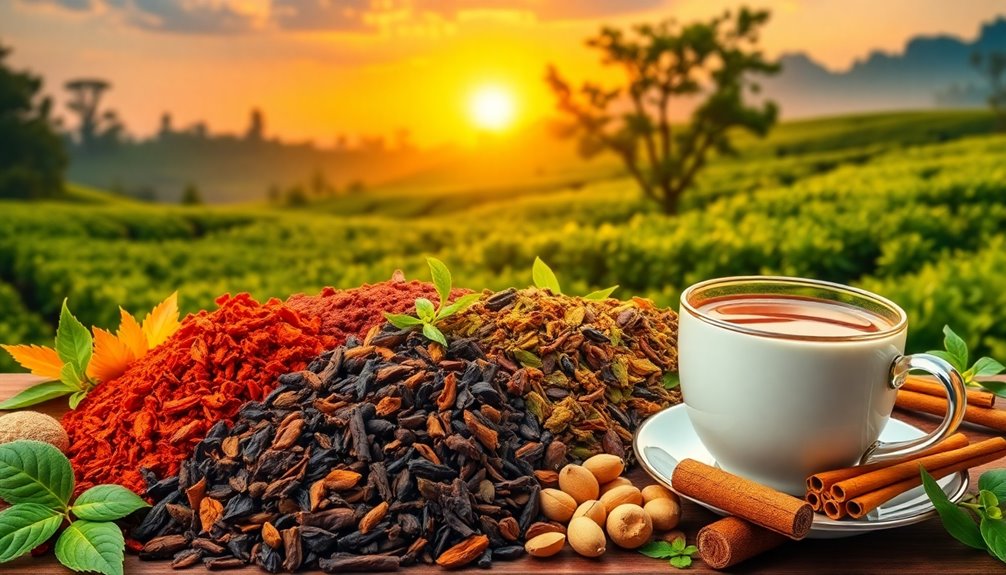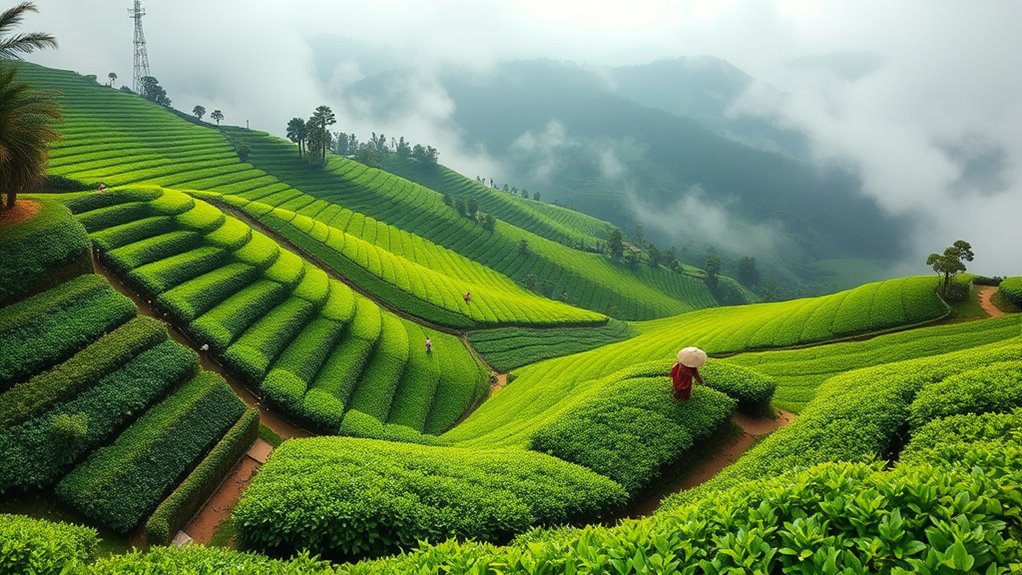
Indian tea offers a rich variety shaped by its regional terroirs. In Assam, the humid climate and rich soil produce bold, malty teas through full oxidation. Darjeeling’s cooler mountains give you delicate, floral, and fruity flavors with minimal processing. Nilgiri’s high-altitude plantations create brisk, aromatic teas with a fresh character. Each region’s unique environment influences the taste, craft, and tradition, making each sip a journey through India’s diverse landscapes. If you keep exploring, you’ll uncover even more fascinating details.
Key Takeaways
- Assam teas are full-bodied with malty flavors due to its humid, subtropical climate and rich soil.
- Darjeeling teas are delicate, floral, and fruity, influenced by cooler, mountainous terrain and minimal oxidation.
- Nilgiri teas are brisk, aromatic, and fresh, shaped by high-altitude plantations and unique weather conditions.
- Processing techniques vary regionally, affecting aroma, flavor, and overall tea characteristics.
- The terroir—including climate, soil, and elevation—significantly defines each region’s distinctive tea profile.
Have you ever wondered what makes Indian teas so unique? The answer lies in the diverse regional varieties and the distinct terroir each region offers. Indian tea is not just a beverage; it’s a reflection of the land, climate, and traditional processing techniques. When exploring Indian tea, you’ll notice that the different regions employ specific tea processing methods that influence the tea’s flavor, aroma, and overall tasting profile. For instance, Assam teas are often crafted through complete oxidation, giving them bold, malty flavors that stand out in your cup. Darjeeling teas, on the other hand, undergo a more delicate processing, often minimally oxidized, which results in a floral, fruity aroma that’s truly unique. These variations in processing methods directly impact the tea tasting profiles, making each regional variety distinct. You might find yourself savoring the briskness of an Assam brew in the morning or enjoying a nuanced Darjeeling in the afternoon. The processing techniques are deeply rooted in tradition, passed down through generations, and tailored to match the specific climatic conditions of each region. For example, the humid, subtropical climate of Assam encourages the cultivation of hardy tea bushes that produce robust leaves, suitable for strong, full-bodied teas. In contrast, the cooler, mountainous climate of Darjeeling fosters the growth of delicate tea plants, perfect for producing light, aromatic teas with complex flavor notes. Moving further east, the Nilgiri region in southern India offers teas that are often brisk and aromatic, thanks to the high-altitude plantations and unique weather patterns. These regional differences don’t just influence the taste but also the tea tasting profiles, which range from rich and malty to light and floral. Additionally, the specific climate and soil composition play crucial roles in shaping each tea’s character. When you sample Indian teas, pay attention to how the terroir shapes each brew—subtle hints of fruit, spice, or earthiness can all be traced back to specific regional influences. Whether you prefer the boldness of Assam or the floral elegance of Darjeeling, understanding the regional varieties and their terroir enhances your appreciation of Indian tea. It’s a journey through landscapes and traditions that results in an array of flavors, each with its own story to tell. So, next time you enjoy a cup of Indian tea, recognize the craftsmanship behind it—each sip encapsulates a region’s unique environment, processing methods, and cultural heritage, offering a truly authentic experience.
Frequently Asked Questions
How Does Altitude Affect Tea Flavor Profiles?
Altitude influences tea flavor development markedly. As you go higher, the cooler temperatures slow down leaf growth, allowing more complex flavors to develop. The increased altitude often results in teas with brighter, more nuanced profiles and a natural crispness. You’ll notice that high-altitude teas tend to have a delicate, aromatic quality, making them highly prized. So, the elevation directly impacts the tea’s flavor, enriching your tasting experience.
What Are the Traditional Processing Methods in Different Regions?
Imagine hand-picking tender tea leaves using traditional plucking techniques that preserve their delicate flavor. In Assam, you’ll find sun-drying and withering methods that enhance robustness, while in Darjeeling, gentle withering and careful tea leaf fermentation create a floral aroma. Each region’s processing methods reflect its unique climate and terrain, shaping the tea’s character. Your experience of these traditional techniques reveals the rich cultural heritage behind every sip.
How Do Local Soils Influence Tea Characteristics?
You’ll notice that local soils, with their unique mineralogy and microbial diversity, shape the tea’s flavor and aroma. Rich mineral content can add depth and brightness, while diverse microbes influence fermentation and overall health of the plants. These soil differences give each Indian tea region its distinct character, impacting taste, aroma, and quality. So, the terroir, especially soil, plays a vital role in making each tea unique.
Are There Specific Pests Unique to Indian Tea Regions?
Yes, Indian tea regions face specific pests like tea mosquito bugs and red spider mites, which you need to manage carefully. Pest management involves monitoring regional infestations regularly and applying integrated control strategies to protect your crops. By understanding these pests’ unique behaviors, you can prevent damage effectively, ensuring your tea remains high quality and healthy. Staying vigilant helps you maintain ideal production despite regional pest challenges.
How Does Climate Change Impact Indian Tea Cultivation?
Have you considered how climate change might threaten Indian tea? It critically impacts future cultivation challenges by altering rainfall patterns and increasing temperatures. You can adapt with climate adaptation strategies like shifting plantations to cooler areas or developing resilient tea varieties. These proactive steps help safeguard your crop, ensuring you can continue producing quality tea despite changing weather. Isn’t it essential to stay ahead of these shifts for sustainable tea farming?
Conclusion
As you savor a sip of Indian tea, imagine the lush green hills and misty mornings where each leaf is nurtured by the unique soil and climate. From the vibrant hues of Assam to the delicate aroma of Darjeeling, every variety tells a story of its terroir. Let the rich flavors transport you to these scenic landscapes, where tradition and nature blend harmoniously, creating a truly unforgettable tea experience in every cup.