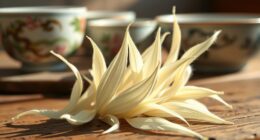
Indian tea is packed with antioxidants like catechins, theaflavins, and flavonoids that help protect your body from oxidative stress and reduce the risk of chronic diseases. It also includes herbs such as tulsi, ginger, and mint, which boost your immune system and fight inflammation. Minimal processing preserves these health benefits, making your daily tea a simple way to improve skin, heart, and overall health. Stick around to discover how various ingredients can further enhance these benefits.
Key Takeaways
- Indian tea contains antioxidants like catechins and flavonoids that neutralize free radicals and reduce oxidative stress.
- Herbal ingredients such as tulsi and ginger boost immunity and provide anti-inflammatory benefits.
- Minimal processing preserves high antioxidant levels, maximizing health benefits when brewed traditionally.
- Regular consumption supports heart health, improves skin, and enhances overall vitality.
- Incorporating herbs and spices into Indian tea can further strengthen its medicinal properties.

Indian tea, renowned for its rich flavors and aromatic qualities, also offers numerous health benefits that you can enjoy daily. When you sip on a warm cup of Indian tea, you’re not just indulging in a comforting beverage—you’re also taking in powerful compounds like tea antioxidants that support your overall well-being. These antioxidants help neutralize free radicals in your body, which can cause oxidative stress and damage cells. Regular consumption of tea antioxidants can contribute to better health by reducing inflammation and lowering the risk of chronic diseases such as heart disease and certain cancers.
Sipping Indian tea daily boosts health with antioxidants that fight free radicals and reduce disease risk.
One way Indian tea boosts your health is through its connection with herbal infusions. Many traditional Indian teas incorporate herbs like tulsi, ginger, and mint, which add not only flavor but also extra health benefits. For example, tulsi, or holy basil, is known for its adaptogenic properties that help your body handle stress and improve immunity. Ginger, often added to chai, has anti-inflammatory effects and can aid digestion. When you choose herbal-infused Indian teas, you’re enhancing your daily routine with nature’s remedies, which can support your immune system, reduce inflammation, and promote overall crucial vitality.
Furthermore, the antioxidants found in Indian tea play a significant role in safeguarding your body against oxidative stress. These antioxidants include catechins, theaflavins, and flavonoids, all of which are prominent in different types of Indian teas such as Assam, Darjeeling, and Nilgiri. By drinking these teas regularly, you help your body fight off cell damage caused by free radicals. This can lead to improved skin health, better aging processes, and increased energy levels. The natural compounds in Indian teas also support cardiovascular health by helping to reduce bad cholesterol levels and improving blood circulation.
Additionally, many Indian teas are brewed with minimal processing, which preserves their high antioxidant content. When you prefer traditional brewing methods, you maximize the health benefits of these teas. You can also customize your tea experience by adding herbs or spices to boost their medicinal properties. Drinking Indian tea regularly, especially varieties rich in antioxidants and infused with herbal infusions, offers a simple, yet effective way to enhance your health without relying on supplements or medications.
By exploring different processing methods, you can further preserve the beneficial compounds and maximize the health effects of your Indian tea.
Frequently Asked Questions
Which Indian Teas Have the Highest Antioxidant Content?
You’ll find that Indian teas like Assam and Darjeeling have the highest antioxidant levels among various tea varieties. These teas are rich in polyphenols, which boost your health by fighting free radicals. When choosing a tea, opt for freshly brewed, high-quality leaves to maximize antioxidant content. Drinking these teas regularly can help improve your immune system, reduce inflammation, and support overall well-being.
Can Indian Tea Help With Weight Loss?
Sure, Indian tea might not turn you into a supermodel overnight, but it can definitely help with weight loss. It offers detox benefits and a metabolic boost that can aid your efforts. Sip on a spicy masala chai or green tea, and you might just trick your body into burning calories faster. Remember, it’s not magic—pair it with healthy habits, and you’ll see better results.
Are There Any Side Effects of Drinking Indian Tea Daily?
Drinking Indian tea daily can pose health risks if consumed excessively, especially due to ingredient concerns like high caffeine levels or added sugars. You might experience side effects such as insomnia, increased heart rate, or stomach upset. It’s important to moderate your intake and check ingredient labels, as some teas may contain preservatives or artificial flavors. Being mindful helps you enjoy the benefits without risking your health.
How Does Indian Tea Compare to Green Tea’s Health Benefits?
Did you know green tea contains about 30% more antioxidants than Indian tea? When comparing their health impacts, green tea is often praised for its higher antioxidant levels, which may boost immune health and reduce aging signs. Indian tea, rich in unique herbs and spices, offers specific benefits like improved digestion. Both promote wellness, but green tea’s antioxidant comparison makes it slightly more potent for overall health.
Is Indian Tea Suitable for People With Caffeine Sensitivity?
If you’re caffeine sensitive, Indian tea might not be your best choice because it contains caffeine, which can trigger jitters or sleep issues. However, you can explore tea alternatives like herbal teas or decaffeinated options that offer similar soothing qualities without caffeine. Always check labels or choose naturally caffeine-free varieties to enjoy a warm drink without risking your sensitivity.
Conclusion
So, next time you sip on Indian tea, remember it’s more than just a warm drink—it’s a health treasure chest. With its rich antioxidants and healing properties, Indian tea acts like a gentle guardian for your body. Embrace this flavorful brew, and let it be a soothing wave that boosts your well-being. Like a loyal friend, it’s there to nurture your health, one comforting cup at a time.